
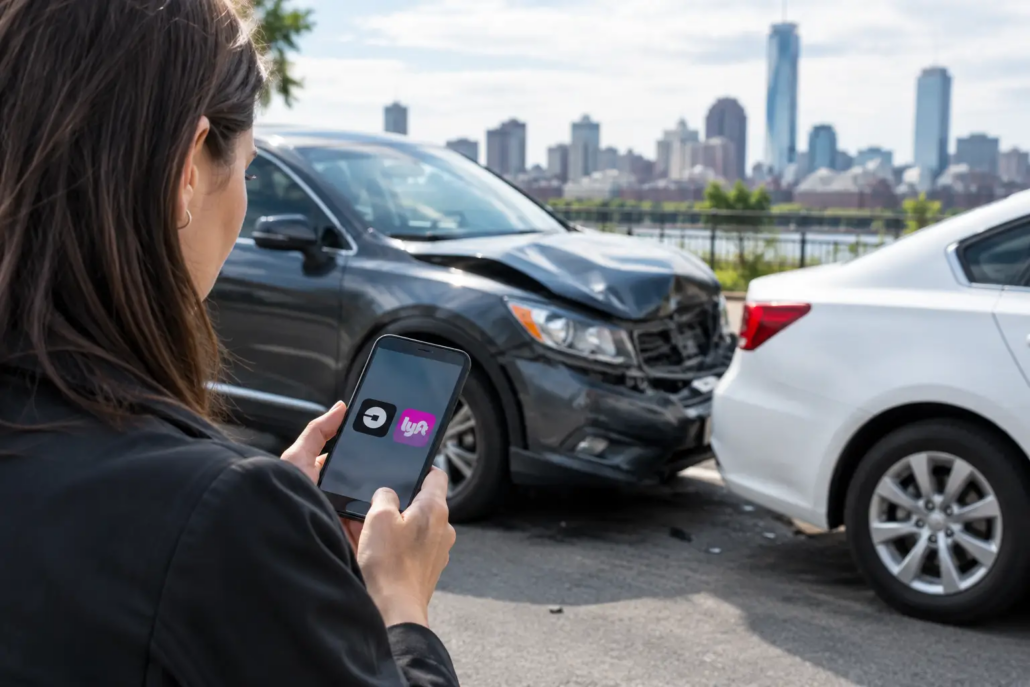
Uber Lyft Coverage After a Massachusetts Crash
A rideshare crash can leave an injured passenger with a frustrating answer from the insurance company: it depends. Uber Lyft coverage is not a single policy that applies every time a driver is in a vehicle with an app on their phone. The available coverage can turn on what the driver was doing in the seconds before impact, who caused the collision, and whether the driver was carrying a passenger or traveling to pick one up.
For an injured person in Boston or elsewhere in Massachusetts, those details are not technicalities. They can affect which insurer must receive notice, how much coverage may be available, and whether a claim is delayed while insurers point to one another. Medical treatment and recovery should come first, but protecting the evidence that answers these questions should happen quickly.
How Uber Lyft Coverage Changes With Driver Status
Rideshare insurance usually falls into different periods of app activity. A driver may be off the app, logged into the app and waiting for a request, on the way to pick up a rider, or transporting a rider. Each period can raise a different insurance question.
When the driver is off the app, the driver’s personal auto policy is ordinarily the first source of liability coverage. If the driver causes a crash while driving for personal reasons, Uber or Lyft coverage generally does not apply simply because the vehicle is used for rideshare work at other times.
The analysis becomes more complicated once the driver has logged in and is available to accept rides. Massachusetts law requires transportation network company drivers to have specified coverage during this period, but the driver’s personal policy may contain a business-use or rideshare exclusion. The rideshare company’s contingent policy may then become central. This is one reason an insurer’s first answer should not be accepted as the final answer.
Once a driver has accepted a trip and is traveling to the passenger, or is carrying the passenger, substantially higher rideshare coverage is commonly available. Uber and Lyft generally advertise up to $1 million in third-party liability coverage during an active trip. Massachusetts law also requires significant uninsured and underinsured motorist protection during a prearranged ride. But policy limits are not the same as a guaranteed payment. Fault, injuries, policy terms, and the presence of other insurance can all affect a recovery.
The exact timestamps matter. A driver who says the app was off may have been logged in moments earlier. A trip may have been accepted before a crash even if the passenger had not yet entered the vehicle. The rideshare company’s electronic records can help establish the correct status, which is why prompt evidence preservation is often critical.
Who Can Claim Under Uber Lyft Coverage?
Passengers are not the only people who may have a claim. A rideshare driver may injure another motorist, a pedestrian in a crosswalk, a cyclist in a bike lane, or a person riding in another vehicle. The person harmed does not lose the right to pursue compensation because the at-fault driver was working through an app.
A rideshare passenger may also be injured by someone other than the Uber or Lyft driver. For example, a distracted driver might rear-end the rideshare vehicle on Interstate 93, the Massachusetts Turnpike, Memorial Drive, or a crowded Boston street. In that situation, the other driver’s liability coverage should be examined first. If that driver has no insurance or too little coverage, uninsured or underinsured motorist coverage associated with the active rideshare trip may become relevant.
There may be more than one responsible party. A crash involving a rideshare vehicle can involve the rideshare driver, another driver, a vehicle owner, an employer, a commercial trucking company, a bar or restaurant in limited circumstances, or a party responsible for a dangerous roadway condition. A careful claim should not assume that one insurance policy tells the entire story.
Massachusetts follows a modified comparative negligence rule. An injured person’s compensation can be reduced by their share of fault, and a person found more than 50 percent at fault generally cannot recover from the other negligent parties. Insurers may use this rule to argue over blame early in a claim. That makes photographs, video, witness accounts, vehicle data, and the police report especially valuable.
What Insurance May Cover After a Rideshare Collision?
Liability coverage is usually the first concern when another person caused the crash. It can address losses such as medical expenses, lost income, pain and suffering, and damage to a vehicle. Serious injuries can exceed the available liability limits, particularly where several people were hurt in the same collision.
Massachusetts personal injury protection, often called PIP, may also provide early benefits regardless of fault. PIP can help with certain medical bills and lost wages, subject to statutory limits and coordination with health insurance. Which PIP policy applies can depend on whether the injured person was a passenger, driver, pedestrian, cyclist, or occupant of another vehicle. A rideshare insurer, a personal auto insurer, and a health insurer may each raise questions about priority and reimbursement.
Uninsured and underinsured motorist coverage deserves close attention. It may provide a path to recovery when an at-fault driver fled the scene, had no insurance, or carried a policy that does not come close to covering the harm caused. A hit-and-run crash involving a rideshare passenger may therefore require quick reporting and a careful review of available policies.
Do not overlook coverage available through your own household. An injured passenger may have an auto policy of their own, or may qualify as an insured under a resident relative’s policy. The language of each policy matters, as do the facts of the crash. Insurance companies often evaluate these questions narrowly, while an injured person needs the complete picture.
Evidence That Can Protect a Rideshare Injury Claim
After a crash, get emergency care and follow through with medical treatment. Delays in care can give an insurer an opening to argue that the injury was not serious or was unrelated to the collision. Keep records of appointments, bills, prescription costs, work absences, and the ways pain or limitations have changed daily life.
Evidence from the scene can disappear quickly in Boston traffic. If you can do so safely, photograph vehicle positions, damage, debris, traffic signals, weather conditions, and visible injuries. Get names and contact information for witnesses. Nearby storefronts, apartment buildings, parking garages, and transit locations may have surveillance footage, but many systems overwrite recordings within days.
The rideshare trip receipt should be saved, along with screenshots from the app, messages with the driver, and the driver’s name and vehicle information. These materials may help establish whether the ride was active and identify the applicable insurer. Do not rely on a screenshot alone, however. The company’s internal trip records, GPS data, and driver log-in records may provide a more complete timeline.
If you were struck by a rideshare driver while walking, biking, or driving, write down what you observed about the driver’s phone, signage, passenger, and movements before the crash. You may not know the driver’s app status at the scene, but those observations can later help test an insurer’s account.
Why Early Notice and Careful Statements Matter
You should report a crash, but be cautious about recorded statements and broad medical authorizations requested by an insurer. A claims adjuster may sound helpful while gathering information that can be used to limit payment. You do not need to guess about speed, fault, injuries, or the driver’s app status when you do not yet know the facts.
Avoid posting about the crash or your recovery on social media. A short post or a photograph taken out of context can become part of an insurer’s effort to question the seriousness of an injury. Keep communications and documentation organized instead.
There are also deadlines. Massachusetts generally provides a limited period for filing a personal injury lawsuit, and claims involving government entities or unusual circumstances can involve additional notice requirements. Waiting until negotiations break down can make it harder to preserve evidence and identify every responsible party.
A rideshare claim is often less about finding a logo on a car and more about establishing the facts behind the trip. If you or a family member was hurt, preserve the app records, seek appropriate medical care, and get clear advice before an insurance company’s version of coverage becomes the only version in the file.


Leave a Reply
Want to join the discussion?Feel free to contribute!