
Who May a Boston Uber Accident Lawyer Hold Responsible?
A rideshare collision can leave an injured person asking a difficult question: should the claim involve the driver, the rideshare company, another motorist, or more than one party? If you are searching for a Boston Uber accident lawyer after a crash, understanding how responsibility may be evaluated can help you preserve important information while the facts are still available.
In Boston, Massachusetts, a rideshare driver may be carrying a passenger, traveling to pick one up, waiting for a request, or driving for personal reasons. Those distinctions can affect which insurance policies may apply. A collision may also involve a negligent driver who struck the rideshare vehicle, the owner of a vehicle maintained by someone else, or a combination of parties.
Neumann provides legal information to help people understand these issues without assuming that every crash has the same answer. This article explains the potentially responsible parties, why app status matters, what passengers and other road users should preserve, and how a Massachusetts attorney may evaluate a rideshare injury claim.
Who May Be Responsible for an Uber or Lyft Crash in Boston?
Responsibility generally turns on evidence of negligence and the relationship between each party and the collision. A rideshare company is not automatically responsible for every crash involving a driver using its app. The driver’s conduct, app status, vehicle ownership, and the actions of other road users all require separate review.
The rideshare driver
A driver may be a potential defendant when unsafe speed, distraction, failure to yield, impaired driving, poor lane management, or another breach of the duty to use reasonable care contributed to the crash. This analysis can apply whether the injured person was a passenger, pedestrian, cyclist, or occupant of another vehicle.
The driver’s app status may be important. A driver who is offline or using the vehicle for personal purposes may have different available coverage from a driver who is logged in and waiting for a request. A driver en route to a passenger or transporting a passenger may fall under another layer of coverage. The exact policy terms and Massachusetts insurance rules require fact-specific review.
The rideshare platform and vehicle owner
The platform may become part of the insurance or liability analysis depending on the driver’s status, the applicable policy, and the facts of the crash. That does not mean the platform is automatically legally liable for the driver’s conduct. The vehicle owner may also matter if ownership, maintenance, permission to use the vehicle, or a mechanical issue contributed to the collision.
How Insurance and App Status Can Affect a Rideshare Injury Claim
Rideshare claims often involve multiple insurance sources rather than one straightforward policy. In Massachusetts, available coverage can depend on the driver’s activity in the app and whether another motorist caused or contributed to the crash. Policy language, coverage limits, exclusions, and coordination between insurers may also affect the analysis.
Important categories may include:
- The driver’s personal automobile insurance, subject to its terms and any applicable rideshare provisions.
- Coverage associated with the rideshare platform while the driver is logged in, waiting for a request, traveling to a passenger, or carrying a passenger.
- Insurance carried by another driver who caused the collision.
- Potential coverage connected to an owned or borrowed vehicle, depending on the facts and policy language.
A passenger’s claim may involve Uber passenger accident insurance or Lyft-related coverage, but the existence and application of coverage should not be assumed from the app alone. A pedestrian, cyclist, or occupant of another vehicle may have a claim against the at-fault driver and may also need to consider other available insurance.
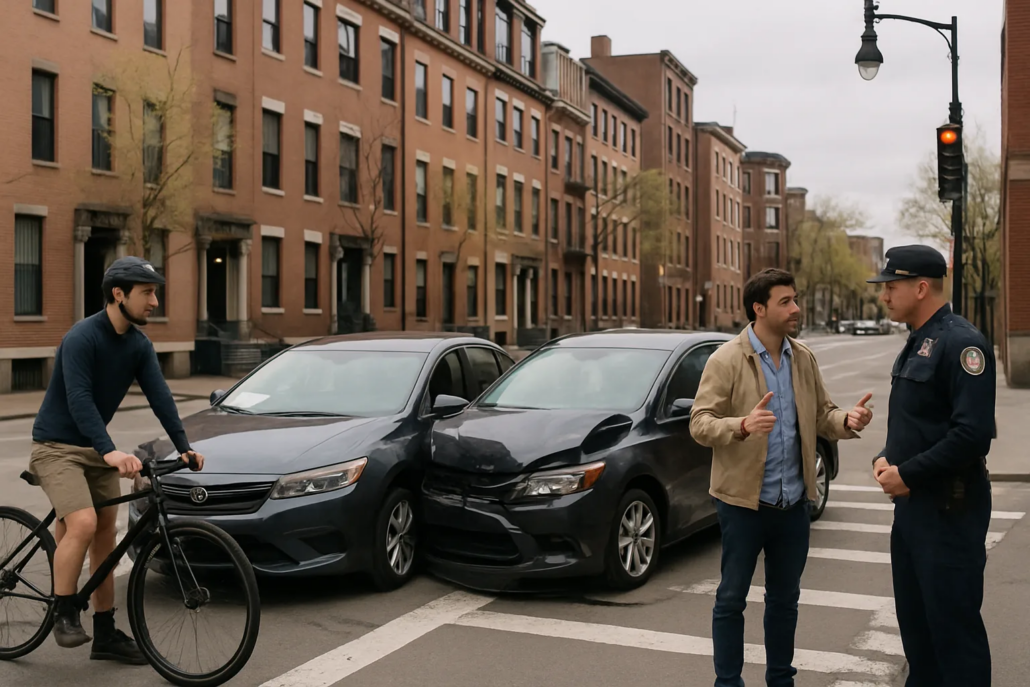
In Boston, Massachusetts, evidence can be especially important when a collision involves a busy intersection, a bike lane, a curbside pickup, or several vehicles. Police crash information, photographs, witness details, rideshare records, and medical documentation may help establish what happened. Massachusetts procedures and insurance rules can change, so an attorney reviewing a claim should confirm the law applicable to the accident’s location and circumstances.
What Evidence Should You Preserve After a Boston Rideshare Crash?
People often assume the rideshare company or police will preserve everything. That assumption can create problems. Depending on your role in the collision, useful evidence may include:
- Trip receipts, ride confirmations, pickup and drop-off information, and the driver’s profile details.
- Screenshots of the app showing the trip, route, status, vehicle, or communications. Preserve them in their original form when possible.
- Photographs of vehicle positions, damage, traffic signals, road conditions, bicycle equipment, visible injuries, and the surrounding intersection, if safely available.
- Names and contact information for witnesses, drivers, passengers, responding officers, and other people who may have observed the event.
- Medical records, bills, discharge paperwork, work-related records, and notes showing appointments or restrictions.
- Insurance information exchanged at the scene and correspondence received from insurers or claims representatives.
Common mistakes that can complicate a claim
Avoiding evidence problems does not guarantee a claim will succeed, but careful documentation may make the facts easier to evaluate. Common issues include deleting app messages, accepting an early insurance payment without understanding what it resolves, giving a recorded statement without legal guidance, or posting detailed conclusions about fault online. Medical decisions should be made with qualified healthcare professionals; legal and insurance questions may warrant separate advice from a licensed attorney.
If you were a passenger, pedestrian, cyclist, or occupant of another vehicle, write down your recollection while it is reasonably fresh. Do not alter photographs or create records that suggest facts you cannot verify. A Boston Uber accident lawyer can review what information exists and explain how it may fit into a potential claim.
Frequently Asked Questions
Can a passenger file a claim if the other driver caused the crash?
Potentially. A rideshare passenger may have a claim involving the driver who caused the collision, even when the rideshare driver did not cause it. Depending on the facts, available insurance may include the at-fault motorist’s coverage and other applicable policies. Responsibility and coverage can be disputed, particularly when multiple vehicles are involved. A Massachusetts attorney can evaluate the evidence, insurance information, and nature of the passenger’s injuries.
Does a rideshare driver’s personal insurance always pay for a crash?
No. Personal coverage may be affected by policy terms, exclusions, the driver’s app status, and whether a rideshare-related policy applies. The driver may have been offline, waiting for a request, traveling to a passenger, or transporting a passenger when the crash occurred. Those distinctions can change the insurance analysis. The applicable Massachusetts rules and policy language should be reviewed rather than assumed.
What if I was hit by a rideshare vehicle while cycling?
A cyclist may need to preserve evidence about the roadway, bicycle, lighting, traffic controls, vehicle movement, and communications with the driver or insurers. Photographs, witness information, medical records, and any available trip or app details may be relevant. The rideshare driver’s status may affect insurance, but another contributing motorist or road condition could also be part of the analysis.
Can I pursue compensation for damage as well as injuries?
Property damage and bodily injury issues may arise from the same collision, but they can involve different evidence, valuation questions, and insurance handling. A damaged vehicle, bicycle, phone, or other item should be documented carefully. Do not assume that resolving a property-damage payment resolves every injury-related issue. A lawyer can explain how the claims may interact under the facts and applicable Massachusetts law.
How Neumann Can Help
Neumann is dedicated to helping people understand their options after motor vehicle collisions involving Uber, Lyft, and other vehicles. The firm can review the available evidence, including trip records, app information, photographs, witness details, medical documentation, and insurance communications. It can also assess how the driver’s app status and the conduct of other parties may affect a potential rideshare injury claim in Boston.
Every collision has its own facts, and no attorney can promise a particular result. Neumann is committed to fighting for clients’ rights and is ready to evaluate your situation. Contact the firm for a free consultation or case evaluation.
The information in this article is for educational purposes only and does not constitute legal advice. Contact a qualified attorney licensed in Boston; Massachusetts for advice specific to your situation.

