
Which Records Matter in a Massachusetts Rental-Car Crash?
A collision is complicated enough when the other driver owns the vehicle. But what happens when the car belongs to a rental company, a family member, a friend, or an employer? For someone pursuing a Massachusetts rental car accident claim, the identity of the vehicle owner may affect which insurance policies and records are relevant.
After a crash in Boston or elsewhere in Massachusetts, an injured person may know the driver’s name but not who rented the vehicle, who insured it, or who owns it. Those details can become important when insurers investigate responsibility and available coverage. They may also be difficult to reconstruct later if a rental agreement expires or a vehicle is returned.
Neumann helps Massachusetts injury victims understand the factual and insurance questions that can arise in these cases. This article explains what to record after the collision, how the driver and vehicle owner may have different roles, and which claim-handling mistakes can create avoidable complications. The information is general and does not determine liability in any particular case.
What should you record for a Massachusetts rental car accident claim?
The first challenge is identifying every person and entity connected to the vehicle. A rental or borrowed car can involve a driver, a registered owner, a rental company, a vehicle owner, and one or more insurance policyholders. These roles sometimes overlap, but they are not always held by the same person.
Capture the driver and vehicle information
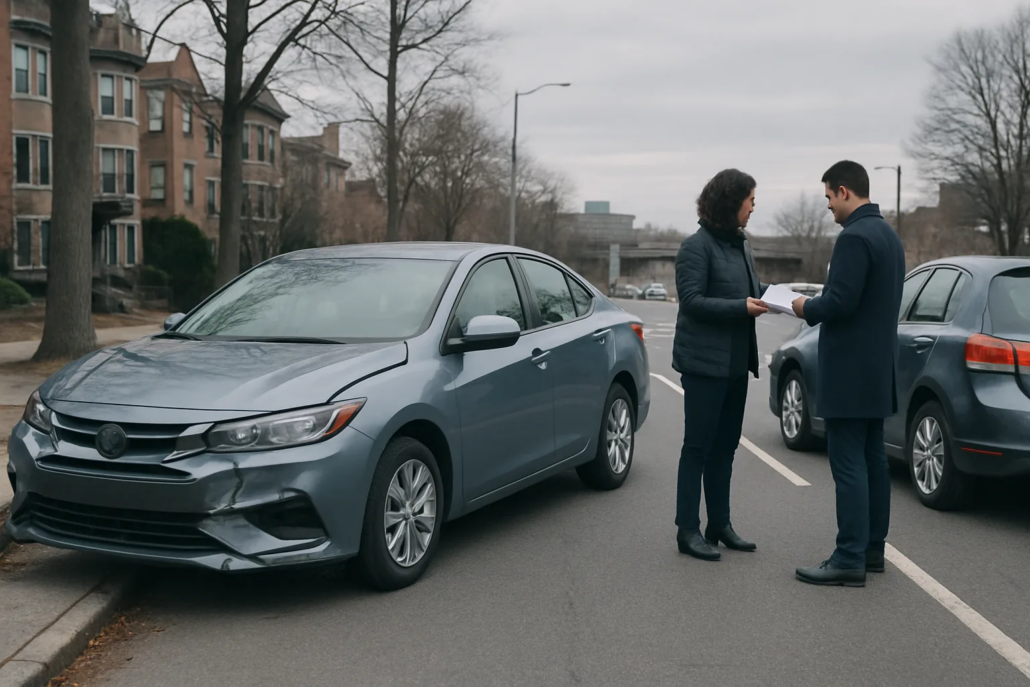
If it is safe and practical, an injured person or another person at the scene may record:
- The driver’s full name, address, telephone number, and driver’s license information
- The vehicle’s make, model, color, license plate number, and state of registration
- The name of the person who rented or owned the vehicle, if different from the driver
- The names and contact information of witnesses
- Photographs of the vehicles, roadway, traffic controls, visible damage, and surrounding conditions
- The responding agency’s information and any incident or report number that is provided
Massachusetts crash reporting and insurance procedures can involve information held by the Massachusetts Registry of Motor Vehicles, law enforcement, and insurers. An injured person may not receive every relevant record at the scene, so preserving basic identifying details can help connect later requests to the correct vehicle and driver.
Preserve rental agreement and insurance details
For a rental vehicle, the rental agreement may identify the authorized renter, additional drivers, dates of use, and selected protection or insurance arrangements. The agreement may also show whether another person was permitted to drive. It is generally useful to preserve the agreement, related emails, payment records, and any written communication from the rental company.
For a borrowed vehicle, ask how the vehicle was owned and insured, without assuming that the driver’s personal policy is the only relevant coverage. The registered owner’s policy, the driver’s policy, and other applicable policies may each raise different questions. Do not alter, discard, or annotate original records if copies can be preserved instead.
How do ownership and insurance differ after a borrowed or rental car crash?
A key issue in a borrowed car accident in Massachusetts is separating fault from coverage. The driver may be the person whose conduct is examined in determining how the collision occurred. The registered owner may be a different person or business. A rental company may own the vehicle but have a separate contract with the renter and separate insurance arrangements.
Massachusetts is a no-fault insurance state for certain first-party benefits, including personal injury protection, but fault can still matter for claims involving damages beyond available first-party benefits and for other legal issues. Insurance questions depend on the facts, the policies, the parties involved, and the nature of the injuries. Laws and procedures may vary by location and may change after publication.
Questions that may need to be answered
Depending on the circumstances, an investigation may examine:
- Who was driving, and did that person have permission to use the vehicle?
- Who signed the rental agreement or owned the borrowed car?
- Was the driver listed or authorized under the rental agreement or applicable policy?
- Which insurer provided coverage for the vehicle, driver, or injured person?
- Did the vehicle belong to an employer or involve work-related use?
- Were there other potentially relevant policies, such as household or excess coverage?
These questions do not automatically establish that a rental company, vehicle owner, or insurer is legally responsible. For example, vehicle ownership alone may not answer every liability question, and a rental company’s role is not necessarily the same as the role of a private owner who lends a car. The facts and governing insurance contracts must be evaluated together.
In a Boston rental vehicle crash injury case, an injured person may also need to distinguish the rental company’s claim for vehicle damage from the injured person’s bodily injury claim. Those are separate issues, even though they arise from the same collision. Communications about damage to the rental vehicle should not be assumed to resolve questions about injury coverage or fault.
What mistakes can complicate a rental or borrowed car injury claim?
People often focus on the collision itself and overlook the information needed to identify the correct parties. A driver may provide a personal insurance card even though the vehicle is rented or owned by someone else. Conversely, a rental company may send correspondence about the vehicle without explaining the insurance information relevant to an injured person.
A practical recordkeeping approach may include:
- Keeping photographs and videos in their original form when possible
- Writing down what happened while the memory is still fresh, using facts rather than guesses
- Saving medical bills, appointment records, work-related absence records, and correspondence from insurers
- Recording every insurer, claim number, adjuster, and date of communication
- Avoiding assumptions about who is insured or liable until the relevant documents are reviewed
- Preserving the rental agreement, vehicle ownership information, and any permission-related messages
Medical records can help document an injury, but they do not by themselves answer who may be legally responsible. An injured person should also avoid making a recorded statement or signing a release without understanding what it covers. Depending on the circumstances, an attorney may review the proposed communication and explain potential implications under Massachusetts law.
The claims process may involve requests for information from several parties. In Massachusetts, an insurer may investigate the crash, coverage, causation, and the nature of claimed damages. A lawyer evaluating the matter may organize the evidence, identify the relevant parties, and assess whether additional records—such as photographs, witness accounts, vehicle documents, or reports—could clarify disputed facts.
Frequently Asked Questions
Does the rental company automatically pay for injuries after a Massachusetts crash?
No. The rental company’s ownership of a vehicle does not automatically determine responsibility for an injured person’s losses. The driver’s conduct, the rental agreement, applicable insurance policies, and other facts may all matter. A rental company may have a role in the insurance or vehicle records without being legally responsible for every collision involving its vehicle. A Massachusetts attorney can evaluate the specific parties and coverage issues.
What if the borrowed car’s owner will not provide insurance information?
An injured person may still have ways to identify relevant coverage through crash records, insurer communications, vehicle registration information, or formal claims procedures. The owner’s refusal or inability to provide information does not by itself establish liability or eliminate a potential claim. Because privacy, discovery, and insurance rules can apply, the available method for obtaining records depends on the circumstances and should be assessed with Massachusetts-specific legal guidance.
Can I pursue a claim if I do not know who rented the vehicle?
Possibly, but identifying the renter and authorized driver can be important to evaluating coverage and responsibility. The license plate, vehicle description, photographs, police or agency records, witnesses, and communications from the rental company may help connect the vehicle to the relevant parties. In a Boston crash, an attorney may help organize the available information and determine what additional records could be requested.
What records matter if the borrowed vehicle was used for work?
Records may include the employer’s name, the driver’s job role, the purpose of the trip, permission to use the vehicle, company vehicle policies, and applicable insurance information. Work-related use can raise questions that differ from an ordinary personal errand, but it does not automatically make an employer responsible. The facts, agency relationships, and insurance contracts generally require careful review under Massachusetts law.
How Neumann Can Help
Neumann is dedicated to helping injured people understand the overlapping insurance, ownership, and liability questions that may follow a rental or borrowed vehicle collision. The firm is committed to fighting for clients’ rights while carefully reviewing available records, including crash information, rental agreements, insurance communications, vehicle ownership details, and injury documentation.
Every collision has its own facts, and no attorney can promise a particular result. Neumann is ready to evaluate your situation and explain potential legal options under Massachusetts law. Contact the firm for a free consultation or case evaluation regarding your Massachusetts rental car accident claim.
The information in this article is for educational purposes only and does not constitute legal advice. Contact a qualified attorney licensed in Massachusetts; Boston for advice specific to your situation.

Leave a Reply
Want to join the discussion?Feel free to contribute!