
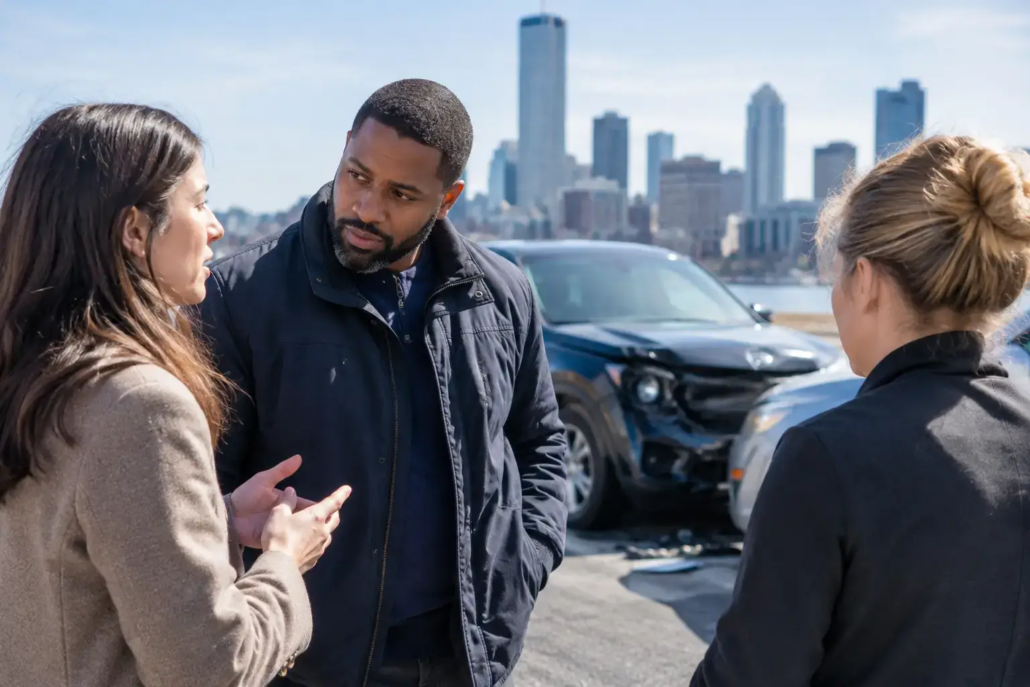
How to Find Crash Witnesses After a Boston Accident
A driver may deny running a red light. An insurer may argue that a pedestrian stepped out too quickly. When the people involved give different accounts, an independent witness can change the course of a claim. Knowing how to find crash witnesses quickly can protect evidence that may otherwise disappear within hours of a Massachusetts collision.
Witnesses do not have to see every second of the crash to be helpful. Someone may have seen a vehicle speeding, drifting between lanes, using a phone, ignoring a construction-zone sign, or leaving the scene. A person who heard the impact or saw what happened immediately afterward may also help establish important facts.
Start at the Scene if You Can Do So Safely
Your health comes first. Call 911, accept medical care when needed, and move out of traffic if it is safe to do so. Do not delay emergency treatment to investigate the crash.
If you are physically able, look around before vehicles are moved and bystanders leave. In Boston and other busy Massachusetts communities, potential witnesses may be pedestrians, people waiting at a bus stop, delivery drivers, cyclists, nearby store employees, construction workers, or drivers stopped at the intersection.
Ask a witness for their full name, phone number, email address, and home or business address if they are comfortable sharing it. A simple request works best: “Would you be willing to tell the police or my insurance company what you saw?” If they agree, write down their information or ask someone you trust to do it for you.
Take note of where the witness was standing or driving and what they say they observed. Do not coach them or argue about fault. A credible witness is someone who can give their own honest account, including the limits of what they saw.
If you cannot gather information because of injuries, ask a passenger, family member, or responding officer whether they can help identify witnesses. The police report may include witness names, but it is not safe to assume every person who saw the collision was interviewed or listed.
Ask Police How Witness Information Will Be Recorded
A responding officer may speak with witnesses and include their statements in a Massachusetts crash report. Tell the officer if a particular person saw the impact, is waiting nearby, or says they have dashcam footage. That gives law enforcement an opportunity to identify and speak with that person before they leave.
Still, a crash report is only one piece of evidence. Officers often arrive after the vehicles have been moved, and they may have limited time to interview everyone in a crowded area. Reports can contain errors, abbreviated statements, or no contact information for people who were present.
Before leaving the scene, if your condition permits, ask for the report number and the police department handling the investigation. This makes it easier to obtain the report later and determine which witnesses were documented.
Look Beyond the People Who Stopped
The most obvious witnesses are often the drivers and pedestrians who stayed at the scene. But valuable evidence may come from people who did not realize they had seen something important.
Consider the immediate area. A coffee shop employee may have watched the intersection through a front window. A homeowner may have a doorbell camera pointed toward the street. A ride-share driver may have a dashboard camera recording the roadway. A bus, delivery van, or commercial truck may have onboard video or electronic data.
In a highway crash on the Massachusetts Turnpike, Route 1, I-93, or I-495, other motorists may have continued driving after seeing the collision. It can be difficult to identify them later, but their vehicles may appear on traffic cameras or private video footage. In a city crash, nearby businesses and residences may be more likely to have useful cameras.
Do not treat video as a substitute for eyewitnesses. A camera angle may miss a traffic signal, obstruction, lane marking, or the seconds leading up to impact. Used together, video and witness testimony can provide a much clearer account.
Preserve Witness Accounts Before Memories Change
Even a truthful witness can forget details quickly. Weather, traffic, vehicle positions, speed estimates, signal colors, and the sequence of events become harder to recall after days or weeks have passed.
When you obtain a witness’s contact information, follow up promptly and respectfully. Ask whether they would be willing to provide a short written statement in their own words. Record the date, time, and location where they observed the crash. If they took photographs or video, ask them not to edit, post, overwrite, or delete the original files.
Be careful about social media. A witness may post a video or comment about the collision, then remove it. Screenshots can preserve what was publicly available, but they may not capture all relevant context or establish authenticity. Saving the original media and identifying who recorded it are usually more useful.
A lawyer can also contact witnesses, obtain formal statements, and take steps to preserve testimony when a serious injury claim is likely. That can matter when a witness is reluctant to get involved, lives out of state, or may become unavailable.
What if You Did Not Get Names at the Scene?
Many injured people leave by ambulance or are too shaken to think about witnesses. That does not mean the opportunity is gone. Act as soon as you can.
Return to the area only if it is safe and you are medically able. Look for nearby businesses, apartment buildings, parking garages, and homes that may have cameras. Ask whether they have footage from the date and time of the collision. Some systems automatically record over video within a few days, so a quick request can be critical.
You can also identify possible witnesses through the police report, 911 call records, dispatch logs, photographs, and video. In a commercial-vehicle or rideshare crash, company records may help establish who was nearby or what vehicles were involved. These records are not always voluntarily provided, particularly when fault is disputed, which is one reason early legal help can be valuable.
Do not post a broad accusation online asking strangers to “prove” the other driver was at fault. A narrowly focused request for anyone who witnessed a collision at a specific location and time may be appropriate, but public discussions can also invite inaccurate accounts, unwanted attention, or statements an insurer may use against you. The facts and timing of each case matter.
Know What Makes a Witness Useful
An independent witness is often persuasive because they have no personal financial interest in the outcome. But independence is not the only measure of value. A passenger, friend, or family member may still give important testimony if they directly observed what happened.
The strongest accounts usually identify concrete observations: which direction each vehicle traveled, whether a turn signal was used, the color of a traffic light, whether a driver crossed a center line, or what occurred after the impact. Statements such as “the other driver was clearly reckless” are less useful than specific facts supporting that conclusion.
Witness evidence can also support damages, not just fault. Coworkers, relatives, and friends may be able to describe changes in an injured person’s mobility, work capacity, sleep, daily routine, or need for assistance. Their observations should be truthful and based on what they personally know.
Protect Your Claim While You Focus on Recovery
Insurance adjusters may contact witnesses early, especially when liability is uncertain. They may seek recorded statements before you understand the full extent of your injuries or before all evidence has been gathered. You do not have to accept an insurer’s version of events simply because it appears first.
Keep copies of the crash report, witness details, photographs, medical records, repair estimates, and every communication about the collision. Write down your own recollection while it is fresh, including road conditions, traffic signals, weather, and anything the other driver said. Do not guess about details you do not remember.
For a serious Boston-area crash, Massachusetts Injury Lawyers can help investigate the collision, preserve evidence, and communicate with insurers while you focus on treatment. Prompt action can make the difference between a case built on assumptions and one supported by the people and evidence that were actually there.
If you believe someone saw your crash, do not wait for the insurance company to find them. A respectful call, a timely request to preserve video, or an early investigation may keep a crucial account from being lost.

Leave a Reply
Want to join the discussion?Feel free to contribute!