What Proves Fault in Boston Intersection Crashes
A collision at a Boston intersection can be over in seconds, but the argument over fault can last months. Boston intersection crashes often involve drivers who each say they had the green light, a pedestrian who had little time to react, a cyclist blocked from view, or a turning vehicle that failed to yield. The physical pain is immediate. So are the insurance calls, medical bills, missed work, and questions about who will be held responsible.
Intersections are not ordinary stretches of road. They combine traffic signals, crosswalks, turn lanes, buses, delivery vehicles, parked cars, construction activity, and people moving in several directions at once. When someone is injured, the details that may seem small at the scene can become central evidence in a Massachusetts injury claim.
Why Boston intersection crashes are often disputed
Many serious intersection collisions begin with a familiar explanation: the other driver “came out of nowhere.” That statement rarely tells the whole story. A driver may have been speeding through a yellow light, turning left across oncoming traffic, looking at a navigation app, or creeping through a crosswalk without checking for pedestrians. A driver with a green signal may still have a duty to yield before making a turn or entering an occupied crosswalk.
Boston’s street layout can make these cases harder. Some intersections are wide and confusing. Others have unusual signal timing, multiple crosswalks, limited sight lines, dedicated bike infrastructure, or temporary lane changes caused by roadwork. Heavy commuter traffic and rideshare pickups can add another layer of distraction and congestion.
Insurance companies understand that intersections create uncertainty. They may use that uncertainty to argue that an injured person shares blame, especially when there is no independent witness or video. That is why evidence should be treated as urgent, not as something that can wait until medical treatment is complete.
What evidence can establish fault after a crash?
Fault is not decided solely by where the vehicles ended up after impact. A thorough review may involve the traffic signal phase, vehicle damage, roadway markings, eyewitness accounts, electronic data, and video from nearby sources. Each piece can either support or challenge a driver’s version of events.
Traffic signals and right-of-way rules
The signal color matters, but so does what each person was doing when they entered the intersection. A driver making a left turn generally must yield to oncoming traffic unless the circumstances clearly give that driver the right of way. A driver turning right must also watch for pedestrians in the crosswalk and cyclists traveling lawfully beside traffic.
A red light violation can be powerful evidence, but it is not the only basis for liability. A driver may be negligent for failing to keep a proper lookout, following too closely, speeding for conditions, failing to yield, or making an unsafe turn. In some cases, both drivers made mistakes. The legal question becomes whether each person’s conduct contributed to the collision and resulting injuries.
Video disappears quickly
Surveillance footage can be among the most useful forms of evidence in an intersection case. Nearby businesses, apartment buildings, parking facilities, buses, and privately owned cameras may have recorded the collision or the seconds leading up to it. Yet many systems automatically overwrite footage in days or weeks.
A prompt preservation request can matter. It identifies the date, time, location, and type of footage that should be retained before it is lost. Footage may show the signal sequence, vehicle speed, lane position, whether a pedestrian was in the crosswalk, or whether a driver was looking away before impact.
Witnesses and first responders
Witnesses are valuable because they may have seen events from an angle neither driver could see. Their memories can fade quickly, and their contact information may not make it into a police report. If a witness is willing, obtain a name and phone number at the scene. Do not rely on the assumption that law enforcement will interview every bystander.
The police report can also provide useful leads, including the responding officer’s observations, listed witnesses, vehicle positions, and any citation issued. Still, a report is not always the final word on fault. It can contain errors, incomplete information, or conclusions made before all evidence is available.
Vehicle, phone, and digital evidence
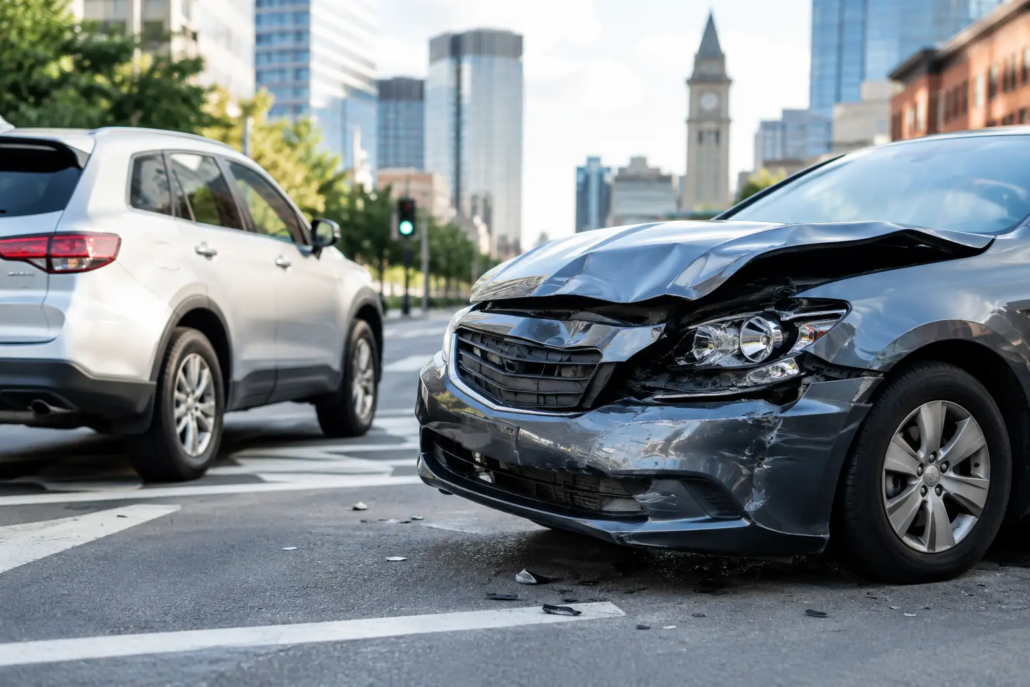
Damage patterns may help reconstruct how a collision occurred. The location and depth of impact can sometimes support or contradict claims about speed, direction, and whether a vehicle was already established in an intersection. Photos of the vehicles, debris, skid marks, roadway conditions, and traffic signs should be preserved as soon as possible.
Modern vehicles may retain event data, and a driver’s phone activity can become relevant when distraction is suspected. Rideshare cases may also involve trip records, driver-app activity, and company insurance coverage questions. This information can be difficult to obtain without taking formal steps to preserve it.
What should an injured person do after an intersection collision?
First, seek medical attention. Adrenaline can hide symptoms after a crash, and injuries involving the head, neck, back, or internal organs may not be obvious at the scene. Medical records also create a timely record connecting the injury to the collision.
If it is safe to do so, photograph the intersection from several angles, including signal heads, lane arrows, crosswalk lines, construction barriers, and anything affecting visibility. Keep copies of your insurance information, the police report number, medical discharge papers, prescriptions, repair estimates, and receipts for crash-related expenses.
Be careful in conversations with insurers. You should report a crash to the appropriate insurer, but a recorded statement or quick settlement offer may arrive before the extent of an injury is known. It is reasonable to ask what claim is being opened, which coverage applies, and what information is being requested. It is also reasonable to avoid speculation about fault or the full impact of an injury while facts are still being investigated.
How Massachusetts shared-fault rules can affect recovery
Massachusetts follows a modified comparative negligence rule. An injured person may seek compensation when another party was negligent, but the available recovery can be reduced by that person’s percentage of fault. If an injured person is found to be more than 50 percent responsible, recovery may be barred.
That rule is one reason insurers often focus on details such as speed, distraction, lane position, and whether someone entered an intersection on a yellow signal. It does not mean an injured driver, pedestrian, or cyclist has no claim simply because the insurer says they were partly responsible. Liability must be evaluated from the evidence, not from an adjuster’s first assessment.
Massachusetts auto claims can also involve Personal Injury Protection benefits, health insurance liens, uninsured or underinsured motorist coverage, and multiple potentially responsible parties. For example, a crash caused by a delivery driver or rideshare driver may raise questions about the driver’s personal policy, commercial coverage, employer responsibility, and the status of the driver at the time of the collision.
When the intersection itself may matter
Sometimes the conduct of individual drivers is not the only issue. A dangerous construction setup, obscured sign, malfunctioning signal, poorly maintained roadway, or defective vehicle component may contribute to a crash. Claims involving public entities, contractors, property owners, or manufacturers can have different notice requirements and deadlines than an ordinary driver-negligence case.
These cases require careful investigation because responsibility may be divided among several parties. A driver who made an unsafe turn may still be liable even if a blocked sight line or confusing temporary traffic control also played a role. The goal is not to choose the easiest explanation. It is to identify every party whose negligence may have caused harm.
Getting help before critical evidence is gone
After a serious intersection collision, the practical priority is protecting your health and preserving the facts. A lawyer can help request video, identify coverage, communicate with insurers, and assess whether other parties may be responsible while you focus on treatment and recovery.
Massachusetts Injury Lawyers, through Neumann Law Group, offers free consultations and is available 24/7 for people injured in Boston and across Massachusetts. If travel is difficult after a crash, the firm can travel to clients.
You do not have to accept a rushed account of what happened at an intersection. Prompt medical care, careful documentation, and early attention to evidence can give you a clearer path forward when the other side is already trying to narrow the story.

