
Which Claims Follow a Boston Construction Electrocution?
An electrical incident on a Boston construction site can leave a worker and family trying to answer an immediate question: did the danger come from an overhead utility line, temporary wiring, a damaged cord, or energized equipment? The answer matters because it can guide the investigation and identify which people or companies had a role in creating, maintaining, or controlling the hazard. A Boston construction worker electrocution may raise questions about workers’ compensation as well as whether a separate claim involving another responsible party could be relevant. Neumann helps readers understand the legal issues that may arise after construction accidents. This article explains how the source of an electrical injury can shape evidence gathering, what workers’ compensation generally covers in Massachusetts, and when a claim beyond that system may warrant evaluation. The facts of each incident matter, and the legal options can depend on who controlled the hazard and how the injury occurred.
How investigators trace a Boston construction worker electrocution
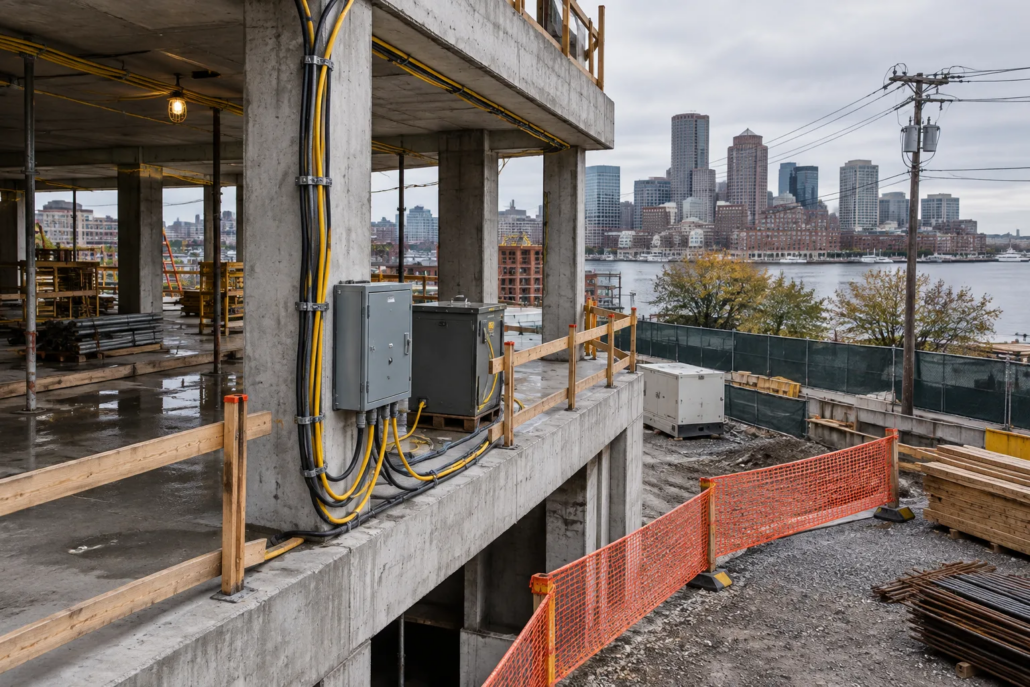
The physical source of the electrical current is an important starting point. Contact with an overhead power line may raise questions about the work zone’s location, clearance, warnings, and coordination with the utility. By contrast, a temporary wiring construction accident may involve a damaged cord, an improvised connection, a faulty temporary power setup, or equipment that remained energized during work.
Investigators may examine the site layout, work plans, photographs, equipment, maintenance records, and accounts from people who were present. They may also look at who installed or inspected temporary power, who controlled access to the area, and whether equipment or wiring was altered after the incident. The goal is to identify the actual hazard rather than assume that every electrical injury has the same cause.
Boston construction projects can involve multiple trades and companies working in close quarters. Looking at common hazards at Massachusetts construction sites can help put an electrical incident in the broader context of jobsite risks, while keeping the inquiry focused on the specific source of current. Evidence should be interpreted in light of the work underway and the responsibilities assigned to each party.
Why the type of electrical source matters
An overhead line and a damaged extension cord point toward different questions and potentially different records. Temporary power plans, equipment inspection notes, utility coordination, and site communications may each help clarify what happened. The available evidence—not the label attached to the event—should guide further review.
Workers’ compensation and a possible separate claim in Massachusetts
In Massachusetts, an injured employee may have access to workers’ compensation benefits for a work-related injury, subject to the requirements of the system. Benefits may address medical care and a portion of lost wages, depending on eligibility and the circumstances. The Massachusetts Department of Industrial Accidents administers the state’s workers’ compensation system. A claim through that system is distinct from a civil claim against another party.
A separate claim may be worth examining if a company or person other than the worker’s employer may have contributed to the hazard. Depending on the facts, that could include a contractor responsible for temporary wiring, a company that supplied or maintained equipment, or another party with relevant control. A utility provider’s role might also be investigated when an overhead line is involved; its involvement alone does not establish responsibility.
A third-party claim and workers’ compensation have different legal requirements and potential remedies. Any recovery from another party may also affect workers’ compensation interests, so the relationship between the claims can require careful review. General information about pursuing damages after a Massachusetts construction-site accident can help explain that distinction, but it cannot determine whether a particular claim is available.
For Boston workers, the right process may depend on the injury, the employer relationship, and the identities and roles of other companies. Deadlines and legal rules can vary and may change, making case-specific advice important.
Who controlled the electrical hazard, and what evidence may help?
Responsibility may not rest with the person or company closest to the injured worker. An employer, general contractor, subcontractor, equipment provider, or utility may have had a different role in the work. Investigators may ask who selected the equipment, installed or moved the wiring, inspected it, controlled the work area, or coordinated around a live line. Those questions are factual; a company’s presence at a site does not by itself prove fault.
The roles of contractors can be complex on a Boston jobsite. A discussion of how contractor roles may matter in a Boston construction injury offers a related example of why investigators may examine who performed and controlled particular work. The details of an electrical incident are different, so contractor involvement in another type of accident does not decide an electrical claim.
Records and physical evidence may help establish what happened. Depending on the incident, useful materials may include:
- Photographs or video showing the work area, power source, and equipment before conditions change.
- Work orders, temporary power plans, inspection or maintenance records, and safety communications.
- Names of witnesses and a timeline of the work being performed.
- Information identifying which company supplied, installed, moved, or maintained the relevant wiring or equipment.
Workers and families may face pressure to make sense of events quickly, but assumptions can obscure the cause. In general, preserving available information and getting appropriate legal guidance can help clarify which benefits or claims may apply. A qualified attorney can assess the circumstances without treating an early account as a final finding.
Frequently Asked Questions
Is an electrical shock at a construction site always called electrocution?
In everyday speech, people sometimes use “electrocuted” to describe any serious electrical shock. The term is also commonly used to mean death caused by electricity. For a worker who survives, “electrical shock” or “electrical injury” may be more precise, but the key legal questions remain the source of current, the injury, and the parties’ roles. This article uses the assigned topic wording broadly.
Can a worker receive workers’ compensation if no one has been found at fault?
Workers’ compensation generally does not depend on proving that another party was negligent, although eligibility and benefits depend on the facts and Massachusetts requirements. A separate claim against another party is a different question and may involve its own proof and defenses. An injury report or initial investigation may not establish the full cause, so the available options should be evaluated in context.
What if the injured worker cannot explain exactly what touched them?
An injured worker may not have seen the source of the current, particularly if the event happened quickly or the worker was focused on a task. Site conditions, equipment, photographs, witness accounts, and records may help investigators reconstruct the event. No single source of information necessarily answers every question. The analysis should account for what is known, what remains uncertain, and whether the scene or equipment changed.
Could a worker’s family have legal options after a fatal electrical incident?
A fatal work-related electrical incident may raise workers’ compensation questions for eligible dependents and may prompt review of whether another party could have legal responsibility. The available rights and procedures depend on Massachusetts law and the specific relationships and facts. Families may also need information about who controlled the work or electrical source. A qualified attorney can explain options without assuming that a separate claim exists.
How Neumann Can Help
Neumann is committed to helping injured workers and families understand the questions that follow a construction-site electrical injury. A review may consider the power source, the work being performed, available records, and the roles of an employer, contractors, equipment providers, or a utility. Workers’ compensation and any potential third-party claim can involve separate issues, and the right analysis depends on the facts. If an electrical injury happened on a Boston jobsite, contact Neumann to request a free consultation or case evaluation and discuss what options may be available.
The information in this article is for educational purposes only and does not constitute legal advice. Contact a qualified attorney authorized to practice in the jurisdiction that applies to your matter for advice specific to your situation.

Leave a Reply
Want to join the discussion?Feel free to contribute!