
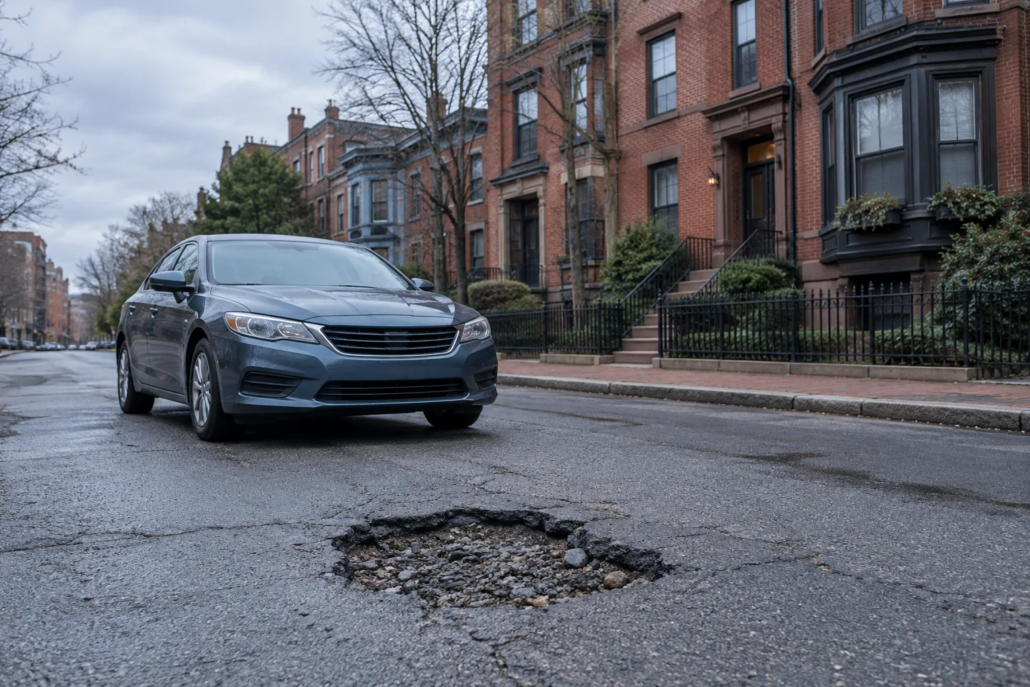
Who May Answer for a Boston Pothole Accident Claim?
A driver traveling through Boston may hit a deep pothole, lose control, or swerve into another vehicle. A Boston pothole accident claim can raise questions about who maintained the road, whether the defect contributed to the collision, and whether a driver’s choices also played a role. Identifying a responsible party is not always obvious from the crash scene alone.
Neumann helps readers understand the issues that may shape a motor vehicle injury claim. This article explains how responsibility may be shared, what to document after a crash, and why investigating road ownership, maintenance, and timing can matter. Careful records of the roadway, vehicles, and injuries may help clarify what happened, but they do not establish liability by themselves.
Who may be responsible in a Boston pothole accident claim?
A pothole crash may involve a roadway defect, but that does not automatically make a city or other road authority legally responsible. An investigation generally looks at the road’s condition, who had responsibility for maintaining the location, what they knew or reasonably could have known, and whether the defect contributed to the collision and resulting injuries.
In Boston, the responsible entity may depend on the specific road and location. A street within city limits might be maintained by the City of Boston, the Massachusetts Department of Transportation (MassDOT), or another public or private entity. Roadwork can add another layer: a contractor or other party may have had a role in the condition or temporary control of the area. The name of the road, nearby intersections, and exact crash location can help investigators identify which entities to examine.
Driver conduct may also matter
A driver’s speed, attention, following distance, and ability to respond to a visible hazard may be relevant. Another motorist’s actions could also contribute—for example, if a sudden maneuver to avoid a pothole leads to a collision. More than one factor may have played a part, so an investigation should not assume the road defect was the only cause.
The key questions are factual: where was the defect, how did the vehicles move, and what evidence supports each account? A claim’s outcome depends on its facts and applicable law; a pothole’s presence alone does not answer who is responsible.
What should you document after a pothole crash in Boston?
If it is safe to do so, documenting the scene soon after a crash can help preserve details that may change or disappear. Keep a record of the pothole’s position and appearance, the vehicle paths, and any nearby roadwork or traffic controls. Avoid entering traffic or placing yourself at risk to take photographs.
Useful records may include:
- Wide and close photographs of the pothole, surrounding road, vehicle positions, and visible damage, taken from a safe place.
- The location, direction of travel, approximate time, weather, lighting, and any nearby intersection or landmark.
- Names and contact details for witnesses, along with any available incident or insurance information.
- Notes about cones, barriers, signs, lane shifts, or active work. These details may matter when investigating a Boston crash in an active construction zone, where temporary controls and work activity can raise different questions from an ordinary road defect.
Preserve vehicle and injury evidence
Photograph vehicle damage from several angles and keep estimates, repair invoices, and records of any inspection. If the vehicle may help show the impact or the path of the crash, consider whether an inspection is appropriate before repairs, while balancing safety and practical needs. This overview of preserving a damaged vehicle after a Massachusetts crash explains why repair records and physical evidence can matter.
Some symptoms may not be apparent immediately. Seek an appropriate medical evaluation and describe symptoms accurately; keeping follow-up and treatment records can help create a clear timeline. This guide to documenting delayed pain after a Massachusetts crash offers more information about maintaining those records.
Why can responsibility and deadlines require investigation?
A photograph of a pothole may show its condition at one moment, but it may not establish how long the defect existed, who was responsible for the road, or whether the condition caused the crash. Investigators may need to compare scene photographs with vehicle damage, witness accounts, crash reports, maintenance information, and records of nearby construction. A pothole may also be repaired or altered after a crash, making prompt documentation useful.
If a public agency may have responsibility for road maintenance, identifying the correct entity can raise separate questions about evidence preservation and applicable notice procedures. A claim involving a roadway defect is not the same as a crash involving a government vehicle. This discussion of investigating a Boston crash that may involve a public agency concerns government-related investigation and notice issues; it is not a guide to roadway-defect liability.
Timing can matter while the facts are being gathered. Different parties or claim types may involve different deadlines or procedural requirements, and a general car-crash filing period may not address every potential notice requirement. Readers can review an overview of deadlines for filing a Boston car accident claim, but the applicable rules depend on the circumstances and should be checked promptly.
When roadwork was present, preserve details of the work area and any temporary controls. A roadway condition, a driver’s response, and maintenance responsibilities may all need to be assessed before anyone can reliably identify who may be liable.
Frequently Asked Questions
Is the city responsible for every pothole on a Boston street?
Not necessarily. Responsibility may depend on who owns or maintains the specific road, how the defect developed, and the circumstances surrounding the crash. A street located within Boston may involve a state agency, a public or private entity, or a contractor, depending on the location and work being performed. Identifying the relevant party generally requires checking the precise site and maintenance responsibilities.
Does a pothole have to be the only cause of the collision?
No. A road defect may be one contributing factor among several. Driver conduct, traffic, visibility, vehicle movement, or roadwork may also be relevant. The investigation may examine how each factor contributed rather than treating the pothole as the sole explanation. The facts and applicable Massachusetts law shape any assessment of responsibility.
What if I did not photograph the pothole at the scene?
A lack of scene photographs does not automatically resolve whether a claim can be evaluated. Other possible sources of information may include witnesses, vehicle damage, crash reports, nearby cameras, repair records, and documentation made by others. The condition of a road can change, so the available evidence may depend on when and how it is collected.
Can I make an injury claim if my car was also damaged?
Vehicle damage and bodily injury are distinct issues, though evidence from the same crash may be relevant to both. An injury claim generally depends on the circumstances, available evidence, and applicable law—not simply on the existence of vehicle damage. Keep records related to the collision and any evaluation or care, and consider getting advice specific to your situation.
How Neumann Can Help
A pothole-related crash can involve questions about road maintenance, driver conduct, construction activity, and the evidence needed to connect a road condition to an injury. Neumann is dedicated to helping people understand these issues and is committed to fighting for clients’ rights. The firm can review available information, identify questions that may need further investigation, and discuss legal options based on the circumstances. If you were hurt in a Boston crash involving a road defect, contact Neumann to request a free consultation or case evaluation.
The information in this article is for educational purposes only and does not constitute legal advice. Contact a qualified attorney authorized to practice in the jurisdiction that applies to your matter for advice specific to your situation.


Leave a Reply
Want to join the discussion?Feel free to contribute!