
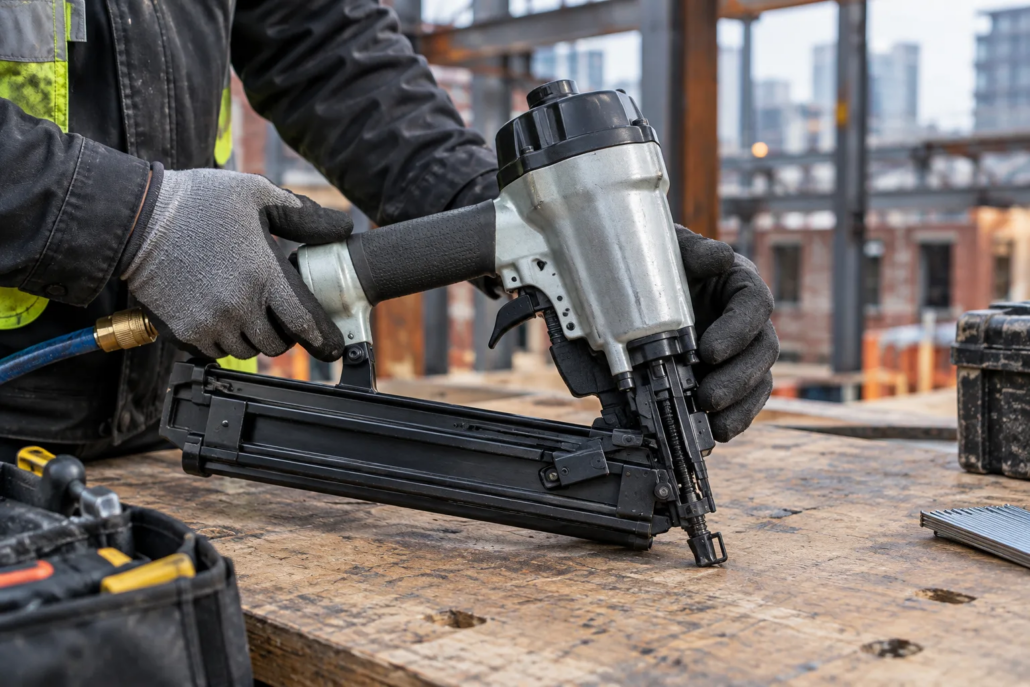
Could a Boston Nail-Gun Injury Involve a Product Defect?
A nail gun can fire with force in a fraction of a second. If one discharges unexpectedly, fires more than once, or seems to activate despite a safety mechanism, an injured worker may wonder whether the tool malfunctioned—or whether something about its condition or use explains what happened. A Boston nail-gun injury involving a possible product defect can raise questions separate from the worker’s immediate workplace benefits. Neumann can help readers understand those questions and the evidence that may matter. This guide covers potential design, manufacturing, and warning issues; the tool’s ownership and history; and how workers’ compensation may relate to a claim against a manufacturer or another outside party. An injury alone does not prove that a product was defective, so careful investigation matters.
When a Boston nail-gun injury raises product-liability questions
A product claim may be worth examining when a nail gun allegedly fires unintentionally, double-fires, or fails to operate as expected because of a problem with the product. Investigators may consider three broad possibilities: a design issue affecting a model or product line, a manufacturing flaw affecting a particular tool, or inadequate instructions or warnings about a relevant risk. These are different questions, and the available evidence may support none, one, or more than one of them.
For example, a trigger or contact-safety mechanism may be examined to determine whether it functioned as intended. A manufacturing inquiry could focus on whether the specific tool differed from its intended design. A warning question might involve whether instructions adequately explained a hazard or operating condition. These are investigation topics, not conclusions about any particular nail gun.
The broader framework is explained in the main types of Massachusetts product-liability claims. In Boston, as elsewhere in Massachusetts, the facts of the incident and the product’s condition help determine whether a potential claim has a factual basis. The worker’s account is important, but it may need to be considered alongside the tool, fasteners, work setup, and other available evidence.
How tool condition, ownership, and jobsite use may change the picture
A malfunction allegation is only one possible explanation for an unexpected discharge. The tool may have been worn, damaged, modified, improperly maintained, or configured in a way that affected its operation. The type and condition of the fasteners, air pressure or power source, the work surface, and the sequence of handling may also be relevant. Investigators should avoid assuming that a product defect caused an injury before examining these alternatives.
Ownership and history can help identify what happened to the nail gun before and after the incident. Useful questions may include:
- Who owned or supplied the tool, and who had access to it?
- Was it new, rented, shared, repaired, or modified?
- Were maintenance or repair records kept, and were parts replaced?
- What fasteners and operating settings were in use?
- Did anyone observe the discharge or handle the tool immediately afterward?
A comparison may help explain why these details matter: a Boston angle-grinder injury involving a missing or displaced guard can involve questions about equipment condition as well as work practices. The tools and facts differ, but the general point is similar: the incident should be assessed in context. At a Boston jobsite, witness accounts, maintenance information, site procedures, and the tool’s physical condition may each add part of the picture.
Workers’ compensation, outside claims, and preserving evidence
Workers’ compensation and a product-liability claim address different issues. Massachusetts workers’ compensation may provide benefits for a work-related injury, subject to the applicable rules. A separate claim may be considered if evidence points to a potentially responsible party outside the employer, such as a product manufacturer or another entity in the distribution chain. Whether an outside claim is available depends on the facts and applicable law; workers’ compensation benefits do not by themselves establish that a product claim exists.
This distinction can be useful when considering how a Boston construction injury may involve workers’ compensation and another party. That article concerns a different type of construction incident, but it illustrates why benefit questions and potential claims involving other parties should not be treated as interchangeable.
Evidence can change or become unavailable as a tool is repaired, returned, discarded, or put back into use. In general, records that may help clarify events include incident reports, photographs, witness names, purchase or rental information, repair records, and the model and serial information on the tool. The nail gun and related components may be important evidence, so handling or changing them can complicate later examination. Depending on the circumstances, an attorney may advise on appropriate preservation steps.
A manufacturer’s investigation or settlement discussions should not be assumed to extend a legal filing deadline. Read why product-liability settlement talks may not pause a Boston claim deadline, and seek case-specific guidance promptly because deadlines and their application depend on the facts and law in effect.
Frequently Asked Questions
Does an accidental nail-gun discharge prove the tool was defective?
No. An unexpected discharge may justify questions about the tool, but it does not by itself establish a defect or show what caused the event. An evaluation may consider the trigger and safety mechanisms, the tool’s maintenance and repair history, fasteners, setup, and how it was operated. The available evidence and applicable Massachusetts law determine whether a product-liability theory is supportable.
Can a worker explore a product claim while receiving workers’ compensation?
Potentially, but the issues are distinct. Workers’ compensation concerns benefits connected to a work injury, while a product claim may involve a manufacturer or another outside party. The facts, responsible parties, and applicable rules matter, and benefits may affect aspects of a separate claim. A Massachusetts attorney can assess how the claims may interact in a particular situation.
Who might be responsible if a nail gun appears to malfunction?
Depending on the evidence, an investigation may consider a manufacturer or another business involved in distributing the product. It may also examine whether maintenance, repair, modification, or jobsite practices contributed to the event. Responsibility cannot be determined from the injury alone. Identifying the tool’s owner, history, and condition may help clarify which parties or explanations warrant further examination.
What if the nail gun was rented or shared at a Boston jobsite?
Rental or shared use can make the tool’s history especially relevant. Records may help identify who supplied it, when it was inspected or repaired, and who used it before the incident. Those facts do not automatically establish liability, but they can guide an investigation. In Boston, as throughout Massachusetts, the specific evidence and applicable legal requirements shape any potential claim.
How Neumann Can Help
Neumann is dedicated to helping injured workers understand the distinct questions that may follow a nail-gun incident: workplace benefits, product condition, ownership and repair history, and whether evidence supports investigating an outside claim. The firm can review the circumstances, identify issues that may require further inquiry, and explain potential options without presuming that a defect occurred. If a nail-gun injury happened at a Boston worksite, contact Neumann to request a free consultation or case evaluation and discuss the facts of your situation.
The information in this article is for educational purposes only and does not constitute legal advice. Contact a qualified attorney authorized to practice in the jurisdiction that applies to your matter for advice specific to your situation.

Leave a Reply
Want to join the discussion?Feel free to contribute!