What Claims Apply After a Boston Work-Zone Worker Is Hit?
A vehicle moving through or around an active work area can strike a worker on foot, even when the worker is following an assigned task. If a Boston construction zone worker is struck by a vehicle, the facts may point to workers’ compensation, a separate claim involving a driver or another party, or both. Those options are related, but they are not interchangeable. Neumann helps readers understand the questions that may shape an investigation, including the worker’s job assignment, the vehicle’s route and ownership, and the work-zone setup. The details can matter because workers’ compensation generally concerns an employment-related injury, while a vehicle claim may depend on whether another party’s conduct contributed to the collision. This article outlines how those claim paths differ, what evidence may be useful, and why a public vehicle or overlapping benefits can add issues to consider. Massachusetts rules and procedures may change, and outcomes depend on the particular facts.
Boston construction-zone worker struck by a vehicle: possible claim paths
When an employee is injured while performing assigned work, workers’ compensation may be one possible path. In Massachusetts, eligibility and the benefits available depend on the employment circumstances and the claim. Workers’ compensation does not generally require proving that a driver was at fault. For more context on who may qualify for Massachusetts workers’ compensation, the specific work relationship and circumstances still matter.
A separate personal injury claim may be considered if evidence suggests that someone other than the employer contributed to the collision. That could involve a driver’s conduct or, depending on the facts, another party’s role in planning or maintaining traffic controls. A claim is not automatic simply because a crash happened inside a work zone; responsibility must be assessed from the evidence. This distinction is important for a construction worker hit by a car in Boston: a comp claim focuses on the work-related injury, while a vehicle-related claim examines possible responsibility for the collision.
The two paths can sometimes exist at the same time. As explained in this discussion of how work-related car crashes may involve workers’ compensation and another driver, a worker struck while on foot presents different facts from an employee driving for work. Benefits and a separate recovery may also raise questions about possible reimbursement claims against a Boston accident recovery. How those issues apply depends on the claim and the worker’s circumstances.
What vehicle and work-zone details may matter in Boston?
Investigators may need to understand both how the vehicle reached the worker and what the worker was doing at that moment. A useful starting point is to identify the vehicle, its operator, its owner, and the route it took through or near the work area. Details about the worker’s assignment can help establish whether the task was part of the job and where the worker was expected to be.
Depending on the circumstances, relevant information may include:
- The vehicle’s type, owner, operator, direction of travel, and any available identifying details.
- The worker’s assignment, work location, shift, and instructions about the task.
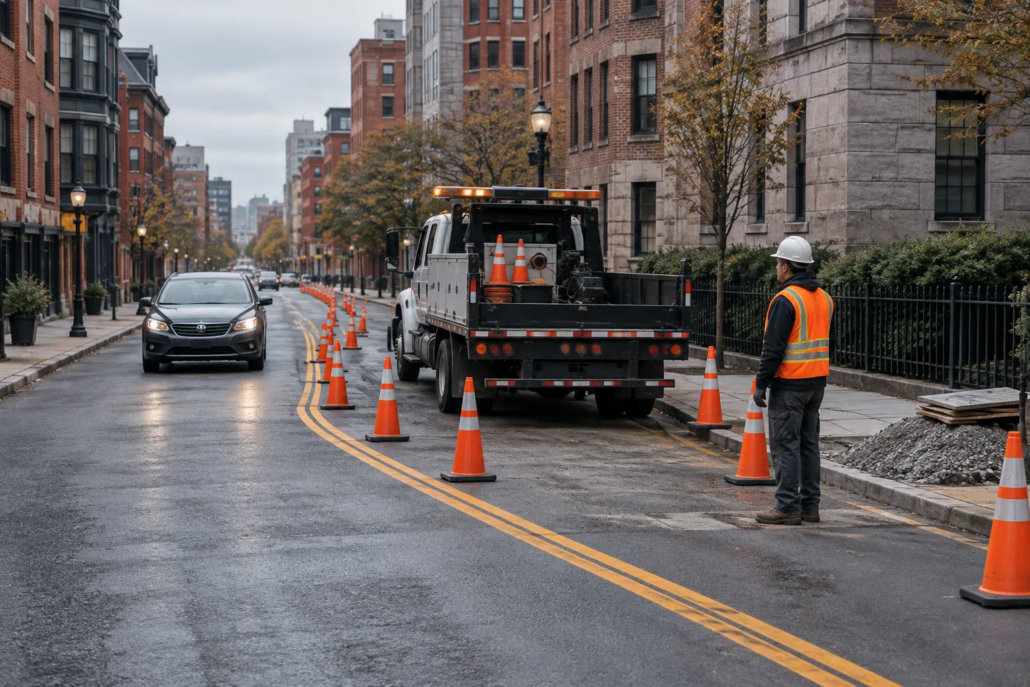
- The positions and condition of barriers, cones, signs, lane closures, flaggers, and temporary traffic controls.
- Witness names and contact details, photographs of the scene, and any available video or incident records.
- Vehicle damage and condition, which may be worth documenting before repairs or changes affect the evidence; see guidance on preserving a damaged vehicle as crash evidence.
In Boston, changing lane patterns and temporary controls may be part of the work-zone layout. Their location and condition can help explain how traffic moved and whether the worker’s position was visible to approaching drivers. This overview of Boston construction-zone crashes involving temporary traffic controls discusses why those conditions can matter. The investigation may also consider potential liability for drivers, contractors, and public agencies in Massachusetts work zones, without assuming any of them is responsible.
Keeping the claim paths distinct as a case develops
Workers’ compensation and a vehicle-related claim have different purposes and may involve different decision-makers, evidence, and procedures. In Massachusetts, the Department of Industrial Accidents oversees aspects of the workers’ compensation system. A separate claim involving a driver or another party may require a different investigation. Filing or pursuing one path does not by itself establish the outcome of the other.
A clear record of the worker’s assignment can help distinguish an injury arising from work from a collision unrelated to the job. Scene photographs, witness accounts, dispatch or work records, and details about the vehicle may help reconstruct events. If a vehicle belonged to a municipality or another public entity, its ownership may raise additional notice and evidence questions. An account of evidence and notice issues in Boston municipal-vehicle collisions may help explain why identifying the owner matters; deadlines and requirements can depend on the specific facts and applicable law.
It can also be useful to keep copies of communications and records related to both claim paths. Avoid assuming that a workers’ compensation decision settles questions about another party’s responsibility, or that a potential vehicle claim replaces employment-related benefits. A Massachusetts attorney can evaluate how the facts, applicable procedures, and any reimbursement issues fit together. Because deadlines and rules can vary by claim and may change, general information is not a substitute for advice about a particular situation.
Frequently Asked Questions
Does the worker’s assignment affect whether an injury is work-related?
It may. The worker’s task, location, schedule, and instructions can help show whether the person was carrying out assigned duties when struck. A jobsite location alone may not answer every question. Employment status and the circumstances of the assignment can affect whether workers’ compensation is available, so the facts should be assessed in context.
What if the vehicle that struck the worker left before it was identified?
The vehicle’s identity may be important, but an unidentified driver does not necessarily end every inquiry. Witness recollections, nearby camera footage, incident reports, and details about the vehicle or its direction of travel may help an investigation. What options exist depends on the available evidence, insurance, and circumstances. An attorney can assess which procedures may apply in Massachusetts.
Could a coworker’s vehicle be involved in a separate claim?
Possibly, but the relationship among the worker, driver, employer, vehicle owner, and insurance coverage can affect the analysis. A coworker’s involvement does not automatically resolve whether a separate claim is available or who may be responsible. Workers’ compensation and any vehicle-related claim should be considered as distinct issues under the facts and applicable Massachusetts law.
What if the workers’ compensation insurer disputes whether the injury arose from work?
A disagreement about whether an injury is work-related may require review of the assignment, the worker’s employment circumstances, and supporting records. Massachusetts has procedures for workers’ compensation disputes through its state system, but the appropriate process depends on the issue and claim status. A qualified attorney can explain options based on the documents and facts involved.
How Neumann Can Help
Neumann is dedicated to helping injured workers understand the questions that can arise when a vehicle enters or passes through an active construction area. The firm can evaluate how the worker’s assignment, vehicle information, work-zone controls, and possible insurance or reimbursement issues may relate to distinct claim paths. A careful review does not guarantee a particular result, but it may help clarify what information is relevant and what options could be available under Massachusetts law. If you have questions after a work-zone collision in Boston, contact Neumann to request a free consultation or case evaluation.
The information in this article is for educational purposes only and does not constitute legal advice. Contact a qualified attorney authorized to practice in the jurisdiction that applies to your matter for advice specific to your situation.

Leave a Reply
Want to join the discussion?Feel free to contribute!