
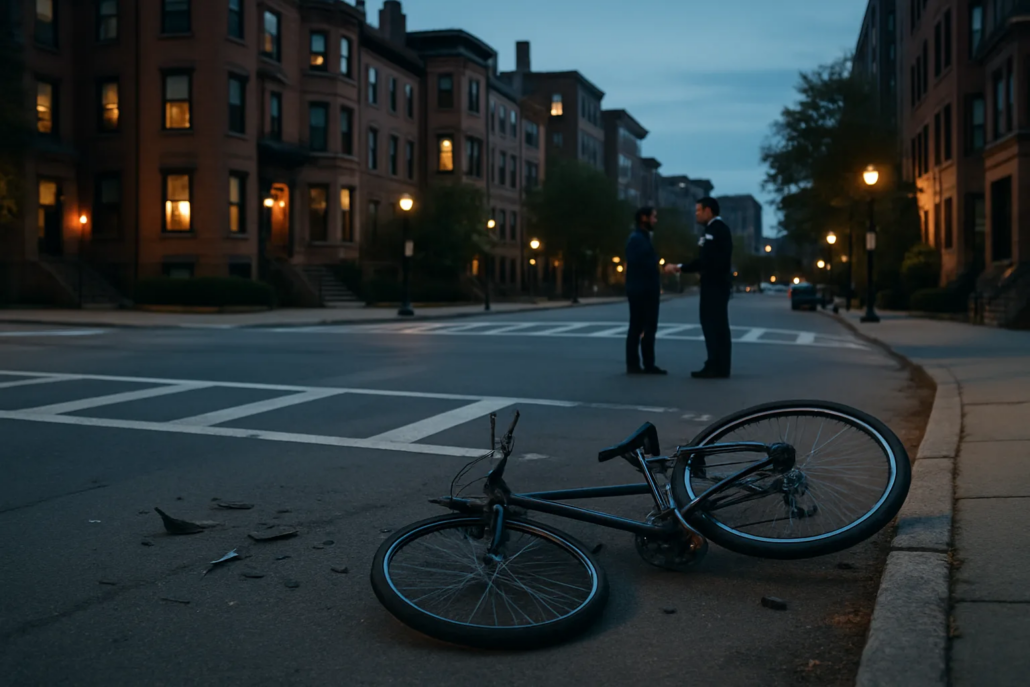
What Steps Can a Boston Hit-and-Run Lawyer Take Now?
A vehicle strikes you at an intersection, in a crosswalk, or in a parking area. Before you can speak with the driver, the car disappears into traffic. If you are injured, you may be left trying to manage medical care while wondering how anyone can identify the vehicle or establish what happened. A Boston hit-and-run accident lawyer can help explain the investigation and insurance issues, but useful evidence often begins with what is preserved in the first hours and days.
For a practical overview of what to do after a Massachusetts driver flees an injury crash, remember that safety comes first. Neumann provides guidance to people dealing with these difficult circumstances. This article covers immediate reporting, medical records, witnesses, surveillance, physical evidence, police follow-up, and what may happen if the driver is never located.
How Can an Injured Person Start a Boston Hit-and-Run Investigation?
An investigation can begin with a clear account of the scene, even when the injured person does not know the driver’s name. Generally speaking, the goal is to preserve independent evidence before weather, traffic, repairs, or ordinary business practices cause it to disappear.
Put safety and medical care first
If possible, move away from traffic without creating additional risk. Call 911 and request police and emergency medical assistance. Do not follow or confront the fleeing driver. A description of the vehicle, direction of travel, license plate information, and distinctive damage can be more useful than an unsafe pursuit.
Seek medical evaluation for reported injuries. Some symptoms may not be obvious immediately, and a medical record can document the timing and nature of complaints without requiring you to diagnose yourself. Keep discharge papers, provider notes, bills, work-related records, and instructions. Medical documentation for delayed crash pain in Massachusetts may be important when symptoms develop after the initial incident.
Make a prompt report
Tell the responding officer what you remember, including the location, time, travel direction, vehicle type, color, visible damage, and any partial plate. Ask how to obtain the incident or police report. A police report hit-and-run Massachusetts process may involve follow-up questions, but the report itself is only one part of the evidence. It does not automatically establish every issue in a later injury claim.
What Evidence May Help Identify the Fleeing Vehicle?
A hit-and-run evidence checklist should include sources beyond the injured person’s memory. In Boston, nearby businesses, residences, transit areas, garages, and other vehicles may have captured portions of the event. Footage may show the collision, the vehicle’s approach or departure, or identifying damage rather than a complete license plate.
Document the scene and physical evidence
When medically and physically practical, photographs may show:
- The location from several angles, including lane markings, curb areas, crosswalks, lighting, and nearby driveways
- Visible injuries and property damage, following medical professionals’ guidance
- Damage to a bicycle, vehicle, mobility device, or other personal property
- Paint transfer, broken lights, mirror pieces, trim, or other vehicle fragments
- Torn or bloodstained clothing, kept in a clean, dry place without washing or altering it
Preserve original photographs and videos rather than relying only on edited or compressed copies. Do not repair or discard damaged property before it can be documented when preservation is reasonably possible. This evidence to preserve after a Boston pedestrian crash offers related guidance about photographs, clothing, fragments, and digital files.
Locate witnesses and cameras
Write down witness names and contact information if they voluntarily provide it. Record what each person personally observed, rather than combining different accounts into one story. Note nearby cameras quickly and provide their locations to police or legal counsel. Many systems overwrite footage on a schedule, and a private business may require a formal request before releasing it.
Avoid posting speculation, accusations, or unverified vehicle descriptions on social media. A public appeal may sometimes assist an investigation, but it can also spread inaccurate information or interfere with a witness’s independent recollection. Police may use public outreach and physical evidence in some Boston investigations, including an example discussed in a Boston hit-and-run investigation in which police identified the driver. That example does not mean every driver will be found.
What Happens When the Driver Is Identified—or Never Found?
Finding a vehicle is not the same as proving legal responsibility. Investigators and insurers may examine whether the vehicle damage matches the scene, whether witnesses and video are consistent, and whether the driver’s conduct caused the collision. Medical records must also connect the claimed injuries to the event. How Massachusetts investigators and insurers evaluate crash fault explains why evidence must address both what happened and the resulting harm.
If police identify the driver, additional issues may include the driver’s insurance, ownership of the vehicle, disputed fault, and the driver’s decision to leave. A Boston hit-and-run accident lawyer may evaluate available records, communications, photographs, witness accounts, and insurance documents. Depending on the facts, an attorney may also help organize preservation requests or communicate with insurers.
If the driver is never identified, an injured person may still have options under applicable insurance coverage. Massachusetts uninsured motorist coverage when the driver is unknown may be relevant, but policy language, notice requirements, proof, and procedural rules matter. The injured person’s own policy and the facts of the crash should be reviewed rather than assuming coverage exists or does not exist.
Common mistakes can make an investigation harder. These include waiting to report the crash, failing to obtain medical evaluation, discarding clothing or vehicle parts, contacting witnesses repeatedly, guessing about the vehicle, or giving an insurer a recorded statement before understanding the claim. Laws and insurance procedures vary in Massachusetts and may change, so an attorney can explain options based on the particular circumstances.
Frequently Asked Questions
Should I try to chase a driver after a Boston hit-and-run?
No one should create another traffic danger by pursuing or confronting a fleeing driver. If it is safe to do so, note the vehicle’s direction, description, visible damage, and plate details from the scene. Give that information to 911 and responding officers. A witness, traffic camera, business recording, or physical fragment may later provide information without requiring the injured person to follow the vehicle.
Can nearby businesses release surveillance video to me?
A business may have its own policies about releasing or preserving video, and some systems automatically overwrite recordings. You can identify the location and ask whether footage exists, but an attorney or law enforcement may use a formal preservation or information request depending on the circumstances. Do not assume that a camera captured the collision; it may show only the approach or departure.
What if I remember only part of the license plate?
A partial plate can still be useful when combined with vehicle make, model, color, damage, direction of travel, time, and location. Report exactly what you recall and identify uncertainty rather than filling in missing characters. Witness accounts and video may confirm or correct the initial description. Memory can change after a frightening event, which is one reason prompt, accurate documentation matters.
Can I pursue an injury claim if the driver is never located?
Possibly. Depending on the policy and facts, uninsured motorist coverage may provide a route for evaluating an unidentified-driver accident in Boston. Coverage is not automatic, and issues can include notice, proof of the collision, medical documentation, policy terms, and applicable deadlines. A licensed Massachusetts attorney can review the available insurance information and explain potential options without assuming that a claim will succeed.
How Neumann Can Help
Neumann is dedicated to helping injured people understand the practical and legal issues that follow a hit-and-run. The firm can evaluate available evidence, including photographs, witness information, police records, medical documentation, surveillance leads, vehicle fragments, and insurance materials. Depending on the circumstances, a Boston hit-and-run accident lawyer may help coordinate the factual timeline, communicate with insurers, and assess whether an injury claim or uninsured motorist issue warrants further review.
Neumann is committed to fighting for clients’ rights while providing clear information about uncertainties, proof requirements, and next steps. Contact the firm for a free consultation or case evaluation to discuss what happened and explore your legal options.
The information in this article is for educational purposes only and does not constitute legal advice. Contact a qualified attorney licensed in Boston; Massachusetts for advice specific to your situation.


Leave a Reply
Want to join the discussion?Feel free to contribute!