
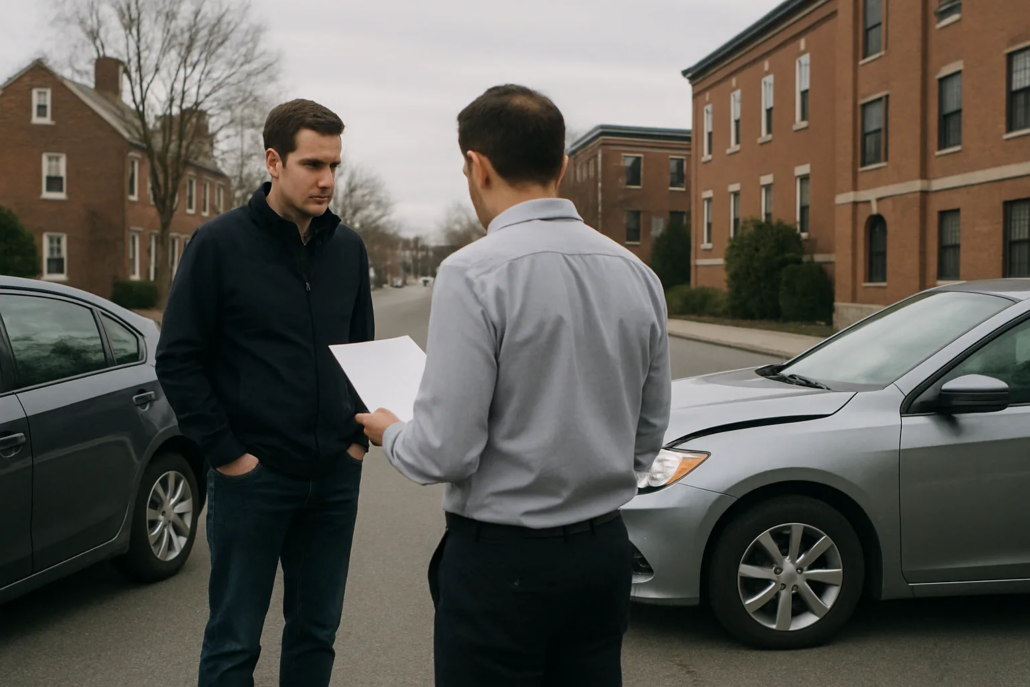
Massachusetts Uninsured Motorist Claims: A Boston Guide
A crash involving an uninsured or underinsured driver can create a difficult question: if the other driver cannot provide enough insurance, where might compensation come from? For many people in Boston and throughout Massachusetts, the answer may involve reviewing their own auto policy for uninsured motorist (UM) or underinsured motorist (UIM) coverage.
A Massachusetts uninsured motorist claim is not simply an automatic payment request. The injured person may need to establish how the crash happened, document damages, comply with policy notice provisions, and address disputes with their own insurer. Coverage can depend on the policy, the people and vehicles involved, and the available limits.
Neumann helps Massachusetts motor-vehicle accident victims understand these insurance issues and evaluate potential claims. This guide explains the difference between UM and UIM coverage, practical steps that may help preserve a claim, and common issues that can arise during the process. Because every policy and collision is different, an attorney’s review may be useful before important coverage decisions are made.
How a Massachusetts Uninsured Motorist Claim Starts
Uninsured motorist coverage is generally intended to address situations in which a legally responsible driver has no applicable bodily injury insurance. It may also apply in some hit-and-run situations, depending on the policy and the facts. Underinsured motorist coverage is different: it may become relevant when the responsible driver has insurance, but the available limits are not enough to address the injured person’s covered losses.
Review every potentially relevant policy
The first step is often identifying all policies that could apply. This may include:
- The injured person’s Massachusetts auto policy;
- A household resident’s policy, depending on the policy language and relationship;
- Coverage for a vehicle owned or occupied at the time of the crash; and
- The other driver’s liability policy, if any.
Policy definitions can control whether a person qualifies as an insured, whether a vehicle qualifies as an insured vehicle, and whether exclusions apply. A declarations page may show coverage limits, but the full policy and endorsements can contain important conditions.
An accident with an uninsured driver in Boston may involve a police report, a vehicle registered in another state, or a driver whose insurance information is incomplete. Those details do not answer the coverage question by themselves. They are starting points for gathering records and examining the applicable policy language.
Underinsured Motorist Coverage in Massachusetts: Limits and Damages
Underinsured motorist coverage may be considered when the at-fault driver’s liability policy exists but is insufficient in relation to the injured person’s losses. The available UIM claim is generally affected by the other driver’s policy limits, the injured person’s own UM/UIM limits, and the terms of the policy. The calculation is not always as simple as adding two numbers.
An insurer may evaluate whether its policyholder was legally entitled to recover damages from the other driver. This can make liability evidence important even though the claim is being presented to the injured person’s own insurer. Evidence may include:
- Crash reports, photographs, vehicle damage, and available video;
- Statements from witnesses and the drivers involved;
- Medical records and bills supplied by the relevant providers;
- Information about missed work or other documented economic losses; and
- Evidence concerning the effects of the injuries on daily activities.
Medical records should be handled carefully and consistently with the person’s providers and legal counsel. This article does not provide medical advice or diagnose any condition. In general, an attorney may help organize documentation without asking a reader to make treatment decisions.
Notice and settlement issues
Auto policies commonly contain provisions requiring notice of an accident or claim. The language may address prompt notice, cooperation, examinations, recorded statements, and consent before resolving a claim with the at-fault driver’s insurer. These requirements can be significant in a Massachusetts UM/UIM claim.
Before accepting a settlement from the responsible driver’s insurer, an injured person may need to consider how that settlement affects a claim under their own policy. Depending on the policy and circumstances, the UIM carrier may have rights that must be addressed before the underlying claim is resolved. A premature settlement or incomplete notice can create avoidable disputes, so an attorney may advise reviewing the policy and communicating with insurers carefully.
Preserving a UM or UIM Claim After a Crash
The process can involve several overlapping issues: insurance coverage, liability, damages, deadlines, and communications with multiple insurers. The following general checklist can help a person understand what information may matter, although it is not a substitute for legal advice.
- Collect policy information. Locate the declarations page, policy booklet, endorsements, renewal documents, and correspondence. Ask whether other household or vehicle policies may exist.
- Preserve crash evidence. Keep photographs, repair estimates, police materials, witness information, and communications about the collision. Do not alter or discard damaged safety equipment or vehicle parts without considering whether they may be relevant evidence.
- Give appropriate notice. Notify potentially relevant insurers in a manner consistent with the policy. Notice is not the same as admitting fault or agreeing to a valuation of the claim.
- Track losses. Maintain organized records of bills, appointments, transportation costs, employment-related losses, and changes in ordinary activities. The types of recoverable damages depend on the facts and governing law.
- Be cautious with recorded statements. An insurer may request a statement or examination. The request and the policy language should be considered before responding, particularly when liability or the extent of loss is disputed.
A carrier may investigate the crash, request records, question the value of damages, or dispute whether the policy applies. Some policies include an arbitration procedure for certain UM/UIM disagreements, while others may require different steps. The exact process depends on the policy and the circumstances. Massachusetts court procedures and legal deadlines may also matter, and laws can vary by location or change over time.
Frequently Asked Questions
Does my own insurer become responsible for causing the crash?
No. In a UM or UIM claim, the injured person’s insurer may evaluate and potentially pay a covered claim under its policy, but that does not mean the insurer caused the collision. The claimant generally may still need to establish that another driver was legally responsible and prove covered damages. The insurer may also investigate policy conditions, exclusions, and the amount of available coverage.
Can a passenger make a Massachusetts uninsured motorist claim?
A passenger may be covered under a UM or UIM policy, but eligibility depends on the policy language, the vehicle involved, the passenger’s relationship to the policyholder, and other facts. The passenger may have claims connected to more than one policy. Because coverage definitions and priority rules can be technical, a review of the policies and crash facts may be appropriate.
What if the crash happened outside Boston or outside Massachusetts?
The location of the collision can affect which law, policy provisions, and procedures apply. A Massachusetts policy may still be relevant, but the other state’s rules may also matter. The policy’s choice-of-law language, the place of the crash, vehicle ownership, and the parties’ connections can all be important. A licensed attorney can assess the jurisdictional issues specific to the accident.
Can an insurer deny a UM or UIM claim?
An insurer may dispute coverage, liability, notice, policy conditions, or the amount of damages. A denial is not necessarily the end of the matter, but the response should be reviewed against the policy and applicable law. Preserving correspondence, identifying the stated reason for the denial, and obtaining advice from a Massachusetts attorney may help clarify available options.
How Neumann Can Help
Neumann is dedicated to helping people understand the insurance issues that can follow a Massachusetts motor-vehicle collision. The firm can review potentially applicable policies, examine evidence concerning liability and damages, communicate with insurers, and explain procedural issues that may affect a UM or UIM claim.
Every case depends on its facts, policy language, and applicable law. Neumann is committed to fighting for clients’ rights while providing a clear assessment of available options. If you were injured by an uninsured or underinsured driver in Boston or elsewhere in Massachusetts, contact Neumann for a free consultation or case evaluation.
The information in this article is for educational purposes only and does not constitute legal advice. Contact a qualified attorney licensed in Massachusetts; Boston for advice specific to your situation.

