
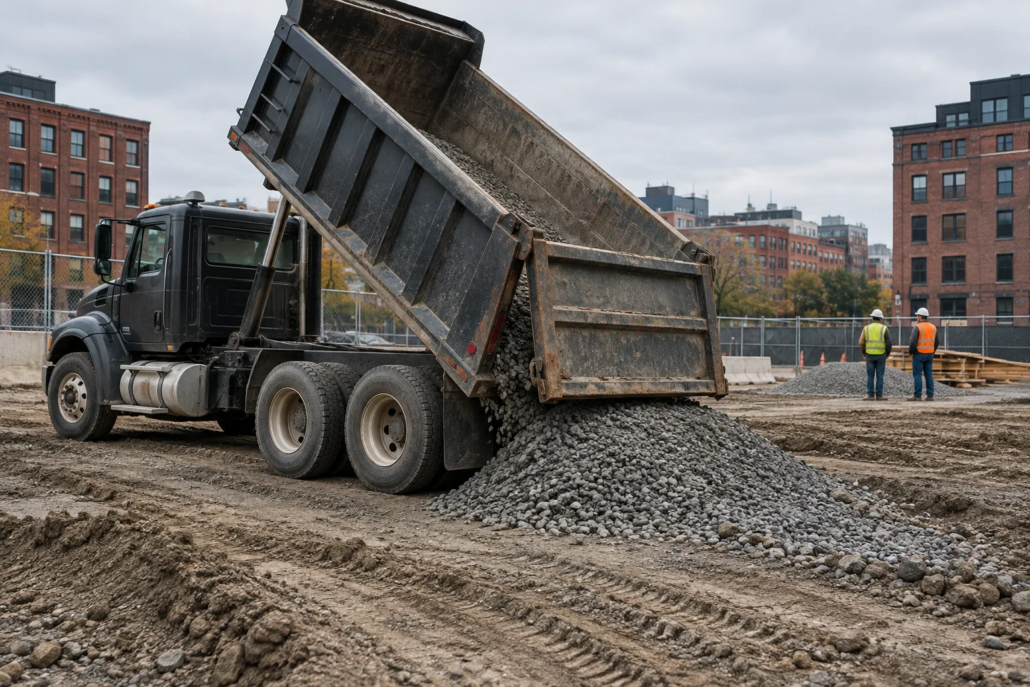
Who May Be Liable for a Boston Jobsite Dump Truck Rollover?
A dump truck can look stable as it arrives at a Boston jobsite, then tip when its bed rises to unload. If you are hurt in a Boston dump truck rollover at a construction site, it may not be obvious whether the ground, vehicle position, shifting load, equipment, or worksite procedure played a part. Several factors—and potentially more than one party—may need review before responsibility can be assessed.
Neumann helps injured workers and others understand how a construction-site truck incident may involve both workers’ compensation and a separate injury claim. This article explains the possible contributors to an unloading rollover, who may warrant investigation, and why prompt workplace reporting and careful documentation matter. It is general information about Massachusetts issues, not a determination of fault in any individual event.
What can cause a dump truck rollover while unloading in Boston?
An unloading tip-over is not automatically proof of driver error or a defective truck. Raising a truck’s bed changes its balance, and the result can depend on how the truck is positioned, the surface beneath it, and whether the load moves or releases evenly. Investigators may need to consider these factors together rather than focusing on just one.
Ground, position, and load conditions
A sloped, soft, uneven, or recently disturbed surface may affect stability. A wheel near an edge, trench, or soft shoulder may have less support than expected. The truck’s orientation and whether it was level can also matter. Meanwhile, wet, compacted, frozen, or unevenly distributed material may shift as it leaves the bed, changing the vehicle’s balance.
These are questions for investigation, not assumptions about what happened. Photos, witness observations, site plans, and information about ground preparation may help establish the unloading area’s condition. In Boston, work may take place in tight urban spaces, but the location alone does not identify the cause. The specific surface, truck position, load, and sequence of events remain important.
Who may be responsible for a Boston dump truck rollover at a jobsite?
Responsibility depends on the facts, applicable Massachusetts law, and each party’s role. A driver’s choices may be relevant, but a broader review can also consider who supplied or maintained the truck, directed the unloading, prepared the surface, or controlled access to the area. A trucking company’s training, supervision, vehicle-maintenance practices, or operational decisions may also warrant examination. For more on that separate question, see how a Boston trucking company’s decisions can contribute to a crash.
Potentially relevant parties can include:
- The truck driver or employer, depending on the work arrangement and conduct involved.
- A general contractor, subcontractor, or site controller responsible for the unloading area or jobsite procedures.
- A trucking or hauling company involved in dispatch, training, maintenance, or delivery operations.
- A manufacturer or supplier, if a component or product may have contributed to the tip-over.
A worker’s employer and a third party may raise different legal issues. Massachusetts workers’ compensation may provide benefits for a work-related injury, while a separate claim against another potentially responsible party may also be considered, depending on the circumstances. These are not interchangeable claims. For context, see Boston work-related vehicle crashes involving workers’ compensation.
What should be documented after a jobsite truck tip-over?
After an incident, medical care and immediate safety concerns come first. Workplace reporting is also important: an injured worker can follow the employer’s reporting process and provide a clear account of what happened. Reporting promptly can help create a record, but it does not by itself determine who is legally responsible or resolve a workers’ compensation claim.
When it is safe and appropriate, details about the scene and truck may help preserve information that could otherwise change. Depending on the circumstances, relevant records may include:
- Photos or video of the truck’s position, the unloading surface, nearby edges or excavations, and visible damage.
- Names and contact details for witnesses, along with notes about the sequence of events and load being carried.
- Worksite instructions, delivery records, maintenance information, inspection records, and communications about site conditions.
- Information identifying who controlled the area and who directed or observed the unloading.
Do not put yourself at risk to collect evidence or interfere with safety operations. A truck may be repaired or moved, and ground conditions may be altered as work continues. Appropriate preservation or inspection steps can depend on the circumstances; this overview of preserving a damaged vehicle as crash evidence explains why a vehicle’s condition may matter. Evidence questions after a Boston worksite injury may also include equipment, site setup, and who controlled the area.
A mechanical issue should not be assumed, but it should not be ruled out without a basis. A tire, brake, suspension, hydraulic, or other component issue may be relevant if supported by the evidence. A qualified investigation may consider whether a part failed, how the truck was maintained, and whether the failure contributed to the rollover. Learn more about Massachusetts injury claims involving defective vehicle parts.
Frequently Asked Questions
Does workers’ compensation apply if a dump truck tips while I am working?
A work-related injury may qualify for workers’ compensation benefits under Massachusetts law, but eligibility and the benefits available depend on the facts and applicable rules. A workers’ compensation claim generally concerns benefits through the employment system; it does not automatically answer whether another party may also be responsible. An attorney can assess how the claims may relate to the specific work arrangement and incident.
Can a contractor other than my employer be responsible?
Possibly. A contractor or another party may warrant investigation if its role in preparing the ground, directing the unloading, controlling the area, or setting site procedures is relevant to the rollover. Responsibility is not established merely because a company was present at the jobsite. The particular duties, conduct, and available evidence matter, and Massachusetts law may affect how a claim is evaluated.
Could the truck’s load contribute to an unloading rollover?
Yes, load characteristics may be one part of the investigation. The material’s weight and distribution, whether it shifted, and how it released as the bed rose could be relevant alongside truck position, ground conditions, and equipment condition. Those details should be evaluated with other evidence, rather than treated as proof by themselves that the driver, loader, or another party was at fault.
Is a product claim possible if a truck part failed?
A product-liability issue may be considered if evidence suggests that a defective component contributed to the incident. Establishing such a claim can require examining the part, the truck’s maintenance and repair history, and how the vehicle was used. A rollover alone does not establish a defect. The available evidence and applicable Massachusetts law determine whether a product claim may be viable.
How Neumann Can Help
Neumann is dedicated to helping injured people understand the separate questions that can follow a construction-site rollover. A careful review may consider workplace reporting, workers’ compensation, possible third-party responsibility, and evidence concerning the truck, load, ground, and site procedures. The facts matter, and no single detail automatically determines the outcome. If you were hurt in a Boston jobsite dump truck incident, contact Neumann to discuss your circumstances and request a free consultation or case evaluation. The firm can help you explore your legal options without promising a particular result.
The information in this article is for educational purposes only and does not constitute legal advice. Contact a qualified attorney authorized to practice in the jurisdiction that applies to your matter for advice specific to your situation.

Leave a Reply
Want to join the discussion?Feel free to contribute!