
Could Vehicle Details Shape a Boston Taxi Injury Claim?
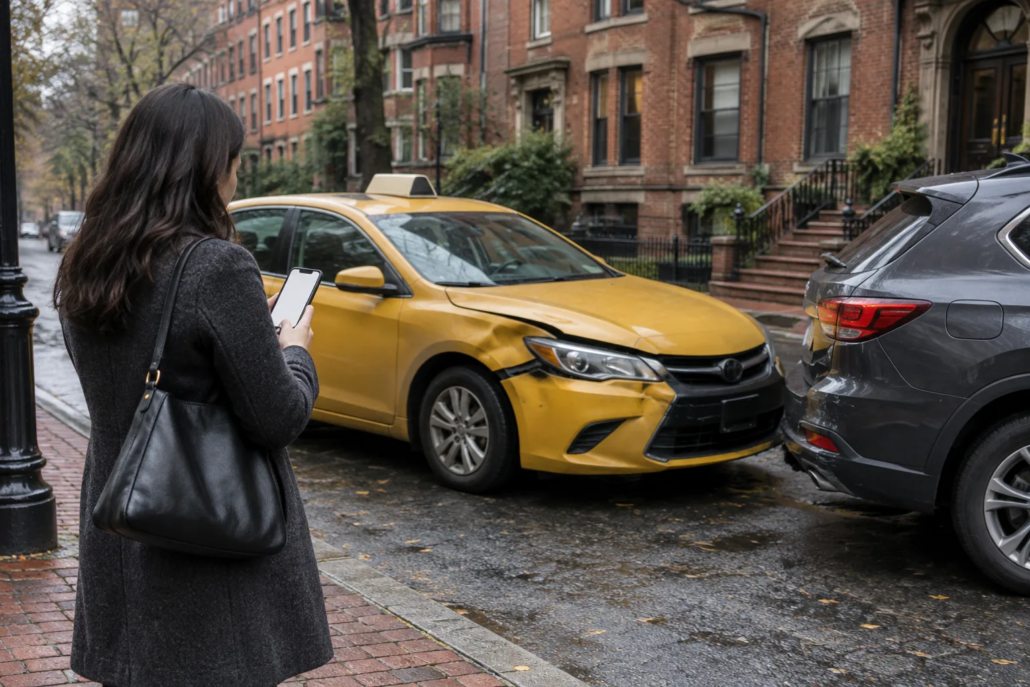
A taxi ride can become disorienting in seconds: a sudden impact, several vehicles, and a passenger trying to understand what happened from the back seat. A Boston taxi accident injury claim may raise questions about the cab driver, the taxi’s owner or operator, and another motorist. The details that seem routine—such as the cab’s identifying information or the trip’s pickup and drop-off points—can help clarify who was involved and what insurance may apply. Neumann helps people understand the issues that may arise after a motor vehicle collision; this guide focuses on what an injured taxi passenger may want to record or request. It explains how responsibility can differ among drivers and businesses, what evidence may be useful, and how to approach insurance questions without assuming that one party or policy is automatically responsible. The facts of each collision matter, and a passenger does not need to determine fault at the scene.
Who may be responsible for a Boston taxi accident injury claim?
Responsibility depends on what caused the collision, who had a role in it, and what evidence supports the account. A taxi passenger may have a claim involving one driver or several. The cab driver’s actions are one question; whether a vehicle owner or taxi operator has a separate legal responsibility is another. Those roles may belong to different people or businesses.
A passenger generally does not need to decide immediately which driver was at fault. Record what happened as accurately as possible and identify all drivers and vehicles. For a broader explanation of how an injured Boston passenger may pursue a claim against a driver, consider how a passenger’s claim may differ from the drivers’ accounts.
The cab driver, owner, and operator are different questions
The cab driver’s conduct may be relevant if, for example, the collision involved an unsafe turn, following too closely, or another driving decision. The vehicle’s owner may be a separate person or entity, and the taxi operator may manage or dispatch the cab. Whether an owner or operator has legal responsibility depends on the facts and applicable law; the company name on a vehicle, by itself, does not settle the issue.
Ownership alone does not automatically establish liability. Facts about whether an owner knew of a driver’s unfitness and entrusted the vehicle to that driver may raise a distinct issue. Read about when a Massachusetts vehicle owner may face a negligent-entrustment claim for more on that separate question.
Another motorist may also be involved
A taxi can be struck by another car, or the cab may be one vehicle in a sequence of impacts. More than one driver’s actions may be relevant. A passenger can preserve information without trying to assign percentages of fault; how Boston chain-reaction claims sort out responsibility among drivers offers related context.
What should an injured taxi passenger record or request?
When it is safe and practical, a passenger may want to keep a clear record of the ride and the collision. Memory can fade, and basic identifying details may help connect the trip, vehicles, witnesses, and later insurance communications. Do not put yourself in danger to collect information or confront anyone.
Useful details may include:
- The cab’s license plate, vehicle description, taxi number or other visible identifier, and the driver’s name or identifying details, if available.
- The trip date and approximate time, pickup and drop-off locations, route, and any receipt or trip confirmation. Keep original records where possible.
- Each other vehicle’s make, model, color, license plate, and driver or insurer information, if safely available.
- The crash location, direction of travel, weather or road conditions, sequence of impacts, and contact details for witnesses.
- Photographs of vehicle positions, visible damage, and the general scene, taken only when safe. Note which details you observed yourself and which you learned from someone else.
In Boston, a precise location—such as the nearest intersection or neighborhood—can help distinguish one crash scene from another. A police report or other official record may document information gathered after a collision, but it does not necessarily decide civil liability. A passenger may ask how to obtain a report or other trip records through the appropriate agency or business. To understand why vehicle condition may matter, see guidance on preserving a damaged vehicle as crash evidence in Massachusetts. Depending on the circumstances, a lawyer may also consider whether a request should be made to preserve relevant vehicle, dispatch, trip, or maintenance records before they are changed or discarded.
How do insurance questions and claim steps fit together?
A passenger’s first insurance question may be which policy could provide benefits while responsibility is still being investigated. Massachusetts has personal injury protection (PIP) rules that may apply to eligible expenses in some motor vehicle collisions. The policy, the passenger’s circumstances, and the facts of the crash matter, so it is best not to assume that the taxi operator’s insurer is the only possible source. This overview of Massachusetts PIP benefits after a Boston car accident explains the general role those benefits may play.
The passenger may also want to identify the other driver and ask which insurance policies could be relevant. If that driver has no insurance or limited coverage, whether another policy may respond depends on its terms and the circumstances. See Boston uninsured motorist claims when an at-fault driver lacks coverage for related information. Avoid treating an initial insurance conversation as a final determination of fault or coverage.
If several passengers or people in other vehicles were injured, more than one claim may involve the same policy. That can make it important to understand what coverage is available without assuming how an insurer will handle competing claims. This discussion of how several injury claims can affect one Massachusetts auto policy provides additional context.
A passenger may find it useful to keep copies of trip records, photographs, correspondence, and any claim reference information together. Record when and with whom insurance or business representatives communicate, and keep notes factual. In Boston, the collision location, the cab’s identity, and the trip details can help organize questions for an insurer or attorney. A lawyer can review the facts and explain which parties or policies may warrant further inquiry. Deadlines and procedures can depend on the claim and circumstances, so avoid relying on general information as a deadline calculation.
Frequently Asked Questions
Can I bring a claim if I was a passenger and did not cause the crash?
A passenger’s lack of control over the vehicles does not, by itself, answer whether a claim may be available. The relevant issues can include how the collision happened, which parties may have contributed, and what insurance applies. In Massachusetts, the specific facts and applicable rules matter. A lawyer can review the information and explain potential options without assuming that any particular driver or company is responsible.
Does the taxi company automatically have to pay for my injuries?
No. The taxi company’s involvement does not automatically make it responsible for a passenger’s injuries. The driver, vehicle owner, operator, and other motorists may have different roles, and legal responsibility depends on the facts and applicable law. Insurance coverage is a separate question. Identifying the cab and preserving trip details can help an attorney or insurer investigate which parties and policies may be relevant.
What if I do not know the taxi’s company or vehicle number?
A missing identifier does not necessarily mean there is no way to investigate. Trip receipts, payment records, dispatch or booking details, pickup and drop-off information, photographs, and witness accounts may help identify the cab. Record what you do remember, including the time and location, and keep any confirmation messages or receipts. Whether those details can identify the vehicle depends on what records exist and can be obtained.
Can I make a claim if the taxi was one of several vehicles in the crash?
Possibly. A collision involving several vehicles can require examining the sequence of impacts and the conduct of more than one driver. A passenger’s account, photographs, vehicle damage, witness information, and available reports may help clarify what happened. The existence of multiple vehicles does not establish that every driver was responsible. The applicable insurance and legal issues depend on the evidence and circumstances.
How Neumann Can Help
Sorting out a taxi collision can involve more than identifying the driver. Neumann is dedicated to helping injured people understand the questions that may arise about the cab, its owner or operator, other motorists, and available insurance. The firm is committed to fighting for clients’ rights while evaluating the facts, records, and potential sources of coverage carefully. If you were hurt as a taxi passenger in Boston, Neumann is ready to evaluate your situation and discuss possible next steps. Contact the firm to request a free consultation or case evaluation.
The information in this article is for educational purposes only and does not constitute legal advice. Contact a qualified attorney licensed to practice in Massachusetts for advice specific to your situation; laws vary by location and may change.


Leave a Reply
Want to join the discussion?Feel free to contribute!