Who May Face Liability for Negligent Entrustment in MA?
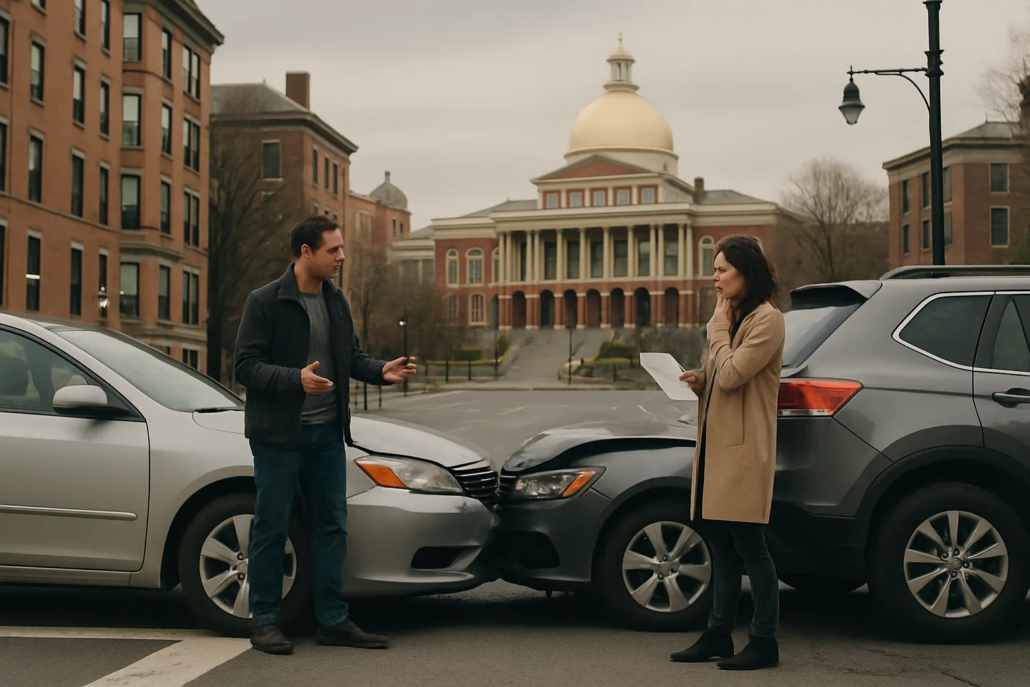
After a collision in Boston, an injured person may quickly learn that the driver who caused the crash was not the vehicle’s owner. The car might belong to a relative, a friend, a business, or an employer. That raises an important question: can the owner share legal responsibility, or is the driver the only possible defendant?
The answer depends on the facts. A Massachusetts negligent entrustment car accident claim is different from a claim based only on the driver’s careless conduct. As how Massachusetts determines fault in a motor vehicle accident explains, establishing the driver’s negligence is a separate step from proving an independent basis for holding the owner responsible. Neumann provides this information to help Boston crash victims understand the issues that may need investigation.
This article explains negligent entrustment, permissive use, agency, employer-vehicle questions, relevant evidence, insurance concerns, and deadlines. It is general information, not a determination of liability in any particular case.
Can Massachusetts Negligent Entrustment Apply When a Boston Driver Does Not Own the Car?
A vehicle owner does not automatically become liable simply because the owner’s car was involved in a collision. In many cases, the injured person must show that the driver acted negligently and caused legally compensable harm. A separate theory against the owner may require proof of the owner’s own conduct or relationship with the driver.
What is negligent entrustment?
Negligent entrustment generally concerns giving control of a vehicle to someone the owner knew, or reasonably should have known, was not competent or safe to drive. The concern could involve a known lack of driving ability, serious restrictions, certain impairments, or another safety-related fact. The specific evidence and legal standards depend on the circumstances and Massachusetts law applicable to the claim.
Knowledge matters. It is not enough to assume that an owner should have predicted any mistake a driver might make. The analysis may focus on what the owner knew before lending the vehicle, what a reasonable owner would have understood, and whether that information was connected to the risk involved.
How is this different from the driver’s negligence?
Driver negligence focuses on what happened behind the wheel: for example, whether the driver was speeding, failed to yield, followed too closely, or drove while distracted. Negligent entrustment focuses on the owner’s decision to provide the vehicle. Both theories can be investigated, but proof of one does not automatically establish the other.
What Other Theories Could Create Vehicle Owner Liability in Massachusetts?
A borrowed-car crash in Boston can involve more than one potential relationship. Ownership, permission, employment, insurance, and control may all affect the analysis. The vehicle owner’s responsibility may depend on facts that are not visible at the crash scene.
Permission and agency are not the same
An owner may have permitted a family member or friend to use a vehicle. Permission alone does not necessarily prove negligent entrustment or make the owner responsible for every driving error. On the other hand, the owner’s relationship with the driver may create additional questions if the driver was acting as an employee, agent, or representative.
For example, an employer may face different issues when an employee was driving during work duties. Scope of employment, employer control, vehicle maintenance, and workers’ compensation may become relevant. A Boston delivery-driver crash involving an employer vehicle can raise both workplace-benefit questions and a possible third-party negligence claim, depending on who was injured and how the collision occurred.
Rideshare situations illustrate why labels alone are not enough. The driver’s status, trip stage, platform involvement, and available insurance can affect the liability analysis. Readers can review how responsibility may be divided in a Boston rideshare collision for a related discussion.
What records can clarify responsibility?
Useful records may include:
- Registration and title information identifying the owner;
- Insurance declarations and claim communications;
- Written or electronic permission to use the vehicle;
- Messages about the driver’s experience, restrictions, or condition;
- Employment schedules, delivery records, or company vehicle policies; and
- Maintenance, inspection, and repair records.
A focused investigation may help distinguish an owner’s independent conduct from the driver’s conduct. Information about the vehicle and the lending arrangement may also be found in records that can clarify responsibility for a borrowed or rented vehicle.
What Evidence and Steps Matter After a Boston Borrowed-Vehicle Crash?
Evidence can disappear or become harder to locate as vehicles are repaired, discarded, sold, or returned to a business. A person considering a Massachusetts negligent entrustment car accident claim may need to preserve more than photographs of the collision scene. The relevant proof could concern the driver, the owner, the vehicle’s condition, and the relationship between them.
Depending on the circumstances, potentially important material may include:
- Police or crash reports, scene photographs, and witness contact information;
- Photographs of vehicle damage, interior controls, tires, and safety systems;
- Repair estimates, maintenance histories, inspection records, and recall information;
- Phone, navigation, employment, or delivery records that may help establish driver activity;
- Medical records and wage documentation concerning the claimed injuries and losses; and
- Communications between the owner, driver, insurers, employers, and other involved parties.
Physical evidence may be especially important if the owner knew or should have known about a mechanical problem. Readers can review guidance on preserving the vehicle and other crash evidence after a Boston collision. Any preservation effort should be handled with attention to safety and applicable legal or insurance requirements.
What can happen while fault is being investigated?
Massachusetts personal injury claims may involve insurance benefits that do not finally decide who caused the crash. Massachusetts PIP benefits after a Boston car accident may help with eligible medical expenses or lost wages under applicable policy terms and state rules. PIP does not, by itself, establish negligent entrustment or determine whether an owner, driver, employer, or another party is ultimately liable.
Potential claimants should also avoid assuming that identifying the vehicle owner pauses all deadlines. Multiple defendants, insurance investigations, and questions about permission can take time. It is important to investigate ownership and entrustment issues promptly while tracking the filing deadline for a Boston car accident claim. Massachusetts deadlines and any special notice requirements can vary with the parties and facts.
Frequently Asked Questions
If a family member caused the crash in my car, am I automatically able to sue the owner?
Not automatically. A family relationship and vehicle ownership may be relevant, but they do not by themselves establish negligent entrustment, agency, or another liability theory. The claim may depend on what the owner knew about the driver, whether the driver had permission, and whether the driver was acting for someone else. A Massachusetts attorney can evaluate the facts and applicable insurance coverage.
Can negligent entrustment apply if the owner did not know the driver was unsafe?
A negligent entrustment theory generally depends on evidence that the owner knew, or reasonably should have known, about a relevant safety concern before allowing the person to drive. If the owner had no reasonable basis to identify a risk, the theory may be more difficult to prove. The answer depends on the available records, witness testimony, and circumstances surrounding the loan.
Does insurance pay for injuries when the driver borrowed the vehicle?
Insurance questions depend on the policies, the vehicle’s use, the driver’s permission, and the facts of the collision. Massachusetts PIP may provide certain no-fault benefits for eligible expenses, while liability coverage may be evaluated separately. An insurer’s initial position does not necessarily resolve every possible claim against the driver, owner, employer, or another responsible party.
What if the borrowed vehicle had a mechanical problem?
A mechanical problem can raise different questions from negligent entrustment. The investigation may examine whether the owner knew or should have known about the condition, whether maintenance was reasonable, and whether the condition contributed to the crash. Repair records, inspection information, photographs, and expert analysis may be relevant. The vehicle should not be repaired or discarded before preservation issues are considered.
How Neumann Can Help
Neumann is dedicated to helping injured people understand the legal issues that may follow a Boston motor vehicle collision. The firm can review questions involving a borrowed car, family vehicle, employer vehicle, negligent entrustment, agency, insurance, and evidence preservation. Its evaluation may consider the driver’s conduct separately from the vehicle owner’s knowledge and relationship with the driver.
Neumann is committed to fighting for clients’ rights while explaining available options in clear terms. If you were injured in a crash involving a vehicle driven by someone other than its owner, contact Neumann for a free consultation or case evaluation. The firm is ready to evaluate your situation and discuss possible next steps without promising a particular result.
The information in this article is for educational purposes only and does not constitute legal advice. Contact a qualified attorney licensed in Boston for advice specific to your situation.

Leave a Reply
Want to join the discussion?Feel free to contribute!