
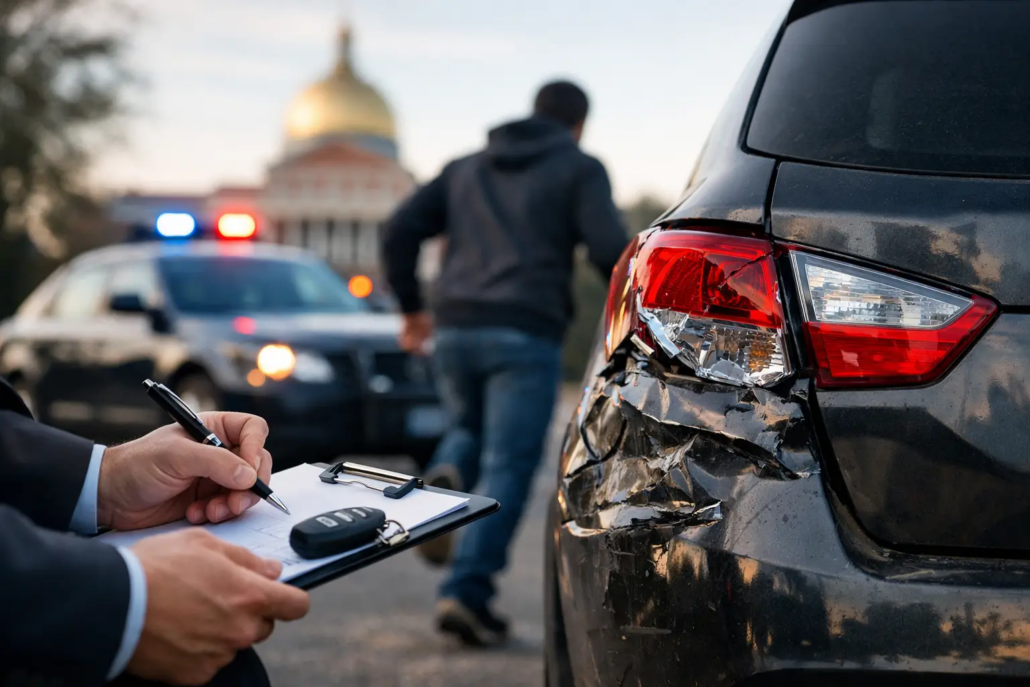
Hit and Run Insurance Claims in Massachusetts
A driver hits your car on Storrow Drive, a cyclist is knocked down in Cambridge, or a pedestrian is struck in a Boston crosswalk – then the vehicle disappears. In the first hours afterward, a hit and run insurance claim Massachusetts residents pursue can feel especially unfair: you are injured, your vehicle may be damaged, and the person responsible has left you without an obvious source of compensation.
Leaving the scene does not eliminate your options. Massachusetts insurance law provides potential coverage for many people injured by unidentified or uninsured drivers, but the outcome often depends on what is reported, preserved, and communicated to the insurer early on. The evidence is rarely as simple as a police report alone.
What Should You Do After a Hit and Run Crash?
Your first priority is medical care. Some crash injuries, including concussions, internal injuries, and soft-tissue damage, may not be fully apparent at the scene. Accept emergency evaluation when appropriate, follow up with your doctor, and explain that the injury followed a motor vehicle collision.
If you can do so safely, call 911 and ask officers to prepare a report. Give them every detail you remember: the vehicle’s color, make, model, direction of travel, damage, partial plate number, distinguishing decals, and the time and location of the collision. A description that seems minor can become meaningful when investigators compare it with nearby camera footage or other reports.
Photograph the scene, vehicle damage, debris, skid marks, traffic signals, and visible injuries. Ask witnesses for names and contact information before they leave. In busy areas of Boston, Somerville, Worcester, or along the Mass Pike, nearby businesses, residences, buses, parking facilities, and traffic cameras may have useful footage. Video can be overwritten quickly, sometimes within days, so identifying and requesting preservation of it may matter.
You should also notify your own auto insurer promptly. Do not assume that reporting the crash means accepting the insurer’s first assessment of fault, injury severity, or available coverage.
Which Coverage May Apply to a Hit and Run Insurance Claim in Massachusetts?
Massachusetts drivers are generally required to carry Personal Injury Protection, commonly called PIP. PIP can help pay certain medical expenses and lost wages regardless of who caused the crash, subject to the terms, coordination rules, and limits in the policy. It may provide needed early support, but it is not designed to cover every loss caused by a serious injury.
For injuries caused by an unidentified hit-and-run driver, uninsured motorist bodily injury coverage can be critically important. A hit-and-run vehicle may be treated as uninsured for this purpose. UM coverage can potentially compensate an injured driver, passenger, pedestrian, or cyclist for losses such as medical bills, lost income, pain and suffering, and other damages that the at-fault driver would have owed.
That does not mean every claim is automatic. The policy language, the facts of the collision, notice requirements, and the available evidence can all affect coverage. Insurers may scrutinize whether a crash occurred as reported, whether the unknown vehicle caused the injury, and whether there is sufficient proof connecting the incident to the claimed losses.
Property damage is a separate question. Uninsured motorist coverage generally addresses bodily injury, not repairs to your own car. Collision coverage may help pay for vehicle damage from a hit and run, often after a deductible. The coverage available depends on the policy you purchased and whether another responsible party can be identified.
What if the Driver Is Later Found?
If police identify the driver, the case may shift from an unidentified-driver claim to a claim against that person’s liability insurance. If the driver has no insurance or too little insurance, your uninsured or underinsured motorist coverage may still be relevant.
Identification can also open the door to investigating other sources of responsibility. For example, the driver may have been working, driving a company vehicle, using a rideshare vehicle, or operating a car owned by someone else. Each situation requires a fact-specific review of ownership, employment status, insurance policies, and the driver’s conduct.
Evidence Often Decides a Massachusetts Hit and Run Claim
An insurer may ask for a statement shortly after the crash, when you are in pain and still trying to understand what happened. You have a duty to cooperate with your insurer, but cooperation does not require guessing, minimizing symptoms, or adopting the insurer’s theory of the crash. Stick to facts you know and seek guidance before providing a recorded statement if the injuries or coverage issues are significant.
Strong documentation can protect the claim from avoidable disputes. Relevant evidence may include the police report, 911 recordings, photographs, witness accounts, video footage, vehicle inspection records, medical records, wage documentation, and communications with the insurance company. For a pedestrian or cyclist, damage to clothing, a helmet, a bike, or personal items can also help show the force and circumstances of the impact.
Medical documentation matters because insurers often argue that treatment was unrelated, delayed, or unnecessary. Continue recommended care, keep appointments when possible, and tell providers about symptoms that interfere with work, sleep, mobility, or daily activities. If you miss work, retain pay stubs, employer communications, and any documentation supporting restrictions or missed time.
Do Not Let the Insurance Company Redefine the Crash
Hit-and-run claims can create difficult factual disputes. An insurer may contend there was no contact with another vehicle, that the collision resulted from a single-car event, or that the claimed injury came from a preexisting condition. In some cases, a driver swerves to avoid a fleeing vehicle and crashes without a direct impact. Those claims can be more complicated because the evidence must establish that the unknown vehicle caused the crash.
There can also be disagreement over policy limits, household coverage, vehicle occupancy, and whether more than one policy applies. A passenger may have potential coverage under the vehicle’s policy and a policy in their household. A pedestrian injured by a hit-and-run driver may have access to coverage through their own auto policy or a resident relative’s policy. The answer depends on the policies and family or household circumstances, not a single general rule.
Be cautious about a quick settlement offer. Early payments may not account for future treatment, extended time away from work, permanent limitations, or the full effect of an injury on your family. Once a release is signed, it can be difficult or impossible to seek additional payment for the same injury.
When Should You Speak With a Massachusetts Injury Lawyer?
Legal help can be useful as soon as there is a serious injury, an insurer questions coverage, the driver cannot be located, or important evidence may disappear. A lawyer can help preserve surveillance footage, communicate with insurers, review available policies, document damages, and investigate whether a known driver, employer, vehicle owner, or business may be responsible.
Time matters even when the driver remains unknown. Insurance policies contain notice and cooperation provisions, while legal claims can have filing deadlines that vary depending on the parties and circumstances. Waiting can also mean losing video, witnesses, and the clearest record of your condition after the crash.
A hit and run can leave you feeling as though the driver took away your chance at accountability. Prompt reporting, careful medical documentation, and a full review of available coverage can help ensure that the driver’s decision to flee does not also determine your financial recovery. Massachusetts Injury Lawyers offers free consultations and is available 24/7 for people and families facing these questions after a serious crash.

