
What to Do After a Car Accident in Massachusetts
A crash can turn a familiar Massachusetts commute into a medical, financial, and legal problem in seconds. Knowing what to do after a car accident in Massachusetts can protect your health, preserve the facts, and prevent an insurance company from defining the incident before you have had time to understand your injuries.
The priorities are not complicated, but the order matters. Get to safety, obtain medical care, document what happened, meet reporting obligations, and be cautious when insurers ask for information. A calm response at the scene can make a meaningful difference weeks or months later.
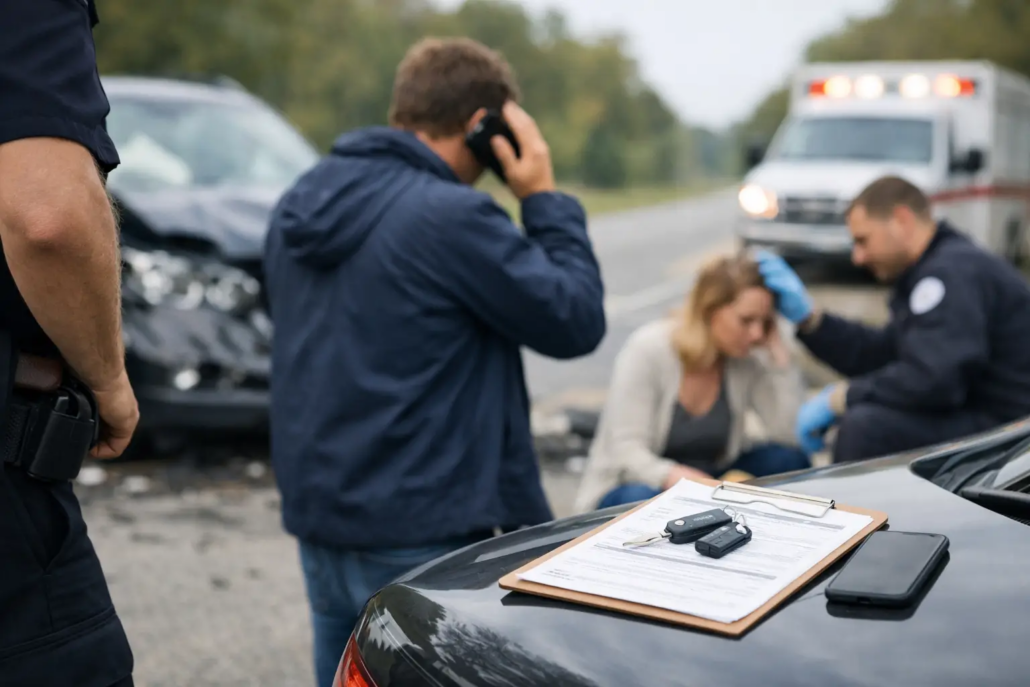
What to Do After a Car Accident in Massachusetts at the Scene
First, stop your vehicle and check whether anyone needs emergency help. Massachusetts drivers have legal duties after a collision, and leaving the scene can create serious consequences. Call 911 if anyone appears injured, traffic is blocked, a driver may be impaired, or the vehicles cannot be moved safely.
If you can do so without putting yourself at risk, move out of active traffic. This can be especially important on high-speed roads such as I-93, the Mass Pike, Route 128, or Route 1, where a secondary collision can be devastating. Turn on hazard lights and wait in a safe location.
Exchange identifying and insurance information with the other driver. Obtain their name, phone number, address, driver’s license number, license plate, insurance carrier, policy information, and vehicle owner information if the owner is different from the driver. If a commercial vehicle, delivery van, rideshare vehicle, or company car is involved, identify the company as well.
Before the vehicles are towed or moved, use your phone to document the scene. Photographs and video can capture details that disappear quickly, including vehicle positions, damage patterns, skid marks, debris, traffic signals, lane markings, weather conditions, construction barriers, and road defects. Take wide photos as well as close-ups.
If witnesses stopped, ask for their names and contact information. An independent witness may be able to confirm who had the green light, whether a driver was speeding, or whether a vehicle crossed a lane unexpectedly. Do not rely on police officers being able to speak with every witness before they leave.
Avoid admitting fault or arguing about responsibility. You can be cooperative without speculating. A simple statement such as, “I am shaken up and need to make sure everyone is okay,” is usually wiser than guessing about speed, distance, or what you could have done differently.
Get Medical Attention Before Symptoms Grow Worse
Some collision injuries are obvious at once. Others are not. Adrenaline can mask neck pain, concussion symptoms, back injuries, abdominal pain, and joint damage for hours or days. A person who walks away from a rear-end crash in Boston traffic may feel substantially worse the next morning.
Accept evaluation from emergency responders when appropriate. If you do not go to the emergency room, arrange prompt care with a doctor, urgent care provider, or other qualified medical professional. Tell the provider that you were in a motor vehicle collision and describe every symptom, even if it seems minor.
Medical records do more than support an insurance claim. They create a timeline of your condition and help ensure you receive appropriate treatment. Waiting too long can allow an insurer to argue that an injury came from another event or was not serious enough to require care. That does not mean every delay defeats a claim, but early documentation is generally helpful.
Follow through with prescribed treatment, referrals, imaging, and physical therapy unless a provider advises otherwise. Keep copies of discharge instructions, bills, prescriptions, appointment records, and work restrictions. If pain affects your ability to work, care for children, sleep, drive, or perform household tasks, keep a short written record of those limitations.
Report the Crash and Keep the Paper Trail
Massachusetts has crash-reporting requirements that may apply when a collision causes injury, death, or more than $1,000 in property damage. In many cases, the driver must submit a Motor Vehicle Crash Operator Report to the local police department where the crash occurred and to the Registry of Motor Vehicles within five days.
A police officer’s presence at the scene does not always eliminate the need to verify whether you must file your own report. Ask the responding officer how to obtain the report number, but do not assume that an officer’s report answers every administrative requirement. If you are physically unable to complete a report, seek help promptly from a family member, attorney, or other appropriate source.
Keep all crash-related documents together. This includes the police report, your written crash report, towing and repair paperwork, photographs, medical records, insurance letters, and receipts for expenses such as medications, rides to appointments, and rental transportation. A folder on paper or a secure digital file can prevent crucial information from getting lost when you are recovering.
Notify Insurers Carefully
You should notify your own auto insurer promptly after the crash. Massachusetts is a no-fault state for certain initial medical and wage-loss benefits, commonly called Personal Injury Protection or PIP. PIP coverage may help with qualifying expenses regardless of who caused the collision, though coverage details can depend on your policy and available health insurance.
Prompt notice does not require a detailed recorded statement. Give basic facts about the date, location, vehicles involved, and known injuries. Be accurate, but do not guess. If you do not know the answer to a question, say so.
The other driver’s insurance company may call quickly and sound helpful. Their adjuster works for that insurer, not for you. You are not required to provide a recorded statement to the other driver’s insurer, sign a broad medical authorization, or accept a fast settlement before you know the full extent of your injuries.
A quick offer can be tempting when medical bills and missed paychecks are already creating pressure. But a settlement generally ends your right to seek additional payment for the same crash. If treatment is ongoing, your condition is uncertain, or fault is disputed, it may be too early to know whether an offer is fair.
Preserve Evidence That May Not Last
The strongest evidence is often temporary. Nearby businesses may overwrite surveillance footage within days. A rideshare company may hold trip records and driver information. A trucking company may possess electronic logging data, inspection records, onboard camera footage, and maintenance documents. A construction-zone crash may involve temporary signs, lane closures, contractor records, or public agency decisions.
Preserve your own evidence immediately. Save text messages from the other driver, screenshots of rideshare trip details, dash-camera footage, and photographs in more than one place. Do not repair, sell, or dispose of your vehicle until it has been thoroughly photographed and, when liability is contested or injuries are serious, evaluated for evidence.
This is especially relevant in multi-vehicle crashes. The driver who struck you may not be the only responsible party. Liability can involve a vehicle owner, employer, negligent driver, rideshare company, contractor, manufacturer, or a party responsible for an unsafe roadway condition. The facts, not assumptions made at the scene, should guide that analysis.
Understand the Massachusetts Deadlines and Fault Rules
Massachusetts generally gives injured people three years to file a personal injury lawsuit, but waiting is rarely beneficial. Certain claims can have different notice rules or shorter practical timelines, particularly when a public entity, wrongful death, defective product, or out-of-state party is involved.
Massachusetts also follows a modified comparative negligence rule. In broad terms, an injured person may recover damages if they are not more than 50 percent responsible for the crash, though their compensation can be reduced by their share of fault. Insurers may use statements, photographs, vehicle damage, and gaps in treatment to argue that you were partly responsible. That is another reason to protect evidence early.
For serious injuries, the question is not limited to vehicle repairs. A claim may involve medical expenses, lost income, reduced earning capacity, pain and suffering, future treatment, and the effect of an injury on daily life. The available insurance coverage and the people or companies responsible can significantly affect what recovery is possible.
When It Makes Sense to Speak With a Lawyer
Legal guidance may be particularly useful when someone was seriously injured, a pedestrian or cyclist was hit, a commercial or rideshare vehicle was involved, fault is disputed, the other driver was uninsured, or an insurer is pressuring you to settle. It can also help when an accident involves a child, a fatal injury, a hit-and-run driver, or a poorly maintained road or construction zone.
Massachusetts Injury Lawyers can review the circumstances of a crash, identify evidence that should be preserved, and explain the insurance issues without charging for an initial consultation. The firm is available 24/7 and can travel to injured clients who cannot get to an office.
After a crash, you do not need to have every answer before asking for help. Protect your health, keep the documents and evidence you can, and give yourself room to understand what the accident has truly cost before making decisions that cannot be undone.

