
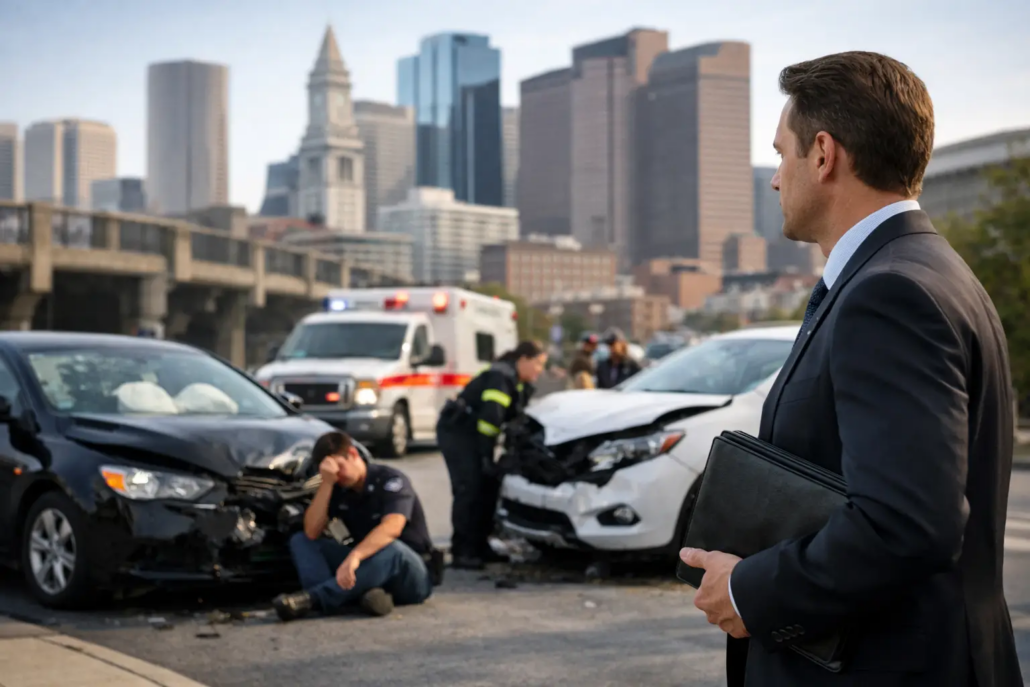
When to Call a Boston Rideshare Accident Lawyer
A rideshare crash can turn an ordinary trip through Boston into a difficult insurance and medical situation within minutes. A Boston rideshare accident lawyer can help an injured passenger, driver, pedestrian, cyclist, or family understand what happened, preserve evidence before it disappears, and identify every source of potential coverage.
Uber and Lyft collisions are not handled exactly like ordinary two-car crashes. The driver may be an independent contractor, the rideshare company may provide insurance at certain points in the trip, another driver may have caused the collision, and several insurers may become involved at once. The details matter from the beginning.
Why rideshare crashes create difficult insurance questions
The central question in many Uber or Lyft claims is simple: What was the driver doing in the app when the crash occurred? The answer can affect which insurance policy applies and how much coverage may be available.
A driver may have been off duty and using the vehicle personally. The driver may have been signed into the app and waiting for a ride request. Or the driver may have accepted a trip, been traveling to pick up a passenger, or had a passenger in the vehicle. These are different stages, and the coverage rules can differ at each one.
Insurance companies do not always agree about the driver’s status. A driver may say the app was active, while an insurer requests confirmation. The rideshare company’s electronic records, trip data, driver logs, and communications can help establish the timeline. Those records are not necessarily available forever, which is one reason prompt legal action can matter.
Liability can also extend beyond the rideshare driver. A speeding or distracted driver, a commercial truck operator, a vehicle owner, a company responsible for vehicle maintenance, or a government entity responsible for a dangerous roadway condition may share fault. On Boston streets, a crash may involve a dooring incident, a blocked bike lane, confusing construction traffic patterns, poor visibility, or a sudden stop in congested traffic. The legal analysis should account for the full setting, not just the rideshare vehicle.
What should you do after an Uber or Lyft collision?
Your first priority is medical care. Some injuries, including concussions, internal injuries, neck trauma, and soft-tissue damage, may not be obvious at the scene. Accept emergency assistance when needed and follow up with a medical provider promptly. Medical records help protect your health and document the connection between the crash and the treatment you need.
If you can do so safely, report the collision to police and obtain the report number. Take photographs of the vehicles, damage, roadway, traffic signals, debris, weather conditions, and visible injuries. If you were a passenger, take screenshots of the trip in the Uber or Lyft app, including the driver’s name, vehicle information, route, pickup and drop-off times, and receipt.
Ask witnesses for their names and contact information. Boston intersections, apartment buildings, stores, parking garages, and nearby transit areas may have cameras that captured the crash. Surveillance video can be overwritten quickly. A lawyer can send preservation requests to appropriate parties while the evidence may still exist.
You should also report the crash through the rideshare app, but use care when describing injuries or assigning fault before the facts are clear. Do not post about the collision on social media. Insurers may review public posts and use incomplete information to challenge the seriousness of an injury or the impact of the crash on your daily life.
When should you speak with a Boston rideshare accident lawyer?
It is wise to seek legal advice early when anyone was injured, when the facts are disputed, or when an insurer contacts you for a recorded statement. You do not need to wait until every medical bill arrives or until an insurer makes an offer. Early guidance can help prevent avoidable mistakes while you focus on treatment.
A lawyer can examine the police report, photographs, app records, medical documentation, witness accounts, vehicle data, and available video. That investigation can clarify whether the rideshare driver was working, whether another vehicle was involved, and whether a defective vehicle part or unsafe roadway contributed to the collision.
Legal help may be especially valuable when a passenger faces pressure from multiple insurers. The driver’s personal carrier, the rideshare company’s carrier, the at-fault driver’s insurer, and your own auto insurer may each have different positions. Their interests are not necessarily aligned with yours.
Massachusetts also has no-fault personal injury protection benefits in many auto claims. PIP may help with certain medical expenses and lost wages, subject to the policy and circumstances. But PIP does not resolve every loss, particularly where injuries are serious, treatment is ongoing, or another party’s negligence caused substantial harm. Underinsured or uninsured motorist coverage may also become relevant if the at-fault party lacks adequate coverage.
Evidence can decide a rideshare injury claim
Rideshare cases often depend on evidence that is more technical than a standard crash claim. The driver’s app status may establish whether company-provided coverage was in effect. GPS records may show speed, route, sudden braking, or the point of impact. Vehicle event data can help reconstruct a collision. Phone records, where legally obtainable, may support or challenge a distracted-driving allegation.
The evidence of your injuries matters just as much. Keep records of appointments, prescriptions, therapy, work restrictions, missed work, travel costs for treatment, and the ways pain or limitations affect your household and routine. A brief daily journal can be useful when an injury disrupts sleep, mobility, parenting, work duties, or activities you previously handled without difficulty.
Do not assume that visible vehicle damage tells the entire story. Even a collision that appears minor in photographs can cause a significant aggravation of a preexisting condition or a serious head, neck, back, or joint injury. At the same time, every case must be evaluated honestly based on medical findings, causation, coverage, and the available evidence.
Who may be responsible for a rideshare accident?
Responsibility depends on the facts. In a straightforward case, the rideshare driver may be liable for following too closely, running a red light, speeding, making an unsafe lane change, or driving while distracted. In other cases, the at-fault party may be another motorist who struck the Uber or Lyft vehicle.
A passenger can have a claim even if both drivers share fault. Massachusetts uses comparative negligence rules, which means fault may be divided among the parties. A person who is injured may still recover damages if the facts support a claim, though their own percentage of fault can affect recovery. Passengers are rarely in control of the driving decisions that cause a collision, but each case requires a careful review.
Other claims may arise when poor vehicle maintenance, defective brakes or tires, a dangerous construction-zone setup, inadequate signage, or hazardous property conditions played a role. A crash involving a city vehicle or a dangerous public roadway can raise special notice requirements and deadlines. Waiting can make an already complicated case harder to investigate.
Be careful with early settlement offers
After a crash, an insurer may quickly offer money before the full extent of an injury is known. An early offer can be tempting when medical bills and missed paychecks are mounting. But accepting a settlement usually means giving up the right to seek additional compensation later, even if symptoms worsen or treatment becomes more extensive.
Before agreeing to a release, consider whether you have reached maximum medical improvement, whether future treatment has been evaluated, and whether all responsible parties and insurance policies have been identified. Serious injury claims may involve compensation for medical expenses, lost income, reduced earning capacity, pain and suffering, and other losses recognized under Massachusetts law. The proper value depends on the evidence, not an insurer’s first number.
Massachusetts Injury Lawyers, operating through Neumann Law Group, offers free consultations and is available 24/7 for people injured in Boston and throughout Massachusetts. If travel is difficult after a collision, the firm can come to you.
A rideshare crash does not have to leave you sorting through app messages, insurance calls, and medical paperwork alone. Protect the evidence, get the care you need, and ask questions before signing away your rights.


Leave a Reply
Want to join the discussion?Feel free to contribute!