What Should Boston Crane Accident Investigators Examine?
A crane or hoist failure at a Boston jobsite can leave workers and families asking an immediate question: was a part defective, or did the lift go wrong for another reason? A Boston crane accident construction injury investigation may need to consider the equipment alongside the planning, load, rigging, site conditions, and people coordinating the work. As a Massachusetts crane-operation incident in Braintree illustrates, a crane event can involve multiple workers and operational details; that example occurred in Braintree, not Boston.
Neumann helps readers understand why a failure alone does not establish who is legally responsible. Investigators may examine how the lift was planned and performed, what records exist, and whether an employer or an outside party may have a role. This article describes the evidence that may matter, how Massachusetts workers’ compensation fits in, and why preserving equipment and project information can help clarify what happened.
What should investigators examine after a Boston crane accident?
Investigators typically work to reconstruct the lift, not simply identify the component that failed. They may compare the crane or hoist’s condition with the task it was performing, the load it was carrying, and the site setup at the time. A Boston jobsite dump-truck rollover involving load and site conditions raises related questions: how equipment, ground conditions, load characteristics, and site roles fit together in an incident.
The equipment, load, and setup
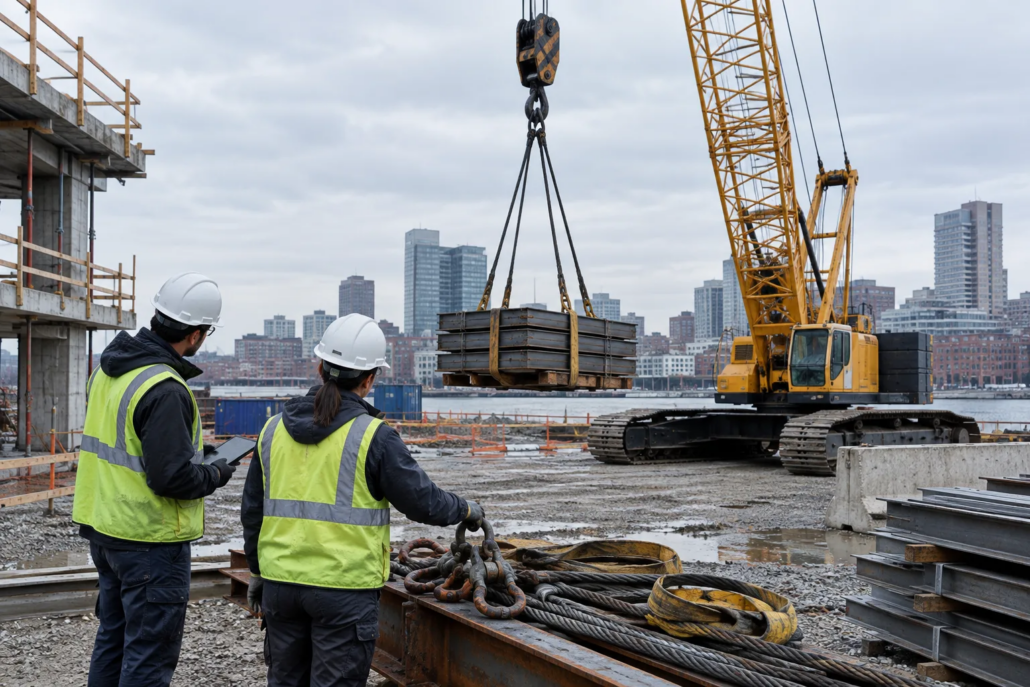
The review may include the crane’s configuration and capacity for the lift, the load’s weight and balance, and whether the rigging was suitable and in usable condition. For a mobile crane, investigators may also consider ground stability, outrigger placement, and any mats or supports in use. For a hoist, relevant items can include controls, brakes, ropes or chains, hooks, and safety devices. Wind, visibility, and nearby obstructions may also help explain the conditions.
The plan and the people coordinating the lift
Investigators may look for a lift plan, load calculations, equipment inspection and maintenance history, repair records, and information about operator qualifications. They may also review who selected the rigging, directed the lift, gave signals, controlled the work area, and communicated hazards. These details can show whether instructions were clear and whether the plan matched actual site conditions. A component’s failure is important evidence, but it may not explain the full sequence of events.
How do workers’ compensation and outside-party claims fit?
In Massachusetts, workers’ compensation may provide benefits for eligible employees with work-related injuries, subject to the requirements and limits of the state system. The Department of Industrial Accidents (DIA) administers that system. Benefits and a separate claim against a potentially responsible outside party are different issues; one does not automatically establish the other. Questions about potential workers’ compensation reimbursement claims after a Boston injury may also arise if there is a later recovery from another party.
Depending on the facts, investigators may assess whether a manufacturer, equipment owner, maintenance contractor, subcontractor, or other business had a relevant role. A potential claim may depend on what a party did, what it controlled, and whether its conduct contributed to the incident. An employer’s responsibilities and the rules that apply to a claim can be different from those governing an outside party. The relationships among contractors and the work each controlled therefore matter.
Investigators may also examine whether the load or material fell, who controlled the surrounding area, and what measures were used to keep people clear. Those questions connect to responsibility for a falling object at a Boston construction project. Safety-agency reviews and civil claims serve different purposes, and an agency’s findings do not necessarily decide legal responsibility. Which agencies become involved can depend on the workplace and the circumstances.
Why preserve crane, hoist, and project information?
Equipment may be moved, repaired, dismantled, or returned to service after an incident. Those changes can make it harder to understand the original condition and configuration. When feasible and appropriate, preserving relevant components and documenting their condition before changes are made may help qualified investigators assess them. Photographs or video of the equipment, rigging, load, supports, and surrounding area can also help record what the site looked like.
Project records can be just as important. Relevant material may include lift plans, daily inspection checklists, maintenance and repair histories, equipment rental records, load information, training records, communications about the lift, and incident reports. Witness names and contact details may help investigators identify people who saw the setup or gave instructions. Keep original records when possible and note where copies came from; avoid altering or annotating source files.
Workers and families may not control the equipment or have access to a contractor’s records. A company, property owner, or agency may hold important material, and access can depend on the circumstances. Early documentation can help identify what exists before normal record practices or project changes make it harder to locate. Similar evidence questions after a Boston worksite ladder fall show why the equipment, its setup, and the surrounding conditions can all matter in a construction incident. In Boston, the specific project, contractors, and records involved will shape what can be examined.
Frequently Asked Questions
Does a crane failure automatically mean the employer or operator was at fault?
No. A failure by itself does not establish legal fault. Investigators may need to assess the equipment, lift plan, load, site conditions, maintenance, training, and communications among those directing the work. Massachusetts workers’ compensation and a possible claim against another party also involve different questions. Responsibility depends on the evidence and the circumstances, so a general description of the incident cannot determine who may be liable.
Can a worker receive workers’ compensation and pursue an outside party?
Potentially, depending on the circumstances and applicable Massachusetts law. Workers’ compensation benefits and a claim against a party outside the employer relationship are distinct matters. If an outside-party recovery occurs, reimbursement or lien issues may affect how funds are handled. The parties involved, the worker’s employment arrangement, and the evidence can all matter. An attorney can explain how those issues may apply to a particular situation.
What if the crane or hoist has already been repaired or removed?
An investigation may still use photographs, inspection notes, maintenance files, repair records, rental documents, witness accounts, and project communications to reconstruct the equipment’s condition and use. Investigators may also identify who handled the equipment and whether components or records remain available. The loss of one type of evidence does not necessarily answer every question, but it can affect what can be reliably established.
Could a family bring a claim after a fatal crane incident?
A fatal workplace incident may raise questions about workers’ compensation death benefits and, depending on the facts, a possible claim involving an outside party. The rules, eligible claimants, and available remedies are specific to the circumstances and Massachusetts law. Evidence about the equipment, lift coordination, and project relationships may be relevant. A qualified attorney can discuss the options that may apply to the family’s situation.
How Neumann Can Help
Neumann is dedicated to helping injured workers and families understand the issues that can follow a crane or hoist incident. The firm can evaluate how the equipment, lift planning, maintenance history, jobsite coordination, and workers’ compensation issues may relate to the available evidence. Depending on the circumstances, an attorney may also assess whether another party’s role warrants further review and explain how reimbursement issues could affect a separate claim. Contact Neumann to request a free consultation and discuss your situation.
The information in this article is for educational purposes only and does not constitute legal advice. Contact a qualified attorney authorized to practice in the jurisdiction that applies to your matter for advice specific to your situation.

Leave a Reply
Want to join the discussion?Feel free to contribute!