
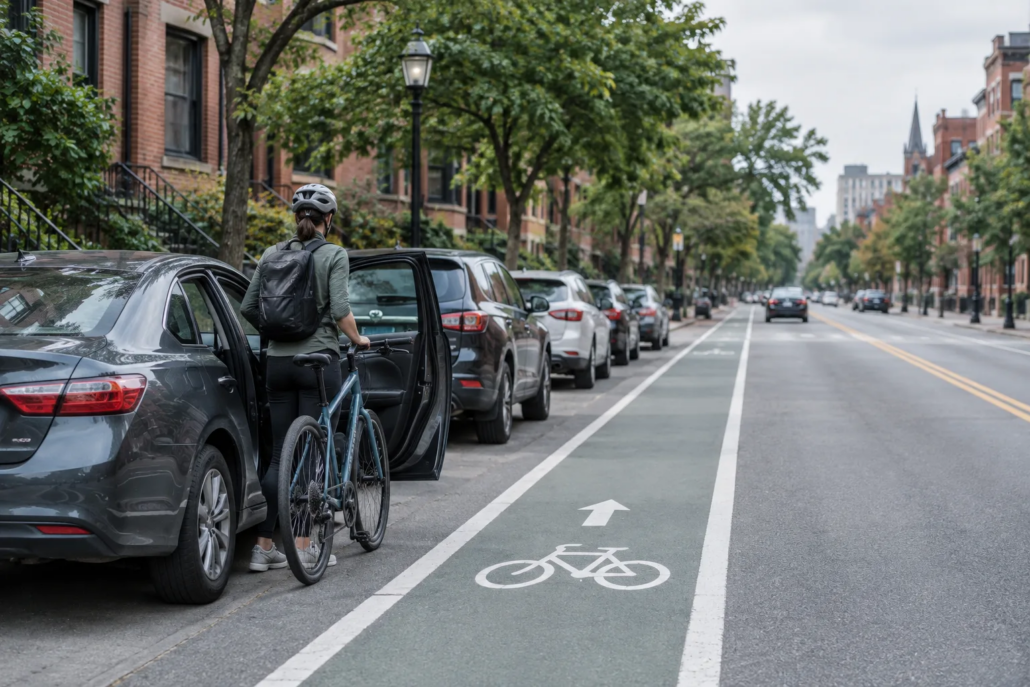
What Details Matter in a Boston Bicycle Dooring Claim?
A cyclist riding beside parked cars may have little time to react when a vehicle door swings into the travel path. A Boston bicycle dooring accident claim can depend on more than the impact itself: who opened the door, where the bicycle was positioned, how traffic was moving, and what evidence remains. For an overview of evidence in a Boston bicycle dooring collision, it helps to consider what details can show how the crash unfolded.
Neumann helps readers understand the issues that may arise after a bicycle crash without assuming that fault is automatic. This article explains who may be responsible, what information can be useful to record, and how injury care and claim deadlines can matter. The circumstances of each collision are different, and a careful review may be needed to assess responsibility.
Who may be responsible in a Boston bicycle dooring accident claim?
A person opening a vehicle door may have a responsibility to do so only when it is reasonably safe. If a door is opened into the path of an approaching cyclist without checking, that action may be relevant to a claim. The driver may have opened the door, but another occupant could have done so. The person’s role, what they could see, and the surrounding conditions may all matter.
The cyclist’s position and conduct can also be considered. For example, evidence may show whether the cyclist was traveling in a marked bike lane, moving with traffic, or able to see and avoid the door. A bike lane does not, by itself, decide who is at fault, and its absence does not automatically establish that the cyclist caused the collision.
Other circumstances may be relevant, including whether the vehicle was parked or stopped, how long the door was open, visibility, lighting, traffic flow, and whether a commercial or other vehicle was involved. Massachusetts evaluates fault based on the evidence and the conduct involved; how Massachusetts evaluates fault after a motor vehicle crash may help explain why one detail rarely decides a claim on its own. In Massachusetts, a person’s share of fault can affect recovery under the state’s comparative negligence rules.
What evidence can help explain a Boston dooring collision?
Useful details are often easiest to capture soon after the crash, if it is safe and practical to do so. A cyclist or someone assisting may want to record:
- The vehicle’s make, model, color, and license plate, along with the door that opened and how far it was open.
- The bicycle’s position and direction of travel, including whether a bike lane or other marked lane was present.
- The street layout, nearby parked vehicles, intersections, visibility, lighting, and traffic conditions.
- Names and contact details for witnesses, and whether nearby businesses or vehicles may have recorded video.
- Photographs of the scene, bicycle, vehicle, and visible damage, if these can be taken safely.
Boston streets can have narrow lanes, curbside parking, bike lanes, and frequent intersections. A clear record of the scene may help explain how much space was available and what each person could see. Avoid assuming a photograph alone tells the whole story; perspective, timing, and changes to the scene can affect what it shows.
If police respond, an incident report may preserve some observations, but it does not necessarily determine civil liability. Keep original photos and video where possible, note when and where they were taken, and preserve witness information. For a more detailed discussion of evidence in a Boston bicycle dooring collision, the vehicle, door position, street layout, and available recordings can each help clarify competing accounts.
What should an injured cyclist consider after documenting the crash?
An injured person’s health should not be treated as an afterthought to gathering evidence. Appropriate medical evaluation can identify injuries and create a record of symptoms and care. Follow-up visits, discharge instructions, and treatment records may help show how an injury developed over time. This is particularly relevant when symptoms are not obvious immediately after a collision. For example, records that may help document a concussion after a Boston crash explains why keeping consistent medical documentation can matter when head-injury symptoms are involved.
A cyclist may also keep a simple timeline of the collision, symptoms, appointments, missed work, and communications with insurers. Save receipts or other records related to the crash, and distinguish personal recollections from details confirmed by photographs or witnesses. These materials can help an attorney or insurer evaluate the claim, but no single record guarantees a particular conclusion.
Massachusetts fault rules may reduce damages based on an injured person’s share of responsibility, so evidence of the cyclist’s position and conduct may be important as well as evidence about the door. Deadlines can depend on the claim and its circumstances. Do not assume that discussions with an insurer pause a filing deadline; review Massachusetts deadlines for filing a Boston motor vehicle injury claim and verify the time limit that applies to the particular situation.
Frequently Asked Questions
Does a driver have to be moving for a dooring claim to arise?
Not necessarily. A collision may involve a parked or stopped vehicle, because the issue can be the act of opening a door into a cyclist’s path rather than the vehicle’s movement. The relevant facts may include who opened the door, what they could see, and how the cyclist was traveling. A stationary vehicle alone does not settle whether anyone was legally responsible.
What if a passenger, not the driver, opened the car door?
The person who opened the door may be an important part of the liability analysis, even if that person was a passenger. The driver’s actions and other circumstances may also be relevant, depending on the facts. Identifying who opened the door and preserving witness accounts can help clarify what happened. Responsibility cannot be determined only from the person’s role in the vehicle.
Can a cyclist bring a claim if there was no bike lane?
The absence of a marked bike lane does not by itself establish that a cyclist was at fault or prevent a claim. The location of the bicycle, traffic conditions, applicable rules, and the actions of everyone involved may be considered. In Boston, roadway design and curbside parking may affect the available space, but the particular street and collision details matter.
Does a police report decide who is responsible?
A police report may preserve information about the scene, involved people, or observations made by responding officers. It generally should not be treated as the final decision on civil liability. Witness accounts, photographs, video, roadway conditions, and other evidence may add context or differ from an initial report. The value of a report depends on what it records and the circumstances of the crash.
How Neumann Can Help
A dooring collision can leave questions about the driver’s actions, the cyclist’s position, and what the available evidence actually shows. Neumann is dedicated to helping injured people understand the issues that may affect a Boston bicycle accident injury claim, including roadway evidence, injury records, and potential shared fault. The firm can review the circumstances and explain options without promising a particular outcome. If you were injured in a bicycle dooring collision, contact Neumann to request a consultation or case evaluation and discuss your situation.
The information in this article is for educational purposes only and does not constitute legal advice. Contact a qualified attorney authorized to practice in the jurisdiction that applies to your matter for advice specific to your situation.


Leave a Reply
Want to join the discussion?Feel free to contribute!