How Is Fault Shared After a Boston Chain-Reaction Crash?
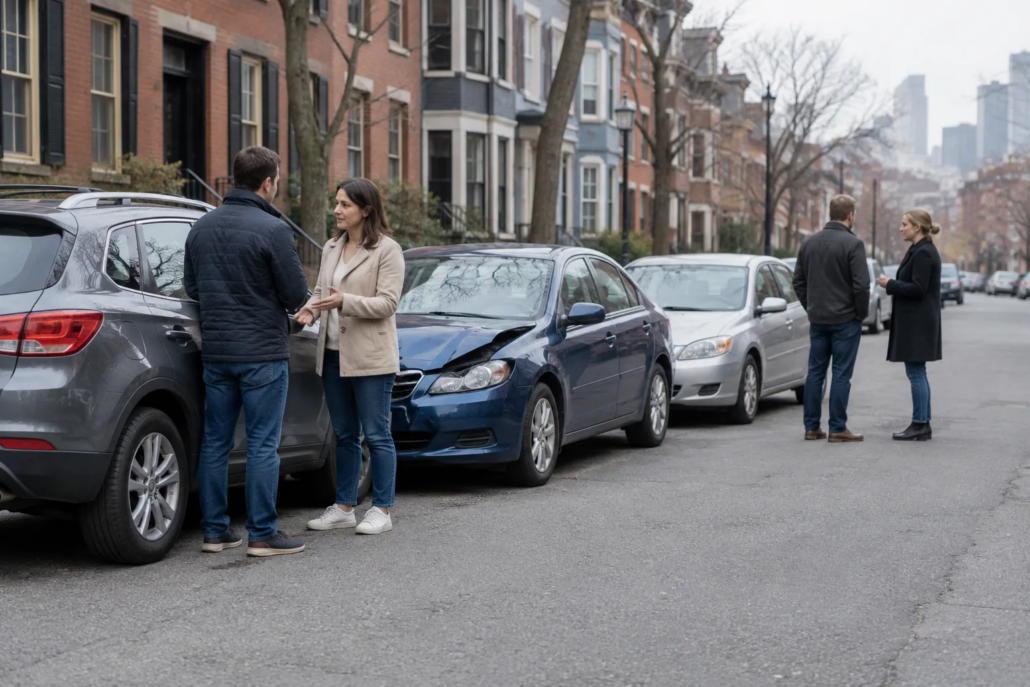
A chain-reaction crash on a Boston street can unfold in seconds: one vehicle slows, another strikes it, and a third impact follows before anyone can react. Afterward, drivers may disagree about when each collision happened or whether an earlier impact pushed a vehicle forward. Boston chain reaction car accident fault can depend on those details. Neumann’s motor vehicle accident guidance helps explain why more than one account may be needed to understand a multi-car crash. This article covers how impact sequence and driver conduct may affect responsibility, what evidence can help clarify events, and what records may be useful as a claim is evaluated.
How Boston chain-reaction crash fault depends on impact sequence
A collision involving several vehicles is not automatically one event with one responsible driver. Each impact may have its own cause. A driver who was following too closely could cause a first rear-end impact, for example, while a separate driver’s later conduct might contribute to another collision. Alternatively, a vehicle struck from behind may be pushed into the car ahead, making the sequence important to understanding who could reasonably have avoided which impact.
In Massachusetts, fault may be shared when the actions of more than one person contributed to an injury. Massachusetts follows a comparative-fault approach: a person’s potential recovery can be affected by their share of responsibility, and recovery is generally barred if that person’s share of fault is greater than the combined fault of the other parties. How that principle applies depends on the facts and claims involved. The number of cars, by itself, does not determine each driver’s share.
Why the order of impacts matters
Accounts can differ about whether a driver stopped before being hit, was pushed into another vehicle, or had time to react between impacts. Damage locations and patterns may be considered alongside those accounts, but damage alone may not establish the timing or cause of every contact. A rear impact, for instance, does not necessarily explain what happened earlier in a sequence. For more context on how driver conduct and impact sequence affect rear-end fault, consider how a single impact may fit into a larger chain of events.
What evidence may clarify responsibility in a Boston multi-car crash?
A useful investigation may compare different sources rather than rely on a single driver’s recollection. Information that may help establish a timeline can include:
- Each driver’s account of what they saw, heard, and felt, including the order and location of impacts.
- Photographs of vehicle positions, damage, debris, skid marks, road conditions, and nearby traffic controls, if available.
- Contact information for witnesses and a note about which part of the crash each person observed.
- Available dashcam, nearby business, residential, or traffic-camera recordings. Recordings may not exist or remain available, so their usefulness depends on the circumstances.
- Vehicle data or other electronic records, if relevant and accessible. The availability and meaning of such data may depend on the vehicle, the event, and how it is obtained.
In Boston, a police crash report or other law-enforcement documentation may provide useful information, but it does not necessarily resolve every disputed question of fault. A report may include initial observations and statements; other evidence may add detail or show a different sequence. Investigators and insurers may compare the sources and assess their reliability.
Vehicle condition can also matter. Photographs taken before repairs, repair records, and the opportunity to inspect a damaged vehicle may help preserve information about points of impact. Depending on the situation, a reader may find it useful to review guidance on preserving a damaged vehicle as crash evidence before deciding what to do with it.
Building a careful timeline and preserving useful records
When several impacts happen close together, separating firsthand observations from assumptions can make an account clearer. A person may remember a jolt or a sound without knowing which vehicle made contact first. Writing down what is remembered, when it was noticed, and what remains uncertain can help distinguish direct recollection from later conclusions. If an insurer asks questions, accurate and consistent reporting matters; these questions about giving an insurer a recorded statement may help readers understand why the details of an account deserve care.
Other records may fill gaps in the timeline. Phone records, for example, may be considered with witness accounts, physical evidence, and other information when investigating what a driver was doing before a crash. A phone record does not automatically prove distraction or establish fault. Its meaning depends on what the record shows and how it fits with the rest of the evidence. More on using phone records to help build a crash timeline explains that distinction.
Medical information serves a different purpose: it can document reported symptoms, evaluation, and treatment after a collision, but it does not by itself establish which driver caused the crash. Keeping bills and records together may help explain the effects of an injury while responsibility is being investigated. Massachusetts personal injury protection (PIP) may be a source of benefits for certain expenses, subject to the applicable terms and circumstances; other payment arrangements may also be relevant. This overview of how Boston crash medical bills may be addressed while fault is disputed discusses that separate issue.
Frequently Asked Questions
Does a police report decide who is at fault in a Boston chain-reaction crash?
Not necessarily. A report may record observations, statements, and other information gathered after the crash, but it is one source among many. It may not capture every impact or resolve disagreements about timing. Insurers, attorneys, or a court may consider the report alongside photographs, witness accounts, vehicle damage, recordings, and other available evidence. The weight given to any report depends on the circumstances.
Can a passenger make a claim involving more than one driver?
Depending on the facts, a passenger injured in a multi-vehicle collision may have claims involving one or more drivers. The relevant insurance policies, the passenger’s circumstances, and the evidence about how the crash happened can all matter. A passenger’s claim is not automatically limited to the driver of the vehicle they occupied. The potential options depend on the specific facts and applicable Massachusetts law.
What if a witness saw only one part of the crash?
A witness may still have useful information even if they did not see every impact. They might describe the traffic conditions, a vehicle’s position, or one moment in the sequence. Their account can be compared with other evidence to understand what it does and does not establish. Investigators may consider the witness’s vantage point, timing, and opportunity to observe when evaluating the account.
Do all drivers need to agree about how the crash happened?
No. Drivers may give different accounts, especially when impacts occur rapidly or visibility is limited. A claim may still be evaluated by comparing the available evidence and identifying what is disputed. Disagreement does not, on its own, show that a particular person is responsible. The significance of differing accounts depends on their detail and consistency with other information.
How Neumann Can Help
Neumann is dedicated to helping people understand the issues that can arise after a multi-vehicle collision, including questions about impact sequence, evidence, and shared responsibility. The firm can review the available information, explain how Massachusetts fault principles may apply, and discuss options based on the circumstances. No two crashes have exactly the same evidence, and an initial account may not answer every question. If you were injured in a Boston chain-reaction crash, contact Neumann to request a free consultation or case evaluation and discuss your situation.
The information in this article is for educational purposes only and does not constitute legal advice. Contact a qualified attorney authorized to practice in the jurisdiction that applies to your matter for advice specific to your situation.


Leave a Reply
Want to join the discussion?Feel free to contribute!