
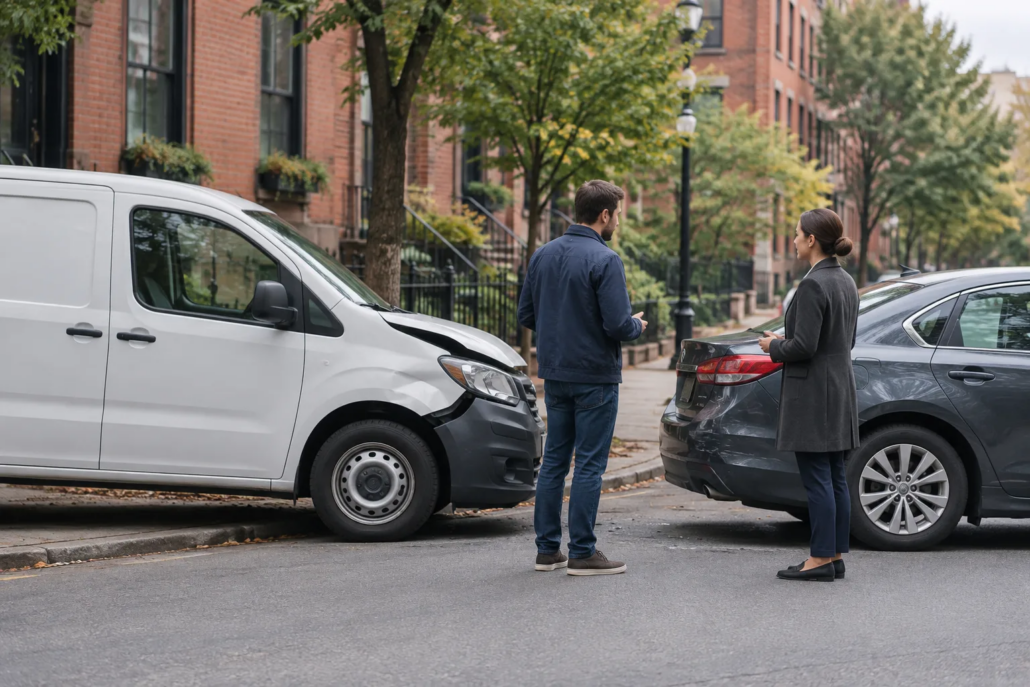
Which Policies May Cover a Boston Delivery Driver Crash?
A collision involving a delivery driver can leave an injured person with more questions than answers. The driver may have been using a personal car, a vehicle supplied by someone else, or a company vehicle—and an app may show whether an order was underway. For anyone considering a Boston delivery driver accident claim, those details can affect which insurer may need to review the crash. Neumann helps people understand the coverage questions that may arise, without assuming that one policy applies to every delivery. This guide explains how personal auto insurance, commercial or platform-related policies, and the driver’s work status may intersect. It also covers why an insurer’s first response may not reveal the complete picture, which trip and vehicle details can help clarify it, and how Massachusetts first-party benefits may fit while fault is being investigated. Coverage depends on the facts and the wording of the policies involved.
Which insurance may apply after a Boston delivery-driver crash?
There is no single rule that makes every delivery crash a commercial claim. A driver’s personal auto policy may be relevant, but it may contain terms addressing vehicle use for paid work. A business, fleet owner, or delivery platform may also have insurance that could be considered, depending on the driver’s relationship with the business, the vehicle, the policy terms, and the driver’s activity at the time. The existence of a policy does not by itself establish that it covers a particular loss.
Personal, commercial, and platform-related policies
The possible sources can include:
- The driver’s personal auto insurer, subject to the policy’s terms and any applicable exclusions.
- A commercial auto policy held by a business or vehicle owner, if its coverage applies to the driver and trip.
- A delivery service’s or platform’s insurance, where available and where its requirements are met.
- An injured person’s own policy, which may provide certain first-party benefits regardless of who caused the crash.
Delivery apps do not all operate under the same arrangements. In particular, rideshare coverage descriptions are only a comparison: rules or policy terms for passenger transportation do not automatically determine coverage for food or package delivery. Massachusetts coverage requirements and policy language may change, so current terms and the specific facts matter.
Why the trip stage matters
A driver who is off duty, waiting for an order, traveling to a pickup, or completing a delivery may be treated differently under a particular policy. App records can help establish whether the driver was logged in, had accepted an order, and was still carrying it out. Those records are one part of the picture, not a final coverage decision. For comparison only, see how Uber and Lyft coverage can change with driver status; delivery-platform policies may work differently.
How can you identify the vehicle, driver, and relevant policies?
In Boston, useful details can be easy to lose after a stressful collision. If it is safe and practical, information that may help identify the right parties includes the driver’s name and contact details, the vehicle’s make and model, its license plate, and the name of any delivery service shown in the app or on the driver’s materials. Do not assume that a vehicle belongs to the driver. It may be borrowed, leased, or provided by a business.
Vehicle ownership can point to another potential source of insurance or records. Registration information, the owner’s identity, and the driver’s relationship to that owner may help clarify which policy should be reviewed. These are the kinds of vehicle records that can clarify ownership and insurance questions. A photo of the vehicle or a contemporaneous note of identifying details may help preserve what was visible at the scene.
Other potentially useful information includes the time and location of the collision, the delivery’s pickup and destination, and whether the driver had accepted an order. A Boston Police Department incident report may record information gathered by responding officers, but it is not an insurance coverage decision. If the crash leads to a lawsuit, the appropriate court will depend on the claim and other procedural factors; a serious injury case may involve Suffolk County courts. Do not treat any one record as proof that a particular insurer must pay.
Massachusetts Personal Injury Protection (PIP) may be relevant through an applicable auto policy for certain benefits, subject to eligibility, policy terms, and state law. It is distinct from a liability claim against the driver or another responsible party. Read more about Massachusetts PIP benefits after a Boston crash, which may be worth understanding while responsibility and other insurance are still being reviewed.
Why can early insurance information be incomplete?
The first insurer contacted may not be the only one with a potential role. An initial call might involve the driver’s personal carrier, while questions about app activity, a vehicle owner, or a business policy remain open. An early answer may reflect only the information currently available to that insurer. It should not automatically be treated as a complete account of every possible policy or as a final coverage determination.
When communicating with an insurer, it can be helpful to clarify which policy and insured person the representative is discussing. If an insurer requests a recorded statement, the circumstances may matter; this overview explains what to know before giving an insurer a recorded statement. A person may want to understand the request and its purpose before deciding how to respond. This article does not provide individualized advice about whether to give a statement.
A careful review may involve comparing the driver’s account with delivery-app timestamps, dispatch or order records, vehicle ownership, and policy information. It can also be useful to keep communications and claim reference details organized. If more than one person was hurt, a policy’s limits may be relevant to multiple claims; finding a policy does not establish how much may be available to any one claimant. Learn how several injury claims can draw on one auto policy.
The driver’s work status can raise a separate issue if the injured person is the delivery driver rather than someone struck by the vehicle. Workers’ compensation and a possible claim against another at-fault party are different questions that may coexist in some circumstances. This discussion of workers’ compensation and third-party claims after a Boston delivery-driver crash explains why the person’s employment relationship and the crash circumstances both matter.
Frequently Asked Questions
Does it matter if the delivery driver was using a borrowed car?
It can. A borrowed vehicle may involve the driver’s policy, the vehicle owner’s policy, or other coverage, depending on the policies and the circumstances of permission and use. The owner may be a friend, a rental company, or a business. Identifying who owned the car and who insured it can help clarify which insurers should be contacted, but it does not establish that a particular policy covers the crash.
Can I use my own auto policy while fault is disputed?
Possibly. Depending on the policy, the people involved, and Massachusetts requirements, an injured person’s own auto coverage may provide certain first-party benefits while responsibility is being investigated. PIP is not the same as a liability claim against a delivery driver, and it may not cover every loss. The policy and circumstances determine what may be available, so an insurer or Massachusetts-licensed attorney can address the specifics.
What if the driver was between orders when the crash happened?
The driver’s exact activity may matter, but “between orders” does not settle coverage by itself. Insurers may consider whether the driver was logged into an app, waiting for an offer, traveling for personal reasons, or otherwise acting within a delivery arrangement. App and trip records can help establish timing. The applicable policy language and the relationship between the driver and service still need to be reviewed.
Can more than one insurer investigate the same delivery crash?
Yes. Different insurers may investigate different potential coverage sources, such as the driver’s personal policy, a vehicle owner’s policy, or a business or platform policy. They may request information about the same collision for separate reasons. Their involvement does not necessarily mean that each policy applies, or that any insurer has accepted responsibility. Keeping track of which insurer represents which policy can reduce confusion as information develops.
How Neumann Can Help
Neumann is dedicated to helping injured people understand the insurance questions that can follow a delivery-driver collision. A review may consider the driver’s work and app status, who owned or insured the vehicle, what trip records may exist, and whether first-party benefits or other policies could be relevant. Coverage depends on policy language and individual facts, so an early insurer response may not resolve every question. If you were hurt in a Boston delivery-driver crash, contact Neumann to discuss your circumstances and request a free consultation or case evaluation. The firm is committed to fighting for clients’ rights and is ready to evaluate your situation without promising a particular outcome.
The information in this article is for educational purposes only and does not constitute legal advice. Contact a qualified attorney licensed in Massachusetts for advice specific to your situation; laws vary by location and may change after publication.

Leave a Reply
Want to join the discussion?Feel free to contribute!