How Can a Boston Crosswalk Accident Lawyer Assess Liability?
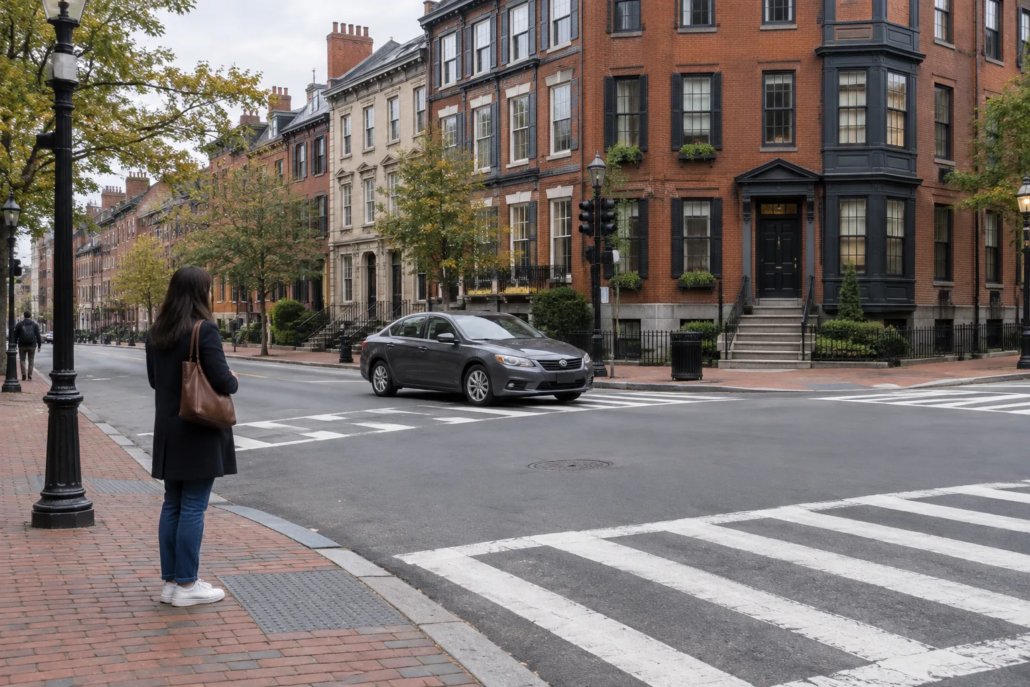
A person crossing a Boston street may have little time to react when a vehicle turns or approaches an intersection. After a collision, a Boston crosswalk accident lawyer may assess more than where the impact occurred: signal timing, sightlines, witness accounts, and the actions of everyone involved can all matter. Neumann helps readers understand the kinds of facts that may clarify responsibility, without assuming that a crosswalk location alone decides fault.
This overview explains how driver and pedestrian conduct may be evaluated, what scene and medical evidence may be useful, and when someone besides the driver could be relevant. The details can be difficult to reconstruct once a scene changes or video is overwritten, so understanding what information may matter can help families ask informed questions.
How a Boston Crosswalk Accident Lawyer May Assess Responsibility
A crosswalk collision does not automatically establish who was at fault. In Massachusetts, responsibility is generally evaluated based on the circumstances and the conduct of each person. Investigators, insurers, and, if necessary, a court may consider whether a driver kept a proper lookout, adjusted to conditions, or yielded as required by the applicable traffic controls. They may also examine what the pedestrian did and whether the person followed the signal or entered the roadway unexpectedly.
Several details can change how the event is understood:
- Signal phase: What indication was facing the driver and pedestrian at the time? A signal cycle, pedestrian countdown, or timing record may help establish who had permission to proceed, if that information is available.
- Turning movement: A vehicle turning across a crosswalk may have a different view and path than one traveling straight. The turn, speed, and point of impact can help explain how the collision unfolded.
- Visibility: Lighting, weather, parked vehicles, construction, and other obstructions may affect what each person could see and when.
- Pedestrian conduct: Crossing location, direction of travel, and response to signals may be relevant, but no single detail necessarily settles the question.
Massachusetts generally considers the parties’ respective fault; a pedestrian’s conduct may affect a claim rather than automatically ending it. The evidence should be considered as a whole. For more context, see how Massachusetts evaluates fault after a crash.
What Scene and Medical Evidence May Help Clarify a Boston Collision?
Useful evidence often records the conditions soon after the collision, before traffic, weather, or cleanup changes the scene. If it is safe and practical, photos may show the crosswalk markings, signal placement, sightlines, vehicle position, lighting, and nearby obstructions. Nearby businesses or property owners may have cameras, but footage is not always available and may be retained only for a limited period. Witness names and contact details can also help preserve independent accounts; memories may become less precise over time.
A person’s health comes first. Medical records can document reported symptoms, clinical evaluations, treatment, and how an injury changes over time. Symptoms are not always obvious at the scene, so records of later evaluations and new or worsening pain may be useful. This guide explains documenting pain that appears after a crash.
If there was a head impact or possible concussion, it may also help to keep a record of headaches, dizziness, concentration or sleep changes, follow-up care, and effects on daily activities. A record of symptoms is not a substitute for medical evaluation, but it may help show how the situation developed. Find more detail about medical and personal records that can support a concussion claim.
For a practical checklist, see preserving evidence for a Boston pedestrian claim. Evidence gathering should not put anyone at risk or interfere with care.
Other Potentially Relevant Parties and Practical Claim Considerations
The driver is often a central focus, but the facts may raise questions about another party. A vehicle owner, for example, is not automatically responsible simply because their name is on the registration. The owner’s conduct and relationship to the driver may matter. In some circumstances, evidence that an owner entrusted a vehicle to someone the owner knew or should have known was unfit to drive may raise a separate issue. Learn more about when a vehicle owner may face negligent-entrustment liability.
A pedestrian collision claim may involve more than identifying a potentially responsible person. Records may come from different sources, and accounts of signal timing or vehicle movement may conflict. In Boston, the location of the collision, any available police documentation, nearby cameras, and witness accounts can all help build a clearer timeline. No one piece of evidence necessarily answers every question.
Some practical points to keep in mind include:
- Preserve photographs, contact information, and any available incident documentation in one place.
- Keep copies of medical visit summaries, bills, work-absence records, and notes about changes in daily activities.
- Avoid guessing about details that are uncertain; distinguish what was personally observed from what someone else reported.
- Remember that legal deadlines and procedures depend on the circumstances, including whether a public entity may be involved. Massachusetts rules can change, and different requirements may apply to particular claims.
A Boston pedestrian accident claim is fact-specific. A legal review may help identify questions about responsibility, available evidence, and applicable deadlines without assuming that a particular result is assured.
Frequently Asked Questions
What if there was no witness to the collision?
A claim is not necessarily impossible without an independent witness. Photos, vehicle damage, scene measurements, available video, signal information, and the accounts of the people involved may help establish a timeline. Evidence differs from case to case, and some sources may not exist or may no longer be available. A lawyer can review what information is available and explain how it may be evaluated.
Is a police report the only record that matters?
No. A police report may contain useful observations and identifying information, but it is not the only possible source of evidence and may not answer every question about fault. Photos, witness accounts, camera footage, medical records, and other documentation can also contribute context. The weight of any particular record depends on what it says, how it was created, and the facts of the collision.
What if the pedestrian cannot communicate after the crash?
A family member may be able to help keep track of available information, such as the location and time, known witnesses, photographs, and records shared with them. Medical care and the injured person’s privacy should remain central. The family may also ask healthcare providers how to access records through the proper process. The available options depend on the person’s circumstances and applicable privacy rules.
Are traffic-camera recordings always available after a crosswalk collision?
No. A camera may not cover the collision location, may not capture a useful angle, or may not retain footage. Cameras can be operated by different public or private entities, and retention practices vary. Identifying a possible camera promptly may be helpful because recordings can be overwritten or deleted. Availability should be confirmed rather than assumed, and no one should trespass or interfere with equipment to obtain footage.
How Neumann Can Help
Neumann is dedicated to helping injured people and families understand the evidence and legal questions that may arise after a Boston crosswalk collision. The team can review available information about signal phase, visibility, turning movements, witness accounts, and medical documentation, and discuss how Massachusetts rules may apply. Each situation is different, and a review cannot promise a particular outcome.
If you are considering a Boston pedestrian accident claim, contact Neumann for a free consultation or case evaluation. The team is ready to evaluate your situation and explain possible next steps.
The information in this article is for educational purposes only and does not constitute legal advice. Contact a qualified attorney licensed in Massachusetts for advice specific to your situation.

Leave a Reply
Want to join the discussion?Feel free to contribute!