
Who Pays Multi Vehicle Crashes in Massachusetts?
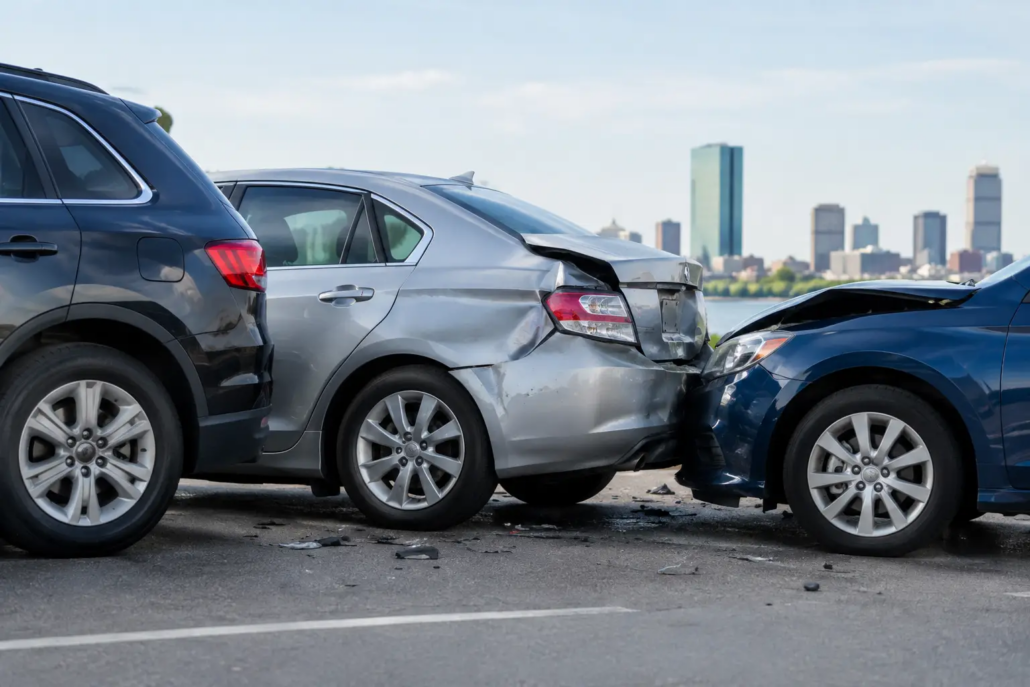
A chain-reaction crash on the Mass Pike, I-93, Route 128, or a crowded Boston street can leave several damaged vehicles, conflicting driver accounts, and one urgent question: who pays multi vehicle crashes? The answer is rarely as simple as identifying the vehicle that struck yours. Massachusetts law looks at how the collision began, whether other drivers had time and space to react, and whether every involved party acted reasonably.
For an injured person, the immediate concern should be medical care and protecting the evidence that may explain what happened. Insurance companies often move quickly to divide fault in a pileup. Their first version of events may not account for traffic-camera footage, vehicle data, witness statements, road conditions, or the full extent of an injury.
Who Pays Multi Vehicle Crashes When Several Drivers Share Fault?
In most cases, the at-fault driver or drivers pay through their auto liability insurance. But a multi-vehicle crash can involve more than one negligent act. One driver may rear-end a stopped car, causing it to hit another vehicle. A second driver may have been speeding, following too closely, changing lanes without care, or continuing into the crash scene when a safer response was possible.
Massachusetts uses a modified comparative negligence rule. An injured person may recover damages if they are found to be 50 percent or less responsible for the collision. Their recovery is reduced by their own percentage of fault. Someone found 20 percent at fault, for example, could recover 80 percent of their proven damages. A person found 51 percent or more at fault generally cannot recover from the other negligent parties.
That rule matters in a pileup because insurers may try to assign fault broadly. A driver who was pushed forward after being hit from behind is not automatically responsible for every vehicle they contacted. The central question is whether that driver acted negligently before the impact or had a meaningful opportunity to avoid another collision.
The first impact is not always the whole story
The driver who causes the initial crash may bear most of the responsibility, but later impacts require separate analysis. Consider a vehicle that loses control on an icy road and blocks two lanes. A following driver who was traveling too fast for the conditions may cause a second, more serious impact. The first driver, the following driver, and potentially others could each bear a share of liability.
Commercial vehicles add another layer. If a truck driver, delivery driver, rideshare driver, or employee driving for work contributes to the crash, the employer or company may also have insurance and legal responsibility. A defective brake system, failed traffic signal, dangerous construction-zone setup, or hazardous road condition can also shift attention beyond the drivers involved.
Massachusetts Insurance Coverage After a Pileup
Massachusetts is a no-fault insurance state for certain initial injury expenses. Your own Personal Injury Protection, or PIP, coverage may pay eligible medical bills, lost wages, and replacement services up to the policy limit, commonly $8,000, regardless of who caused the crash. Health insurance coordination rules can affect how PIP benefits are paid.
PIP is not a complete answer for a serious injury. It does not compensate a person for pain and suffering, and its limits can be exhausted quickly after an ambulance transport, emergency treatment, imaging, surgery, or time away from work.
A claim against an at-fault driver may be available when the injury meets Massachusetts’ tort threshold. This can include medical expenses reasonably expected to exceed $2,000 or injuries involving a fracture, permanent serious disfigurement, loss of sight or hearing, or loss of bodily function. The details matter, and the value of a claim depends on the injury, treatment, lost income, future limitations, and available insurance coverage.
When more than one driver is liable, an injured person may pursue claims against each responsible driver. Massachusetts law can allow recovery for an indivisible injury from liable parties, while those parties sort out contribution between themselves. This is particularly significant when one driver has a low policy limit and another has more substantial coverage. It is not necessary for an injured person to accept an insurer’s position that one policy alone defines the available recovery.
What if one driver has no insurance or too little coverage?
Uninsured motorist coverage may apply if the driver who caused the crash has no insurance or cannot be identified, such as in a hit-and-run collision. Underinsured motorist coverage may help when an at-fault driver’s policy limits do not fully cover the losses. These claims are made under your own policy, but that does not mean the insurer will simply accept the full value of the injury without documentation and negotiation.
In a multi-car crash, coverage questions can become complicated quickly. One driver may carry only the Massachusetts minimum limits. Another may be driving a company vehicle. A passenger may have access to coverage under more than one policy. The order in which policies apply can affect the claim, so preserving policy information is a practical early step.
Evidence Can Change Who Is Responsible
Pileups create confusion because each driver sees only part of the event. A rear driver may insist that traffic stopped without warning. A middle driver may say they were pushed into the vehicle ahead. A passenger may recall a driver looking down moments before impact. The strongest claim is built on evidence rather than assumptions.
Important evidence may include the police report, photos of every vehicle, damage patterns, scene measurements, nearby surveillance footage, traffic-camera footage, 911 recordings, witness contact information, and data from vehicles or commercial fleets. Black-box and event-data information can help show speed, braking, steering, and the sequence of impacts. This material may not remain available for long.
Medical evidence matters just as much. Prompt evaluation can identify injuries that are not obvious at the scene, including concussions, soft-tissue damage, spinal injuries, and internal injuries. Follow-up records connect symptoms, treatment, work restrictions, and long-term limitations to the crash. Gaps in care can give an insurer room to argue that an injury was unrelated or less serious than claimed.
Common Insurance Arguments After Multi-Vehicle Collisions
Insurance adjusters are entitled to investigate a claim, but injured people should recognize the issues adjusters often raise. They may argue that a driver stopped too abruptly, that a claimant could have avoided the impact, that prior medical treatment explains current pain, or that only the first collision caused injury.
These arguments are not automatically correct. Sudden braking may be necessary to avoid a hazard. A driver trapped in heavy traffic may have had no safe escape route. And a later impact can worsen an existing injury or create a new one. The timing of symptoms, medical findings, vehicle damage, and expert analysis can all help clarify causation.
Be careful about giving a recorded statement before you understand the crash sequence and your medical condition. Do not guess about speed, distance, or fault. Report what you know truthfully, keep copies of all claim communications, and avoid accepting a quick settlement before the full impact of the injuries is known.
Steps to Take After a Massachusetts Multi-Vehicle Crash
If you are physically able, call 911, seek medical attention, and photograph the vehicles, road surface, skid marks, debris, weather, and intersection or highway conditions. Exchange information with the other drivers, but avoid debating fault at the scene. Ask witnesses for their names and contact details before they leave.
Afterward, notify your insurer promptly, follow medical recommendations, and keep records of bills, missed work, prescriptions, transportation costs, and symptoms. If a commercial vehicle, rideshare vehicle, government vehicle, construction zone, or defective vehicle part may be involved, legal guidance can be especially valuable because critical records may be controlled by others.
A multi-vehicle crash should not force an injured person to carry the financial consequences of someone else’s careless driving. When the facts are disputed or several insurers are involved, Massachusetts Injury Lawyers can help evaluate the evidence, identify every potential source of coverage, and protect your claim while you focus on recovery. A free consultation is available 24/7, and the firm can travel to clients who cannot come to the office.


Leave a Reply
Want to join the discussion?Feel free to contribute!