
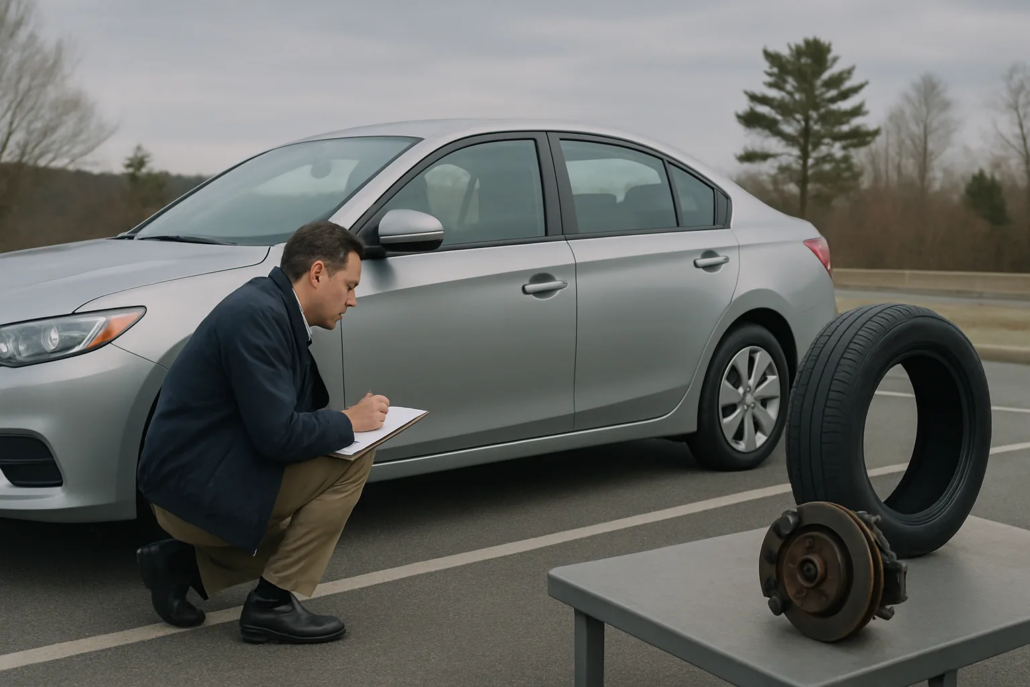
Could Vehicle Defects Trigger a Massachusetts Injury Claim?
A crash is often blamed on weather, traffic, or driver error. But what if the brakes did not respond, a tire suddenly failed, or an airbag did not deploy as expected? A Massachusetts defective vehicle parts injury claim may be possible when a component caused the collision or increased the severity of resulting injuries.
These cases can be difficult to recognize because the vehicle may be towed, repaired, sold for salvage, or dismantled before anyone examines it. A routine repair can also alter or remove the very evidence needed to evaluate a product-liability theory. Neumann provides guidance to people evaluating whether a vehicle component deserves closer attention after a Massachusetts crash.
This article explains practical warning signs, steps that may help preserve the vehicle and parts, and ways to document medical consequences. It also discusses how responsibility may be analyzed and why a prompt legal evaluation can matter. The information is general; the facts of each crash determine whether a claim may exist.
How Can Defective Vehicle Parts Support a Massachusetts Injury Claim?
A product-liability claim generally focuses on whether a product was defectively designed, manufactured, or supplied, or whether inadequate warnings contributed to harm. In a motor vehicle crash, the suspected product might be an original equipment component, a replacement part, a tire, or an airbag-related system.
The part does not necessarily have to cause the entire crash. A brake defect might prevent a driver from stopping. A tire failure might cause a loss of control. An airbag or seat-belt system that does not perform as expected might increase the severity of injuries even though another event started the collision.
Warning signs worth documenting
Possible indicators include:
- A brake pedal that felt unusually soft, sank, or failed to respond.
- A tire that separated, shredded, deflated, or showed an unusual tread or sidewall condition.
- An airbag that failed to deploy when occupants appeared to experience a qualifying impact, or deployed unexpectedly.
- A warning light, recall notice, service record, or prior complaint involving the same component.
- A repair, replacement, or inspection shortly before the crash.
These signs do not prove a defect. They identify issues that may warrant preservation and investigation. Photographs should show the whole vehicle and close details without altering the scene or cleaning away debris.
Massachusetts crash victims should also note where the vehicle was taken and which tow yard, repair shop, insurer, or salvage company may have possession of it. A defective brakes accident lawyer in Massachusetts may need those details to locate physical evidence and relevant records.
What Evidence Matters in a Massachusetts Product Liability Crash?
The vehicle is often the most important physical evidence. Once a component is discarded or repaired, it may become much harder to determine what happened. Generally speaking, owners should avoid authorizing repairs, scrapping the vehicle, replacing suspected parts, or allowing destructive inspections until the preservation issue has been considered.
Useful evidence can include:
- Photographs and video of the vehicle, tires, dashboard warnings, deployed airbags, roadway, and visible debris.
- The vehicle identification number, maintenance history, repair invoices, tire purchase information, and inspection records.
- The crash report, tow records, insurance communications, and names of people or businesses that handled the vehicle.
- Medical records and bills, along with a factual diary of symptoms, limitations, appointments, and missed work.
- Recall and complaint information available through the National Highway Traffic Safety Administration, commonly called NHTSA.
NHTSA information may help identify a broader safety concern, but a recall or similar report does not automatically establish liability in an individual case. An attorney may also consult engineers, accident-reconstruction professionals, medical providers, or other qualified experts, depending on the questions presented.
Massachusetts law applies to claims litigated in Massachusetts, but the precise rules can depend on the product, the parties, the injury, and where the events occurred. The Massachusetts Registry of Motor Vehicles may hold relevant licensing or vehicle records, while law enforcement records may document the crash circumstances. A claim could involve a manufacturer, distributor, seller, repair business, or another responsible party, depending on the evidence.
Do not post detailed theories, photographs showing sensitive information, or speculation about fault on social media. Statements made before the evidence is reviewed may create confusion about the event. Keeping original files and recording when and how photographs were taken can help preserve their context.
How Should Crash Victims Document Injuries and Avoid Evidence Mistakes?
A product issue and a bodily injury claim are connected but distinct questions. Showing that a part malfunctioned does not, by itself, establish the nature or extent of a person’s medical harm. Conversely, medical treatment alone may not show why a component failed. Both evidence tracks should be developed carefully.
After a crash, people often focus on immediate pain and overlook symptoms that appear later. Medical professionals can evaluate symptoms and provide treatment guidance; injured people should describe what they experience accurately and follow their providers’ instructions. Keeping a consistent record may help explain the timing and effect of symptoms without attempting to diagnose the condition independently.
Common evidence-preservation mistakes include:
- Giving away or selling the vehicle before its condition is documented.
- Discarding a failed tire, brake component, airbag module, or other part.
- Authorizing a repair shop to replace the suspected component without asking how it will be preserved.
- Failing to identify who inspected, moved, stored, or altered the vehicle.
- Delaying medical evaluation or failing to keep records of appointments and restrictions.
- Assuming an insurer’s preliminary explanation resolves whether a product claim exists.
An attorney evaluating a Massachusetts defective vehicle parts injury claim may review photographs, crash dynamics, product history, maintenance records, and medical documentation together. Depending on the circumstances, the attorney may also assess comparative responsibility, warranty issues, notice requirements, filing deadlines, and whether a civil action belongs in a Massachusetts court or another jurisdiction. Laws and procedures can change, so location-specific legal advice is important.
Questions to raise during an evaluation
A consultation may address who controls the vehicle, whether a preservation request is appropriate, what records are missing, and whether the suspected component can be examined without destroying evidence. It may also clarify how an insurance claim and a potential product-liability claim interact. Readers should provide complete information, including facts that may seem unfavorable, so the legal analysis is based on an accurate record.
Frequently Asked Questions
Can a tire defect claim exist if the tire was purchased from a local shop?
Potentially. A tire defect car accident claim in Massachusetts may involve more than the store where the tire was purchased. Depending on the facts, review may include the tire’s design or manufacture, distribution chain, installation, maintenance, and warnings. The available evidence matters, including the tire itself, purchase records, service records, and crash circumstances. A lawyer can evaluate which parties and legal theories may be relevant.
What if the vehicle was repaired before anyone inspected it?
A prior repair does not automatically eliminate every possible claim, but it can make causation and defect analysis more difficult. Keep invoices, replaced parts, photographs, and communications with the shop or insurer. Identify what work was performed and when. An attorney may assess whether remaining evidence, service records, testing, or witness information can still answer the key questions.
Can an airbag failure matter if another driver caused the crash?
It may. An airbag failure injury claim in Boston or elsewhere in Massachusetts could focus on whether the restraint system increased the harm caused by an impact that began with another driver’s conduct. The analysis may require crash data, vehicle inspection, occupant information, and medical evidence. Multiple causes or potentially responsible parties can exist, and the facts must be evaluated together.
Should I contact NHTSA about a suspected vehicle problem?
A consumer may submit safety information to NHTSA, and agency databases may provide publicly available recall or complaint information. However, an agency report is not a substitute for preserving the vehicle or obtaining individualized legal guidance. Before making detailed statements, consider how the vehicle, records, and crash evidence can be maintained for potential claims in Massachusetts or another jurisdiction.
How Neumann Can Help
Neumann is dedicated to helping injured people understand whether a vehicle component may have caused a crash or worsened its consequences. The firm can review available crash records, photographs, maintenance information, medical documentation, and the status of the vehicle to help identify questions requiring further investigation.
A careful evaluation may include product-liability issues, motor vehicle negligence, evidence preservation, insurance communications, and the applicable Massachusetts procedures. Neumann is committed to fighting for clients’ rights while providing clear information about available legal options. Contact Neumann for a free consultation or case evaluation regarding your situation.
The information in this article is for educational purposes only and does not constitute legal advice. Contact a qualified attorney licensed in Massachusetts for advice specific to your situation.


Leave a Reply
Want to join the discussion?Feel free to contribute!