
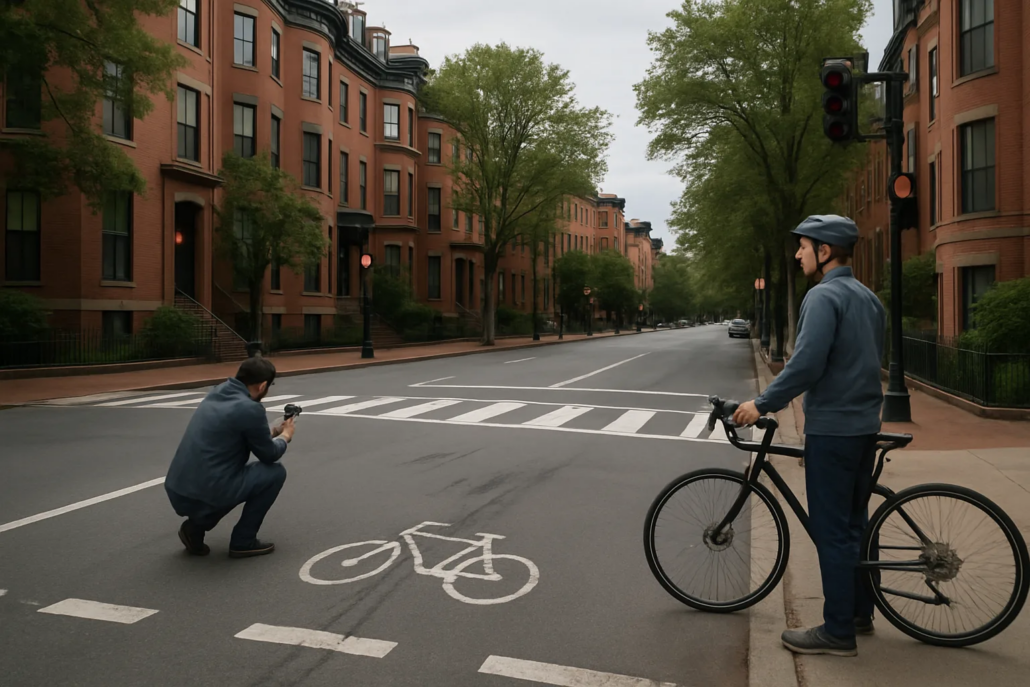
What Should You Save for a Boston Pedestrian Claim?
A pedestrian or bicycle crash can leave behind more than an injury. It may also create a fast-changing trail of evidence: a repaired vehicle, altered construction barriers, fading bruises, deleted phone data, or surveillance footage that is no longer available. If you are building a Boston pedestrian accident claim, evidence gathered early may help show what happened and how the collision affected you.
Neumann understands that injured road users often have questions before they know whether they have a legal claim. This guide offers a practical preservation checklist focused on medical care, the crash scene, visibility, crosswalks, traffic signals, helmet use, vehicle damage, witnesses, surveillance, and electronic records. It is general information, not a substitute for advice about a particular collision.
What Boston Pedestrian Accident Claim Evidence Should You Preserve First?
The most useful evidence usually connects three parts of a claim: how the crash occurred, who may have been responsible under applicable law, and the nature of the resulting harm. No single photograph or witness statement answers every question. A consistent collection of records can provide a clearer picture.
Start with health and injury records
Medical care should be the first priority after a collision. A medical professional can evaluate symptoms and document findings; this article does not provide medical diagnosis or treatment advice. Keep discharge paperwork, bills, imaging records, prescriptions, work restrictions, and notes about follow-up visits.
Also maintain a simple timeline of symptoms and limitations. Record when pain, dizziness, reduced movement, or other concerns affect ordinary activities, work, transportation, or sleep. Avoid exaggerating or minimizing symptoms. Honest, consistent documentation is generally more useful than a detailed account created long after the event.
Preserve the scene before it changes
If you can do so safely, photographs or video may show the roadway from several viewpoints. Consider documenting:
- The crosswalk, curb, bike lane, roadway markings, traffic signals, and nearby intersections.
- Lighting, weather, shadows, obstructions, parked vehicles, construction equipment, and sight lines.
- A bicycle, helmet, clothing, backpack, or other property in the condition it was after the crash.
- The vehicle’s position and visible damage, without entering traffic or creating another hazard.
Boston streets can change through repairs, weather, construction, traffic patterns, or routine maintenance. A scene image should preserve context, not merely a close-up of a damaged object.
How Do Crosswalk, Signal, Vehicle, and Witness Evidence Fit Together?
A pedestrian or cyclist’s account is one important part of a claim, but liability questions often turn on timing, visibility, right-of-way, speed, attention, and roadway design. In Boston, Massachusetts, the relevant facts may be reviewed alongside records from the Boston Police Department, emergency responders, transportation agencies, insurers, and other sources. The availability and retention period of a particular record can vary.
Details that can clarify the collision
Write down what you remember as soon as reasonably possible, including:
- Where you entered the roadway or bicycle facility and whether a crosswalk, bike lane, or intersection was involved.
- The color and sequence of traffic or pedestrian signals, if remembered, and whether any signal was obstructed or malfunctioning.
- The vehicle’s direction, lane, turning movement, headlights, horn, braking, and apparent speed.
- Where you were looking, what you could see, and whether parked cars, construction, weather, darkness, or glare affected visibility.
- Names and contact information for witnesses, along with what each person personally observed.
Do not guess at details simply because a form, insurer, or another person expects an answer. Mark uncertain memories as uncertain. An attorney can explain how these facts may fit into a Massachusetts claim and how comparative responsibility principles may affect an evaluation.
Electronic and third-party records
Potential records may include 911 audio, dispatch information, police reports, ambulance records, nearby business surveillance, traffic-camera material, rideshare or delivery-app data, and relevant vehicle event data. Phones, watches, vehicle systems, and fitness devices may also contain location or timing information, although access and interpretation can raise privacy and authentication issues.
Surveillance is especially time-sensitive. Ask nearby businesses, residences, property managers, or transportation facilities whether cameras may have captured the area. Do not trespass, pressure employees, or assume that a person who declines to provide footage has done anything improper. A lawyer may be able to address formal evidence-preservation requests or other lawful methods of obtaining records.
What Evidence Mistakes Should Boston Crash Victims Avoid?
Evidence preservation is not only about collecting material. It is also about avoiding steps that unintentionally destroy context or create disputes.
Common problems after a pedestrian or bicycle crash
- Throwing away or repairing a bicycle, helmet, clothing, or damaged personal property before it is documented.
- Deleting photographs, text messages, navigation history, health-app records, or posts connected to the collision.
- Editing images, applying filters, cropping out landmarks, or failing to preserve the original file and its metadata.
- Giving a recorded statement or signing a release without understanding what information it covers.
- Posting speculation, blame, detailed medical commentary, or photographs that could be taken out of context.
- Waiting to document road conditions until construction barriers, signal timing, lighting, or vehicle placement has changed.
Keep original files in a secure location and make a separate backup. Preserve communications with insurers, employers, medical providers, witnesses, and repair facilities. Do not secretly record conversations or access another person’s device or account; rules governing recordings, privacy, and electronic evidence can be fact-specific in Massachusetts.
A lawyer evaluating a Boston claim may also consider insurance coverage, available witnesses, medical causation issues, property damage, lost income documentation, and deadlines that can depend on the parties and circumstances. Laws and procedures vary by jurisdiction and may change after publication, so a prompt case-specific review can be useful.
Frequently Asked Questions
Should I keep my bicycle and helmet after a Boston crash?
Generally, preserving the bicycle, helmet, clothing, and other damaged property can be important because they may show impact points, damage patterns, or the condition of safety equipment. Photograph the items from multiple angles and store them safely without cleaning, repairing, discarding, or altering them if possible. Depending on the circumstances, an attorney may advise how to preserve or inspect them while respecting ownership and evidence-handling requirements.
Can a police report prove who caused a bicycle or pedestrian collision?
A police report may contain useful observations, diagrams, statements, and identifying information, but it is usually one part of the overall evidence. It may not resolve every disputed issue, and an officer may not have witnessed the collision. Photographs, witness accounts, medical records, signal information, vehicle damage, and video may add important context. A Massachusetts attorney can explain how available records may be evaluated.
What if I do not know whether a nearby camera recorded the crash?
You can make a note of businesses, residences, garages, transit facilities, and traffic equipment near the scene. Do not assume footage exists or will be retained. Tell a lawyer or insurer about possible cameras promptly, because retention practices differ and recordings may be overwritten. A formal preservation request may be appropriate in some situations, but its use depends on the facts and applicable law.
Does wearing a helmet decide a Massachusetts bicycle injury claim?
Helmet use may be one fact considered in a bicycle injury claim, but it does not automatically determine responsibility or the value of a claim. The collision circumstances, roadway rules, conduct of all involved parties, and medical evidence may also matter. Massachusetts law and the facts of each case control. Avoid making assumptions based on helmet damage alone; preserve the helmet and seek case-specific legal guidance.
How Neumann Can Help
Neumann is dedicated to helping injured pedestrians and cyclists understand the evidence that may matter in a Massachusetts motor vehicle accident claim. The firm can review available photographs, medical records, witness information, vehicle and property damage, potential surveillance, and communications with insurers. It may also help identify gaps in the record and explain how local facts in Boston could affect the evaluation of a claim.
Neumann is committed to fighting for clients’ rights while providing clear, practical information about the legal process. If you or a family member has been injured, contact Neumann for a free consultation or case evaluation to discuss your situation and legal options.
The information in this article is for educational purposes only and does not constitute legal advice. Contact a qualified attorney licensed in Boston; Massachusetts for advice specific to your situation.


Leave a Reply
Want to join the discussion?Feel free to contribute!